Announcing free airport entertainment at LIH

I’m happy to report that there’s a new show in town to entertain visitors when they arrive at Līhu`e…and it’s free!

It’s been a long time coming but, thanks to some strong community collaboration, a very informative ocean safety video now plays in the arrival hall.

It only takes six minutes out of your life, and it could save it!

ImageI believe the count currently stands at 11 drownings off Kaua`i this year (they are so damned frequent I’m beginning to lose count), and it’s only April! The majority of deaths were visitors. What a tragic way for a vacation to come to a grinding halt, not just for the victims, but for all the families and friends who had expected to escape their regular lives for a week or two in paradise.

I don’t have a count of the far greater number of rescues, but I know that the lifeguards and other responders have been working overtime this year. There are many folks who have had a very lucky escape; but their unpleasant experiences, and the risk to responders, could probably have been avoided if they’d been aware of the dangers in the ocean, particularly along the north shore in winter months.

Take a look at the video below – even if you’re not planning a visit to the island, it captures the beauty of our beaches and impressive power of the ocean.

I particularly encourage my CA friends to share the video, since Hawai`i is such a popular vacation destination for those on the West Coast.

When in doubt, don’t go out!

Outrigger Canoeing: A rookie wrinkly’s perspective

Having had a charity tennis tournament rained out this afternoon, I’m back home and watching the rain continue to dump on us, so it seems apt to talk about a water sport instead.

Back in October a friend invited me to try outrigger canoeing. If you’ve been to Hawai’i, or seen the closing credits for Hawaii Five-0, you’ll know the kind of canoe I mean … this kind:

Many years ago, I rowed in eights and fours in England (on the River Thames), even once taking part in the Head of the River race (which looked a little like this recent example); latterly, I’ve been more into enjoying ‘easy’ kayaking with Steve (we brought a couple of ocean kayaks with us to the island), so I was keen to give the traditional Hawaiian outriggers a go.

IMG_4302

HCC: River access is behind the building – turn right to head up river, or left to head out into Hanalei Bay

Luckily, I joined Hanalei Canoe Club (HCC) during the off-season, so I had a few months of recreational-level paddling with a small (i.e. ‘quality not quantity’) group who regularly go out on Monday and Friday mornings.

Since the paddling stroke is very different from rowing, this gave me a chance to learn the ropes and start to ‘educate’ the required muscles before the serious training began, which it did in February.

IMG_4300

Training sessions are now Monday and Wednesday evenings, and also Saturday mornings if there isn’t a race. As the season goes on, there will be a race or regatta on most Saturdays.

IMG_1489

Hanalei River passes through the Hanalei Wildlife Refuge and taro fields.

During winter months, we train up and down Hanalei River, but when the ocean calms down in the summer we’ll get out into Hanalei Bay.

We paddle in most weather conditions, wet or dry, so training is rarely canceled (unlike tennis)! It’s harder work on windy days and when the river is flowing fast, but on a good day (and there are plenty of those), the views are spectacular. Either way, it’s exhilarating and a great work-out. It’s also a very sociable activity, and it beats going to a gym.

I’m thoroughly enjoying my new sport, not just for the activity itself, but also for the friends I’ve made, and for all I’m learning about the tradition of the sport and Hawaiian culture. The club members are an enthusiastic and close-knit group. Everyone helps to lug all the canoes in and out of the water, and no one leaves until all the canoes are rinsed and stowed away under the building. Every training session ends with us all (30-35 paddlers on most days) gathering in a circle for announcements and the closing HCC Hawaiian chant.

During the season, there are all kinds of events, from long-distance ocean races to regattas that include quarter- or half-mile sprints. There are also many categories for a race: genders, age ranges, and rookies. The Novice A and B categories are for the rookies like me. It’s somewhat bizarre to be able to compete in a new sport when I’m almost past my sell-by date. 🙂

2013 is an especially exciting year for HCC, as it’s Kauai’s turn to host the State Championships in August, and I’m looking forward to being involved in some way or other. However, I cannot imagine participating in any long distance races, which are relays requiring team members to swap in and out of the canoe at intervals during the event! On those occasions I suspect I’ll restrict myself to the role of spectator and team support! 😉 (Here’s a video clip that shows what those swaps look like on the annual Na Pali Challenge, which starts in Hanalei Bay and heads west along the Na Pali coast down to Port Allen on the south of Kauai.)

Below is a brief gob-smacking look at the 2012 Na Wahine O Ka Kai event – a long distance women’s race from Molokai to O’ahu. The 2012 event was <um> pretty brutal! This clip shows the teams struggling to get out from the shore to the start line! 

No! I’m not in the running for any of our HCC teams for the 2013 Na Wahine O Ka Kai … and, if I had been, I definitely wouldn’t be after seeing this video! 🙂


Our albatross girls: futile not fertile


IMG_5681It seems that KP338 has finally decided enough is enough, and has left the nest that’s in our front yard.

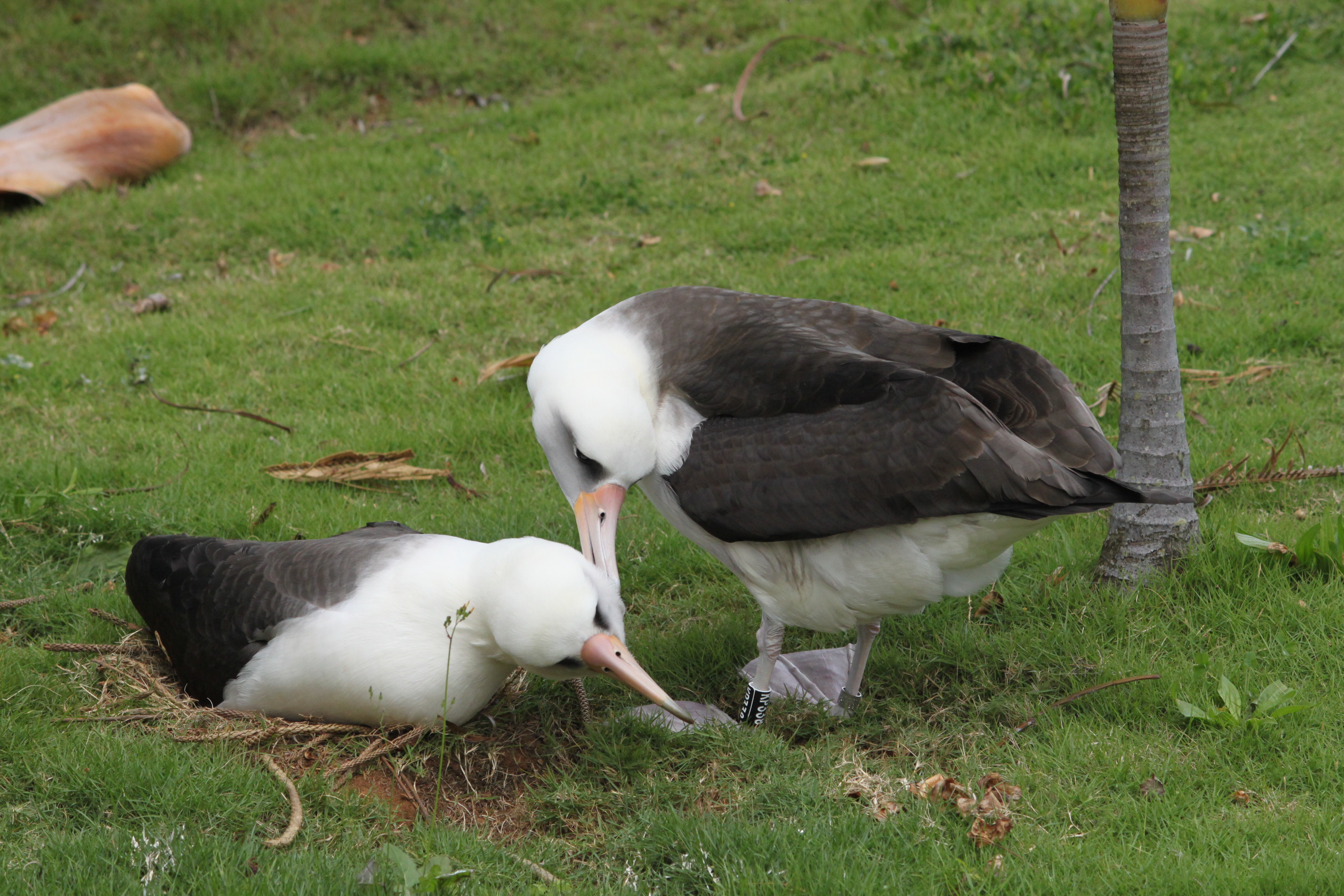
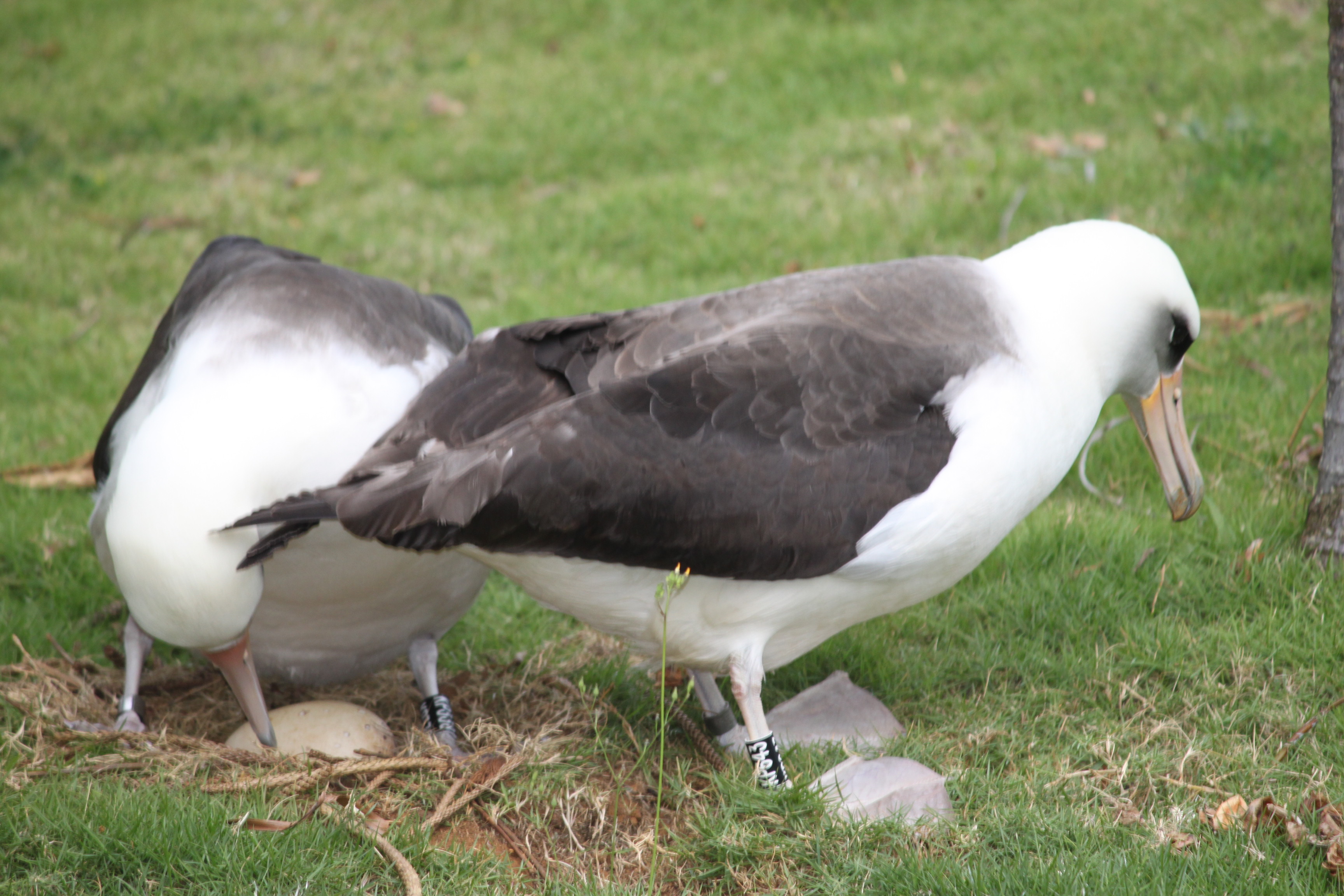
She swapped with KP643 for the last time on March 12, and on that occasion they spent a particularly long time sitting side by side on the nest, ‘chatting’ together, and occasionally sitting up to look at, and chatter at, the egg.

Was it just my imagination or did I detect a worried look on their faces, and maybe frustration too?…

IMG_5672On the morning of March 14, I noticed 338 was standing over the egg for several minutes, with no sign of settling down; whereas usually, when a nesting bird needs a stretch, it’s a quick stand-up-shuffle-and-sit-down-again, to keep that precious egg warm.

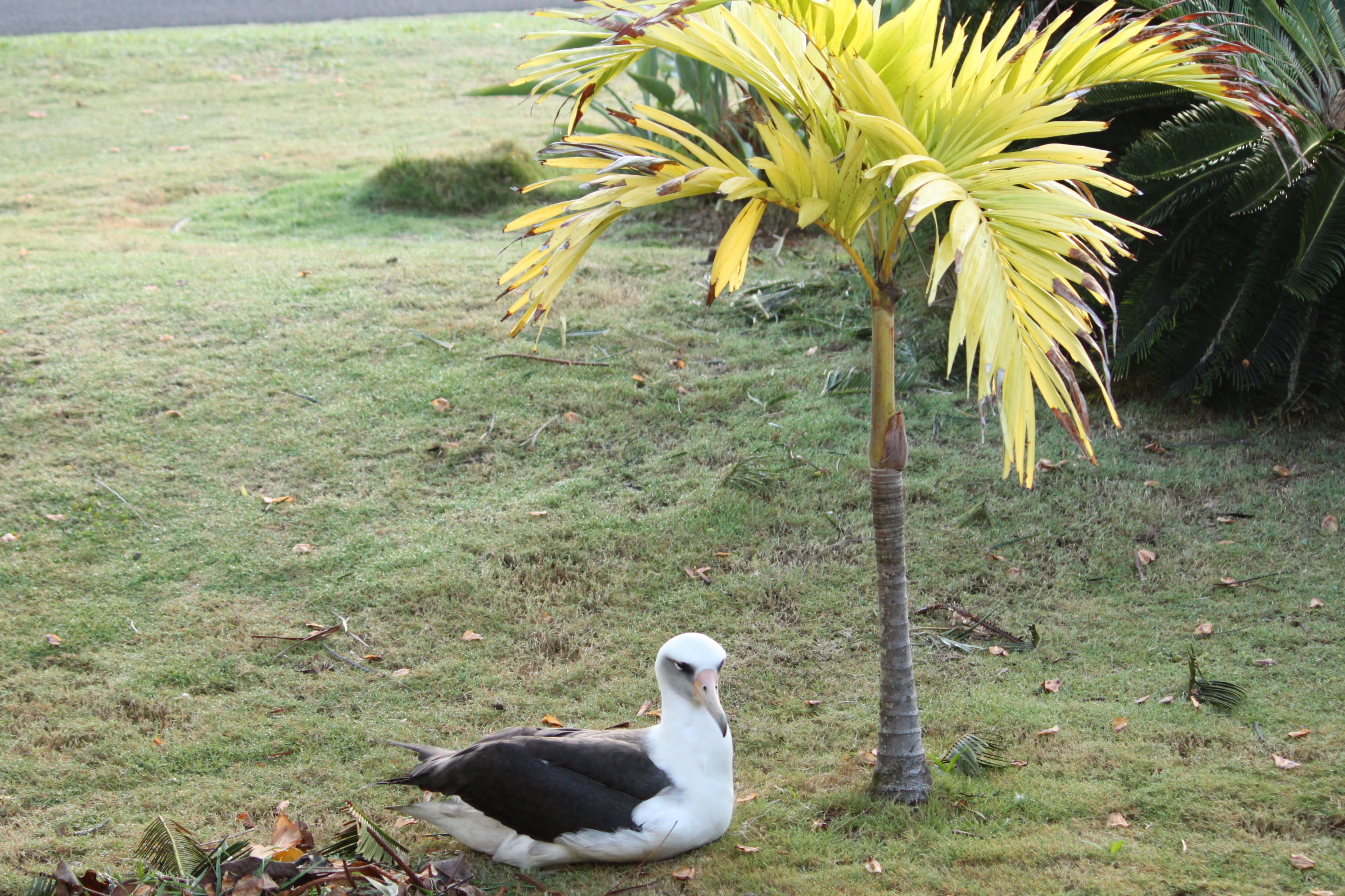
By lunchtime she had left the nest, waddling around the front yard and back-and-forth across the driveway for a while, before settling down a few yards from the nest under the sago palm…yes, the same sago palm where both she and 643 had laid their eggs back on December 4 and 5, before 338’s egg rolled down the slope to its resting place nearer the garage.

IMG_5683

We won’t remove the egg yet (amazingly, it’s still whole after almost 3-and-a-half months!) unless of course it breaks and emits an unholy smell!

We’ll just let nature take its course. 338 is likely to  return to the nest a few times, even though she has now let the egg go cold. 643 might return, and they might still hang out in the neighborhood together for a while, just like our neighbor’s couple that I featured in my previous post.

If we’re lucky, they’ll treat us to some noisily entertaining and affectionate displays of their own, before eventually heading off to Alaska for the summer months.

I’m already looking forward to November, assuming they return for another try, when I’m hoping some randy male gets to one or other of them before they settle down together.

Laysan albatross couple dance like there’s nobody watching *

The couple in the video nested this year in a neighbor’s yard, but the egg wasn’t fertile and eventually broke, so now they’ve settled in the yard next door to their nest, and we see them almost daily displaying like this.

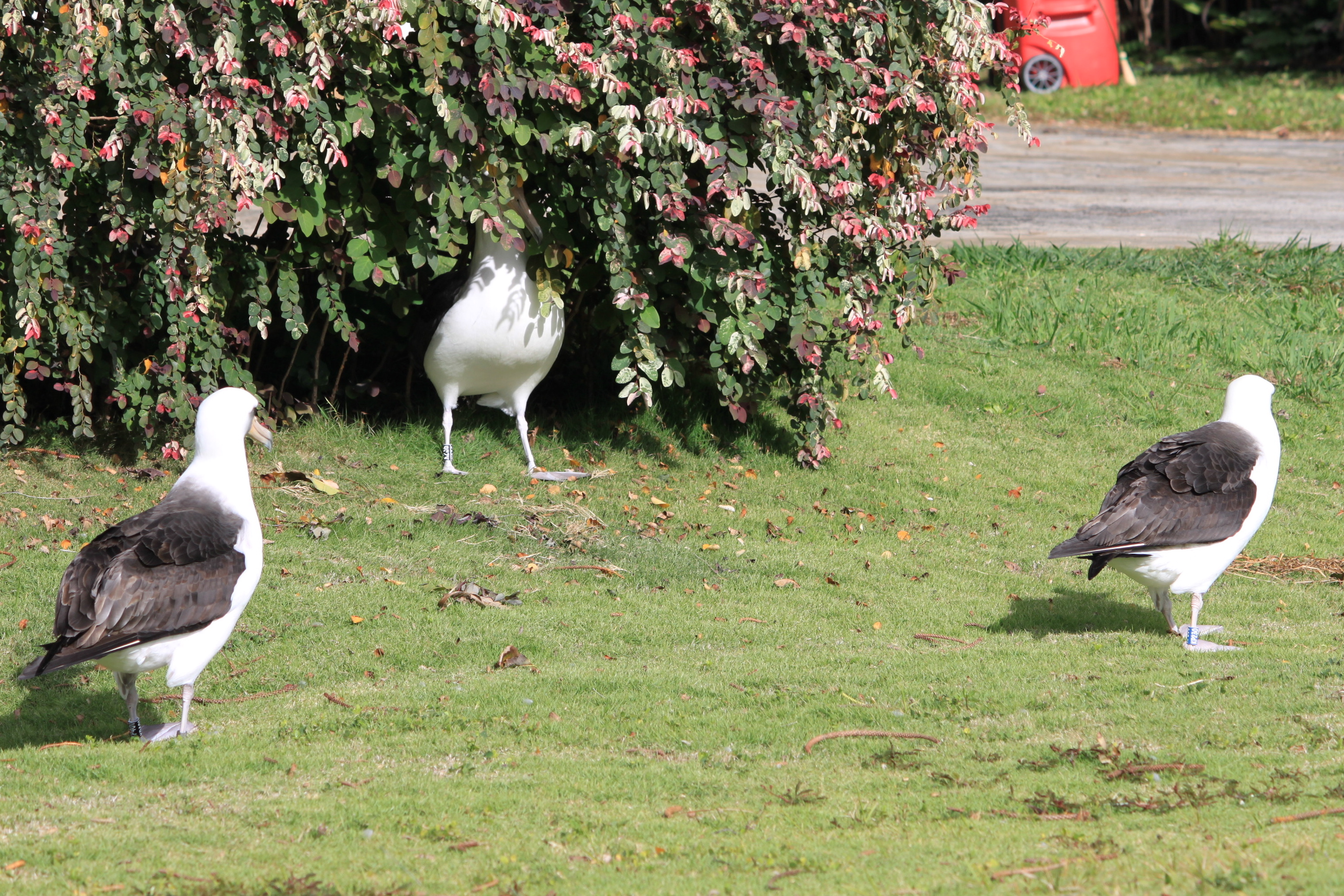
These displays are common among our neighborhood albatross at this time of year – either couples whose egg did not successfully hatch, like these two, or non-nesters seeking a partner for future years. Often, we also see larger groups of 4 to 6 adolescents ‘displaying’ together. It’s always fascinating to watch their moves!

Eventually this couple will fly north for the summer, but this continued ‘affection’ indicates that they plan to return to their nest, or close by, next year to try again.

* “You’ve gotta dance like there’s nobody watching,
Love like you’ll never be hurt,
Sing like there’s nobody listening,
And live like it’s heaven on earth.”  — William W. Purkey

Our albatross girls: the vigil continues

In my previous post, I introduced the pair of albatrosses nesting on our front yard, KP338 and KP643, and their infertile egg.

Last Tuesday, 338 returned to take over nesting duties from 643.

338 had departed on February 6, so she was gone for 13 days. That’s the shortest swap for our pair. The whole nesting process must be very tiring for both birds, and their stamina level must drop as the incubation period continues. The first nesting period is usually the longest (for 338 and 643, that was 26 days this season from December 4 to 30).

I was in the ‘office’ (at the front of the house) at 4:15pm when I heard them chatting together. The sound of a returning mate is very different from the interactions that a nesting bird might have with passing ‘acquaintances’.

IMG_7912I watched as 338 settled down beside 643 (still on the nest) and as they preened and chatted; then 338 stood up and wandered around, picking at grass or leaves, and dropping them nearer the nest.

Finally, 643 lets 338 take over the nest

Finally, 643 lets 338 take over the nest

I’m not sure whether 643 was reluctant to leave the nest (I’m told that pairs swap quite quickly on an egg, but are more resistant to their mate once the chick is hatched), but it took some 15 minutes before 643 relinquished her warm spot to 338.

Roles were then reversed,  with 338 plucking grass and debris for the nest, occasionally stopping to chat and preen her mate, while 643 adjusted herself on the egg.

I didn’t see 643 leave, but I know it was some time between 5:00 and 5:25pm, while I was walking Freya and watching whales at the bluff. Such is the unfortunate conflict of activities that nature provides at this time of year! 😉

I wish I knew if our pair had ‘discussed’ their egg, and reached a decision as to whether to give up on their hope of an offspring this year. Still, for the moment, it seems as if 338 is content to take another turn.

Our albatross girls

I must have compiled half a dozen or more posts since my last of December 28. Unfortunately, they were all composed in my head, either while driving around the island (plenty of time for contemplation at a maximum of 50mph), or during one of my frequent bouts of insomnia (which I attribute to age, not location!) So, apologies for the extended absence and, obscenely belatedly, Happy New Year…or, rather less belatedly, Gung Hay Fat Choy!

One of the most frequent topics for my mental musings is our local population of laysan albatross. I briefly mentioned some weeks ago that they were/are back on Kauai.

Nov 2012: returning albatrosses find their mates

Nov 2012: returning albatrosses find their mates

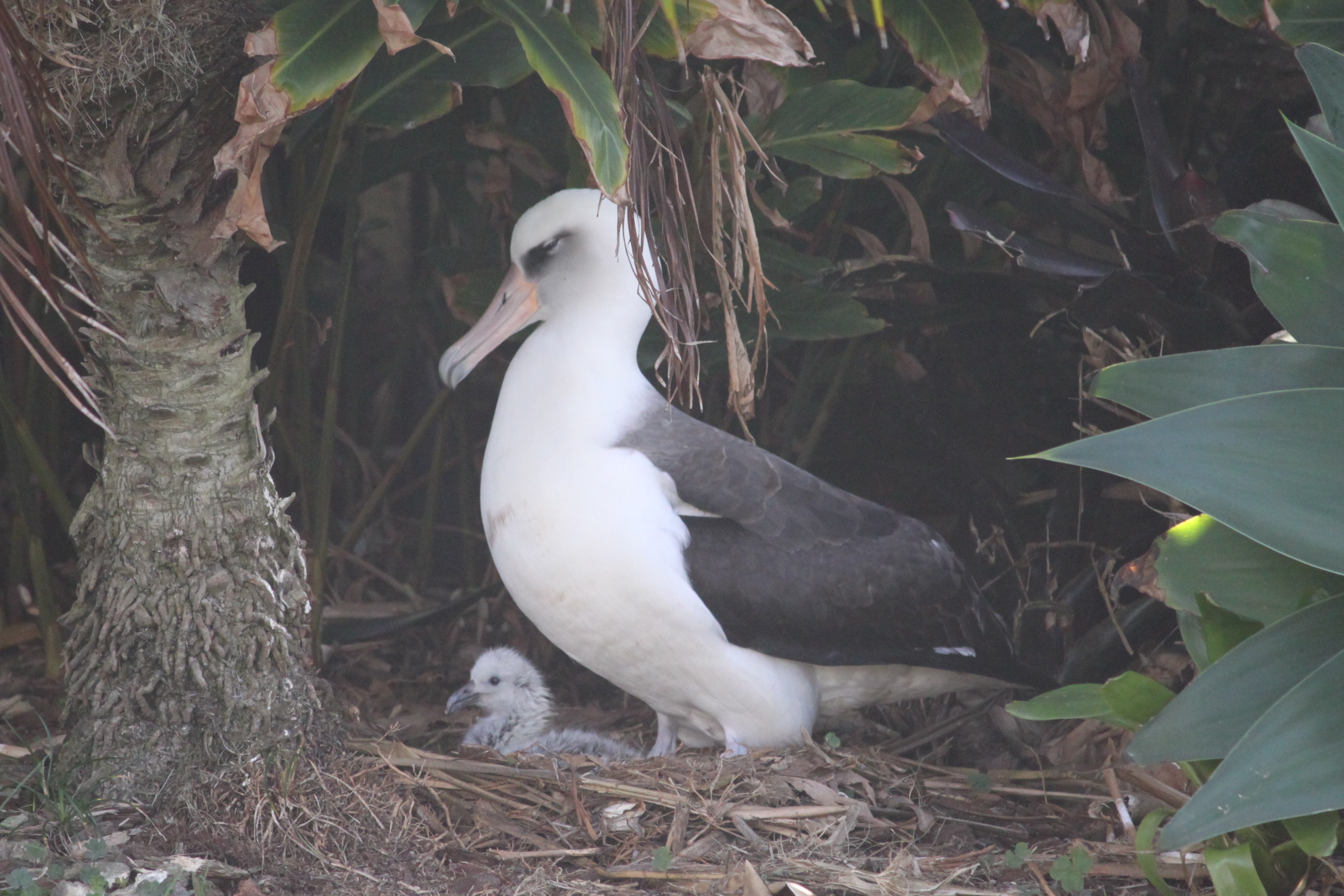
They started returning mid- November. Once one appears, it seems they all stream in. After courting and mating, all the nesting pairs concentrate on incubating their (single) egg and raising their chick.

Each parent takes it in turn to fly all the way back to Alaska to feed (yes, seriously, a round-trip of roughly 6,000 miles), while the other is dedicated to sitting full-time on the egg. They swap every two or three weeks until the egg is hatched, then more frequently as the chick grows, often covering the round-trip in only four or five days. Not surprisingly, the nesting bird is too hungry to hang about for long once its mate returns to relieve it.

So, during this incubation stage, the neighborhood goes a little quiet for a while.

IMG_5386However, the activity level picks up considerably early in the new year, when the non-nesters start appearing.

"If I stand really still, perhaps they won't notice me."

“If I stand really still, perhaps they won’t notice me.”

Non-nesters include those adults who for one reason or another do not have a partner this year, as well as the three to seven year old juveniles who are not yet old enough to mate, some of whom have returned to the island for the first time since they fledged (they usually spend the first three years at sea).

Each chick is banded before it leaves the nest; Kīlauea Point and Princeville chicks are given a ‘KP’ prefix. Last year, KP338 and KP643 nested on the border between our home and our neighbor. I learned a little about this pair at that time, but, since we only visited our new ‘vacation’ home for a week or two in February 2012 and again that April, we didn’t see the whole process through all the stages. However, we did find out that they are both females.

We were surprised to discover that female pairs are quite common. It’s not known why this happens, but they are definitely as dedicated as their male/female counterparts in incubating the egg. When both females lay an egg, one of the eggs has to be removed, as they only have the resources to incubate and raise one chick. Of course, the chances of them having a fertilized egg are somewhat limited…but not impossible, since there’s sometimes a randy male hanging around the neighborhood ready to jump their bones when they first return to the area!

Sadly, last year’s egg was not fertile. In some cases, an adoptive egg can be given to an all-female pairing. A program was instigated some years ago to replace infertile eggs with proven fertile eggs from pairs nesting on PMRF (Pacific Missile Range Facility) land. The idea was to reduce the PMRF colony of laysan albatross to avoid collisions with aircraft by relocating the eggs prior to hatching, since an albatross will typically return to the area where it hatched.

Initially, adoptive eggs were relocated to the KPNWR (Kīlauea Point National Wildlife Refuge) only, but it was later extended to those birds nesting on private lands (such as Princeville).

This wasn’t an option for our pair last year as, for some reason known only to herself, 643 decided to move two doors down to lay and incubate her own egg, while 338 was left alone at the original nest site. Without two adults to incubate an egg, there’s no hope of success, since, as I already mentioned, they must take it in turns to leave the nest to feed.

KP338 and KP643 (with 643's egg)

KP338 and KP643 (with 643’s egg) at the top of the slope

This season, the same pair returned, and this time ended up with their nest just a few feet from our garage, on the edge of the driveway. Not that that was their original intention! They started off tucked behind a sago palm and a bird of paradise plant, at the top of a small slope.

643 laid her egg first, on December 4, and left 338 to incubate it.

KP338 followed her egg after it rolled down the slope

KP338 followed her egg after it rolled down the slope

338 laid her own egg the following day, slightly to one side … unfortunately, it was closer to the slope and at some point during the day, presumably while 338 was shuffling around and beginning to pull some grass around her to form a nest, the egg rolled down the slope.

KP338 on the eventual nest site, admiring her reflection in the car!

KP338 on the eventual nest site, admiring her reflection in the car!

At least, 338 had the sense to follow her egg and sit on it! (An albatross will often ignore an egg that has accidentally rolled out of the nest, and will stubbornly remain on the nest while the egg goes cold – not the sharpest tool in the box!)

On the positive side, since 338 was by now nesting some distance from the sago palm, it was easy to remove 643’s egg without causing 338 any grief.

To avoid disturbance, the ideal is to keep at least 15 feet away from nesting birds but, given their location, that’s simply not feasible for us, or at least for the car, this year. Thankfully, neither 338 nor 643 seem too bothered by our comings and goings (though, of course, we don’t open the passenger door right next to them). At the risk of imposing human characteristics on these beautiful creatures, our pair do now seem to recognize our voices and appear quite comfortable on their accidental nesting site.

We had hoped that their infertile egg would be replaced with a PMRF egg, but sadly this year the State has decided not to extend the adoption permit to private lands. 😦 So, for now, our pair continue to incubate their egg, with no hope of hatching a chick. At some stage either the egg will break or the pair will simply give up hope and abandon the nest. They have been particularly faithful to each other and to their nest this time, despite the egg relocating itself, so we’re hoping they will have another go next year.

This chick (less than a week old) was hatched on a neighbor's front yard

This chick (less than a week old in the photo) was hatched on a neighbor’s front yard

Meanwhile, the happier news is that we now have 18 chicks in Princeville.

We’re enjoying watching the little balls of gray fluff grow, day by day, in our neighborhood.

Once again, I highly recommend Cathy’s blog, My Albatross Diary, as an excellent and entertaining source for more detailed updates on our Princeville chicks, an insight into albatross parenting, and many more great photos and videos.

A typically atypical week at the Refuge

I do thoroughly enjoy my volunteer sessions at the Kīlauea Point National Wildlife Refuge (KPNWR). The less informed might imagine it a somewhat repetitive, uneventful role: hang at ‘the Point’, chat with visitors, explain about our seabirds, talk story about the lighthouse history and restoration, occasionally politely ask someone not to eat, drink, smoke (or whatever else they’re doing that they’re not allowed to do at the refuge), watch for birds, dolphins, and whales…

However, the routine is never quite routine. Take last week, for instance:

The annual bird count:

IMG_4784The annual Christmas bird count is held across the States. Our contribution was to walk around Kīlauea Point on Sunday morning (Dec 16), counting any birds (not just seabirds) that we saw or heard.

IMG_4774As you might imagine, birds being birds, this is not a precise, scientific process!

In the case of the nēnē, it’s not so difficult. Many of them tend to hang out in pairs at this time of year, grazing in a few open areas, and it’s easy to read their band codes without disturbing them, with the help of binoculars.

On the other hand, the Japanese White-eyes and the Kōlea aren’t so cooperative; they don’t stay still for long and aren’t banded, so there’s no way of knowing if we’ve counted the same bird twice (or 10 times)!

IMG_2319Then there’s the colony of red-footed boobies that roost on Crater Hill. Try counting hundreds of distant white dots on a hillside as they constantly take to the air, swoop and land again. In this case, we learned the accepted method was for each individual to pick a small area and count, say, 25 birds, then estimate the number of similar sized areas across the entire hillside and multiply the two. Finally, we took an average of all the counts. Our individual counts ranged roughly from 800 to 1000 birds, so I was relieved we weren’t expected to count every one!

Even though not precise, the annual bird count is a useful, long-established, exercise that indicates trends in bird populations. It’s a regular event on the refuge’s calendar that provides an enjoyable morning for volunteers to get together with rangers and other experts to cover parts of the refuge that we otherwise don’t frequent. You might think about finding a bird count near you next year!

The great escape:

img4813-copyThe following Wednesday, on an extremely windy afternoon, a visitor’s baseball cap was whisked off his head and settled on top of a high bank of naupaka. The cap had significant sentimental value, having belonged to a deceased relative, so the poor chap was desperate to retrieve it.

We made several attempts to hook the cap on the end of a very long pole (what a pity I was too involved in the whole process to think about snapping a photo), but neither the wind nor the cap would cooperate and it finally dropped further into the deep shrubbery, out of reach.  So we called in the cavalry, one of our rangers eventually clambered to the rescue, and man and cap were happily reunited!

IMG_4817

The gosling photoshoot:

Proud nēnē parents and their brood of four newly-hatched goslings were one of the main attractions last week.

They emerged from their nest under the naupaka and gradually worked their way along the west edge of the refuge behind the protective fence, nibbling at the grass.

IMG_4834A number of visitors went to extraordinary lengths to capture a photo of these tiny youngsters at the closest possible range!

Smoke without fire:

IMG_4824At the northern-most tip of Kīlauea Point is the islet of Moku’ae’ae, and on the east side of the islet is a fork in the rock with a hidden lava tube that occasionally spouts a plume of sea spray high into the air. This event is neither frequent nor regular; it depends on the swells hitting the cleft at precisely the right angle and height.

Unlike the more famous Spouting Horn near Po’ipū, we can go many days without seeing this spout, but we were treated to repeated displays last Thursday.

Every day is different – different conversations with visitors, different weather conditions, different sea swells, different number of bird and whale sightings – so I’m looking forward to many more entertaining, illuminating and unexpected events at the refuge in the new year!

All Creatures Great and Small

IMG_4769Yesterday, a neighbor had to take her cat to her vet, urgently, and was in need of a ride.

The surgery is tucked away down country lanes in the hills, mauka (inland) of Kapa’a. Not an area I’d yet explored, so I was interested to visit new ground.

IMG_4768Dr Basko runs All Creatures Great and Small, with the practice apparently occupying the ground floor of his home.

The staff are all delightful, and I was particularly impressed by Dr Basko’s ‘bedside manner’ with my neighbor, who was naturally concerned about her beloved persian, Lelani  (sorry, I didn’t take a photo of her, but she’s utterly adorable), who has the biggest roundest eyes I’ve ever seen in a cat, except maybe Simon Fry’s Cheshire Cat in Tim Burton’s Alice in Wonderland.

IMG_4766Dr B, as his staff refer to him, was very caring to Lelani, as well as to my neighbor, and was patiently matter-of-fact as he stepped through the diagnosis and dietary regime that he recommended for the next few days.

This post is an unapologetic excuse to share with friends a few entertaining photos I took around the premises. However, if anyone is looking for a vet in the Kapa’a area I would, on my brief experience of his sincere caring of one sick cat, certainly recommend you check out All Creatures Great and Small.

IMG_4767

The Mango Tree Project [continued]

Since my first post about our Mango Tree Project, we’ve completed Steps 3 and 4, and are now on Step 5 (waiting and praying…dum-di-dum-di-dummmm).

IMG_6512Step 3: We wait and watch for some new shoots to appear.
We didn’t have to wait too long. Pete gave the mango tree its dramatic haircut on October 1; we noticed the beginnings of tiny shoots within just a week or two, and after a month there was plenty of healthy growth noticeable from the lanai [photo, Nov 2].

IMG_7379Step 4: Pete grafts new varieties to existing shoots.
Once the shoots are large enough, about the thickness of his finger, a similar sized shoot of a different variety can be grafted. For us, after another three weeks of growth [photo], Pete decided our tree was ready.

IMG_7401So, on November 22, Pete gave us four initial grafts, and we’ll see how those take. He can repeat as necessary, when newer shoots grow to a suitable size.

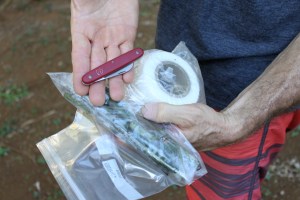
Tools of the trade: A selection of potential grafts, tape, and a very sharp knife (which it appears he had already tested on his thumb!) 😉IMG_7386

Step 5: We step back, wait, and pray.
This will be a longer wait. Though I assume we’ll be able to tell pretty quickly if the grafts have not taken (if they wither and die!), we’ll have to be patient until next year to see if we have any fruit to harvest.

P.S.
For those who read the original Mango Tree Project post to the end, I’m sorry to say my stand-out against the coconut palm cull didn’t last as long as I’d hoped. Two palms have met their demise since that post.

However, while the exposed green belt at the bottom of our yard is currently rather straggly and unsightly (mostly caused, insists Steve, by lack of sunlight due to those palms), I have to admit that the increased light across the yard, together with a tiny peak of the mountains that we didn’t realize we’d be able to see, have probably justified this latest mini-massacre.

First trip to (the island of) Hawai’i

I’ve been slacking on the blog-posting, so am trying to make time to catch up on the past few weeks, but it’s difficult! This retirement lark, on a beautiful island in a warm temperate climate with albatross and whales now arriving for another season, is a full time job. 🙂

IMG_6641Mid-November, I made my first trip to the island of Hawai’i (aka the Big Island), and spent a long weekend on the west side. I’m already looking forward to a return trip with Steve sometime, to explore Hilo to the east and the Kilauea Volcano – I hear that a night visit to watch the lava flowing into the sea is spectacular.

The Keauhou Lavaman triathlon was taking place just south of Kona, and our friend, Erich, was Head Coach for the Team in Training tri team this season.
IMG_6760

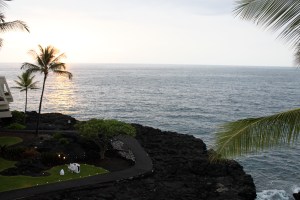
So, I ‘bunked with’ with Erich, Ellen and baby Gabrielle in their hotel room. It was a pretty cool ‘squat’, as we had an ocean view at the Sheraton, with nightly entertainment from the huge manta rays that come to feed in the bay immediately below our room.

The lava-rock cliff by that bay is also used for private (well, maybe not so private) torch-lit dinners. Personally, I’d prefer a rather more secluded spot, as opposed to being overlooked by a hundred-plus balconies.

The four of us had united at Kona airport on Thursday – with me making the island hop from Kauai, via Honolulu, and the three of them flying in direct from San Francisco.
IMG_4451There are plenty of places to grab a meal at any hour in downtown Kailua-Kona, including Humpy’s, a lively sports bar/grill where we ended up in the middle of Thursday afternoon.


Exploring the North West

On Friday, we all took the opportunity to drive north together, in search of King Kamehameha I’s birthplace. There is no sign from the main road, so we crisscrossed very close to the site several times without actually seeing it.

IMG_6691During our meanderings we did, however, happen upon the Hawi Renewable Wind Farm and Upolu Airport, at the end of a narrow country road (imaginatively named Upolu Airport Road). By the time we discovered the birth site was merely a short hike from the airport, we were already some miles away and it was pouring with rain, so there wasn’t much support for retracing our wheel-treads for the umpteenth time.

IMG_6698

We were pleased we continued to the end of Akoni Pule Highway (Hwy 270), as we were rewarded with an amazing view (even on a foggy windy wet day) across Pololu Valley, and, as we backtracked through Kapa’au, we found the impressive statue of Kamehameha I at the North Kohala civic center. Throughout our search, we were indebted to Ellen and her iPhone apps for shedding historical light on the area as we traveled. So the trip wasn’t a complete cultural failure.

IMG_6709Kamehameha I’s statue in particular has a fascinating story. The Wikipedia page is definitely worth a read. However, in brief, the full-size brass statue was initially commissioned and intended for Honolulu, but was lost when the ship transporting it sank near the Falkland Islands. A second statue was cast, but the original was unexpectedly retrieved, and ended up at Kapa’au.

IMG_6722We took a different route for the return to Kona, along Kohala Mountain Road (Hwy 250) to Waimea.
IMG_6720

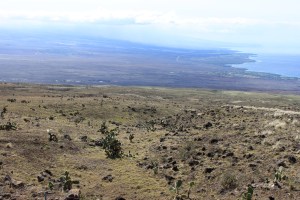
The landscape quickly changed to hills and farmland, with extensive views to Mauna Kea.

As we headed south, we experienced large exposed stretches of windswept terrain, including at one point a surprising patch of cactus.

I should give a shout out to the Red Water Cafe, in Kamuela, for a delicious lunch (and an additional shout out to Ellen for finding it with her Yelp app).

IMG_4476


Coffee, Critters, and Culture

On Saturday, Erich had Head Coach duties back at base, so Ellen, Gabi and I headed south without him.

We started with an excellent breakfast at The Coffee Shack. The cafe is positioned high above the valley, overlooking Kealakekua Bay. From the lanai we had delightful views of the bay and the cafe’s garden.
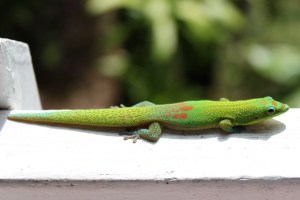
IMG_6789We also discovered a large number of the most attractive geckos I’ve ever seen, the gold dust day gecko. Although, our delight was somewhat tempered by the discovery that they are an invasive species that are killing off the indigenous population!

Next stop, St. Benedict’s Roman Catholic Church, the Painted Church.
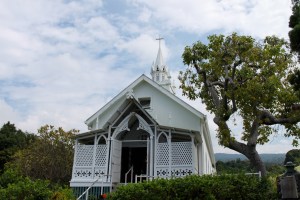
IMG_6802This church was originally built in 1842 and located near the shore of Honaunau, but gradually the villagers moved further inland to cooler, more fertile area; in 1899, the priest at that time decided the church should move too. So the church was dismantled and relocated higher up the slopes of Honaunau.
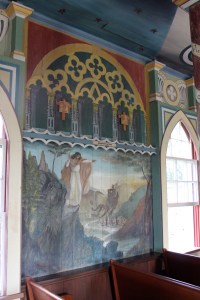
IMG_6809The Belgian priest, John Velghe, was a self-taught artist and single-handedly painted murals on almost every interior surface. Sadly, he died before the project was completed, so some panels remain blank.

Apparently the paintwork has never been retouched, which is remarkable considering it dates back to the late 1800’s and he used ordinary house paint.

IMG_6819The cemetery is surrounded by attractive tropical plants and flowers, overlooking the ocean. I can think of worse places to be dead!
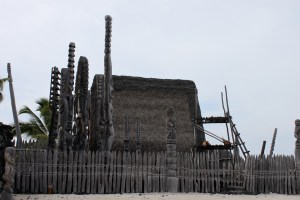
IMG_6836From there we headed to Pu’uhonua o Hōnaunau National Historical Park (The City of Refuge). This was a treat mainly for me, since Ellen had visited on a previous trip, and so spent most of our stop twiddling her fingers (I assume) while Gabi enjoyed her afternoon nap in the car.
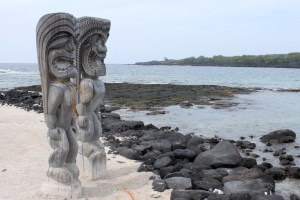
IMG_6840It’s a fascinating site that’s been restored to show the layout and buildings in what were once royal grounds (for the chiefs of Kona) and the dividing wall that separated it from the Pu’uhonua, where people found refuge after war or breaking a kapu (religious law).

It took me well over an hour to complete the excellent and very detailed self-guided audio tour; there was so much information to absorb and views to enjoy.
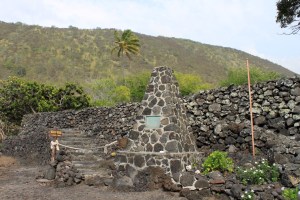
IMG_6874From there, we drove north along City of Refuge Road. The map warns it’s a single-track beach road, so I’m not sure I would have attempted it without 4-wheel drive; however, we were surprised to find a well-paved stretch of straight road, with views on either side to ocean and hills.

We stopped at Napo’opo’o Beach Park, which has an impressive Hawaiian temple, Hikiau Heiau, and a distant view to Captain Cook’s monument (accessible only by kayak).
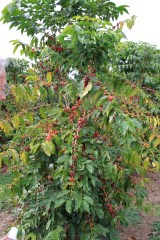
IMG_6908Our final visit (apart from a brief stop in the little town of Captain Cook, to purchase some Donkey Balls!) was to Greenwell Farms.

The way coffee is grown on the slopes of Kona is very different from in Kauai. In Kauai, the coffee trees stretch for many acres across flat lands, and the ripe cherries can be picked by large machinery. In Kona, however, coffee is grown in small hillside lots, five acres or less, among residential areas, and the trees are hand-picked.

IMG_6919Individual farmers then either process their own coffee manually, using a small hand-cranked press, or sell their sacks of coffee ‘cherries’ to larger enterprises, such as Greenwell’s.
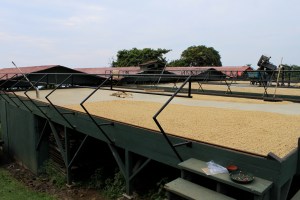
IMG_6922They were in the middle of their harvest, and we joined a 20 minute tour of the grounds, including the processing plant where we saw large sacks of cherries being processed, and coffee beans spread out across huge racks to dry.

Team in Training rocks the Keauhou Lavaman
IMG_6970The big event was on Sunday, November 18. The participants were up at 5.30am, setting up their bikes and other equipment/clothing at the transition point.

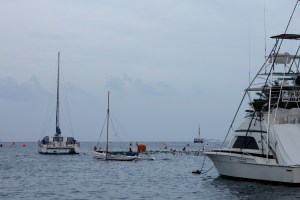
At 7am I joined them as they entered the water at Keauhou Harbor and headed out to the water start (among the rest of the colorful bobbing heads you see in the photo). Erich and I cheered from the harbor wall.
IMG_7162

Several of the Team in Training participants were taking part in their first triathlon and it was inspiring to watch them cope so well with the three disciplines.
IMG_7154

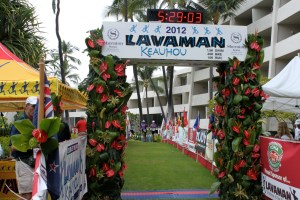
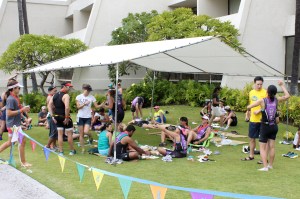
We were at the finish line to cheer them in and help them celebrate. They deservedly enjoyed a big party in the Sheraton grounds.

So, that was my first visit to the island of Hawai’i. Too brief to experience the whole island, but that’s OK, as it leaves plenty to enjoy on future trips, and happily we’re only a couple of island hops away.