Kuaihelani New Arrivals

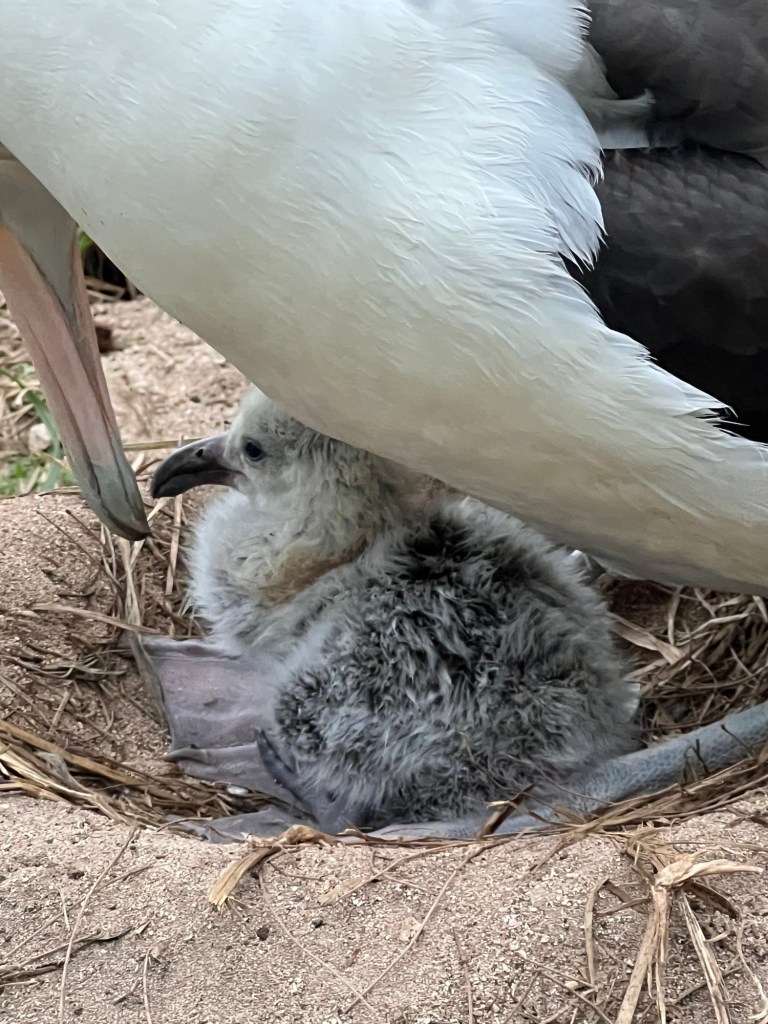
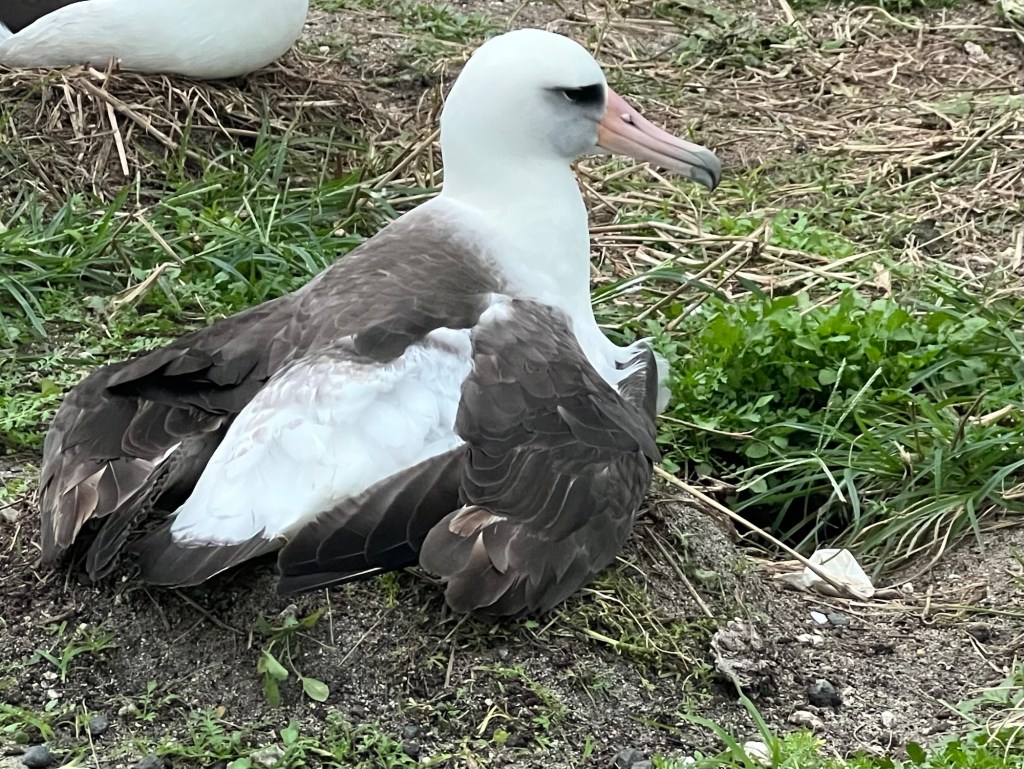
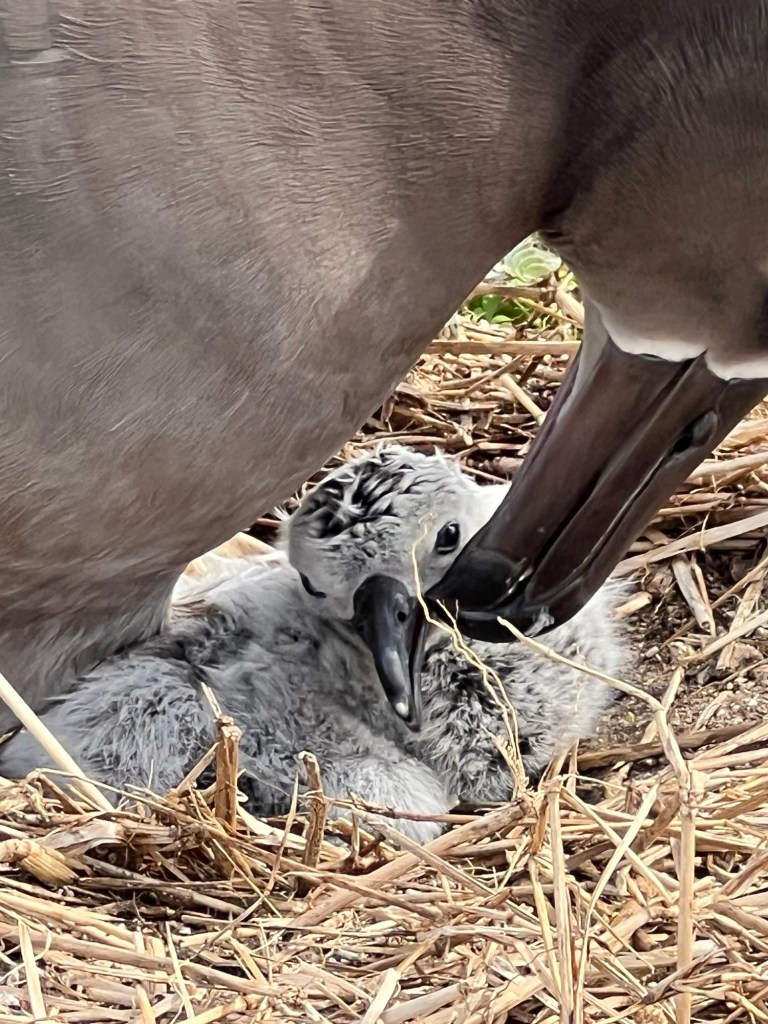
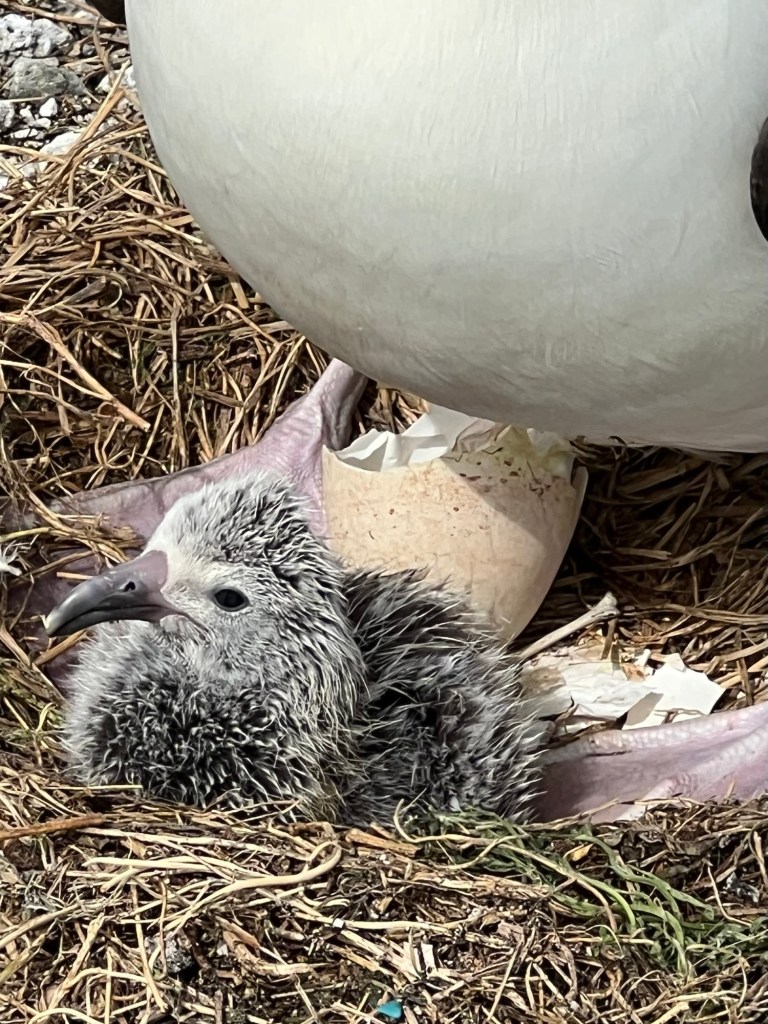
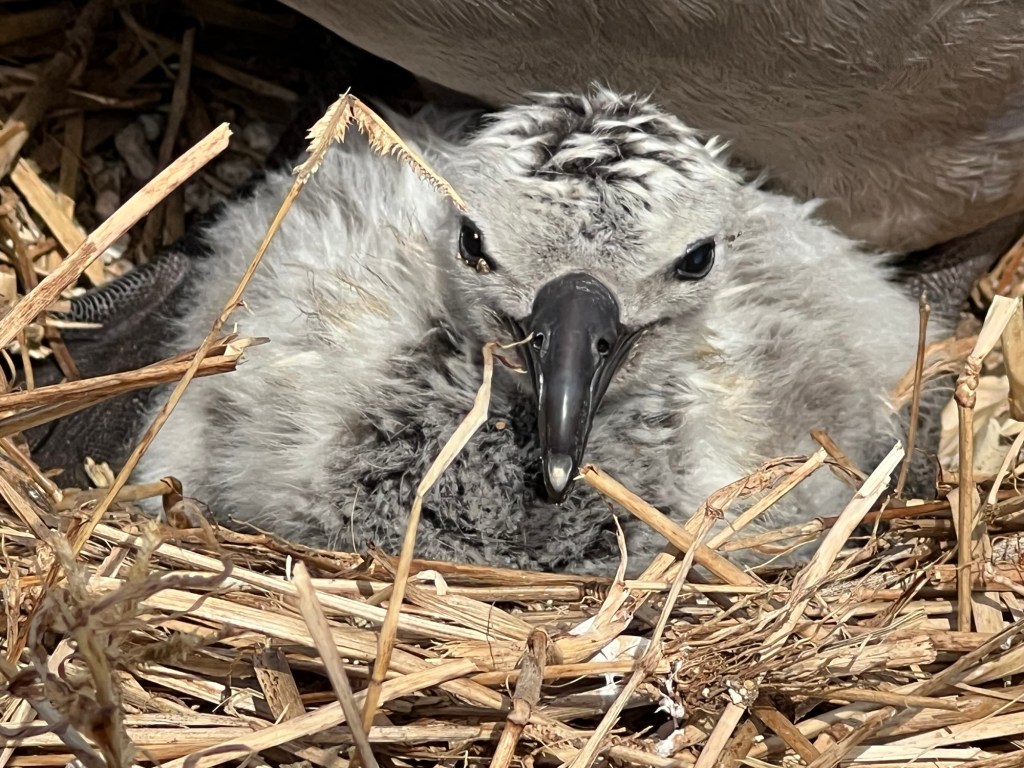
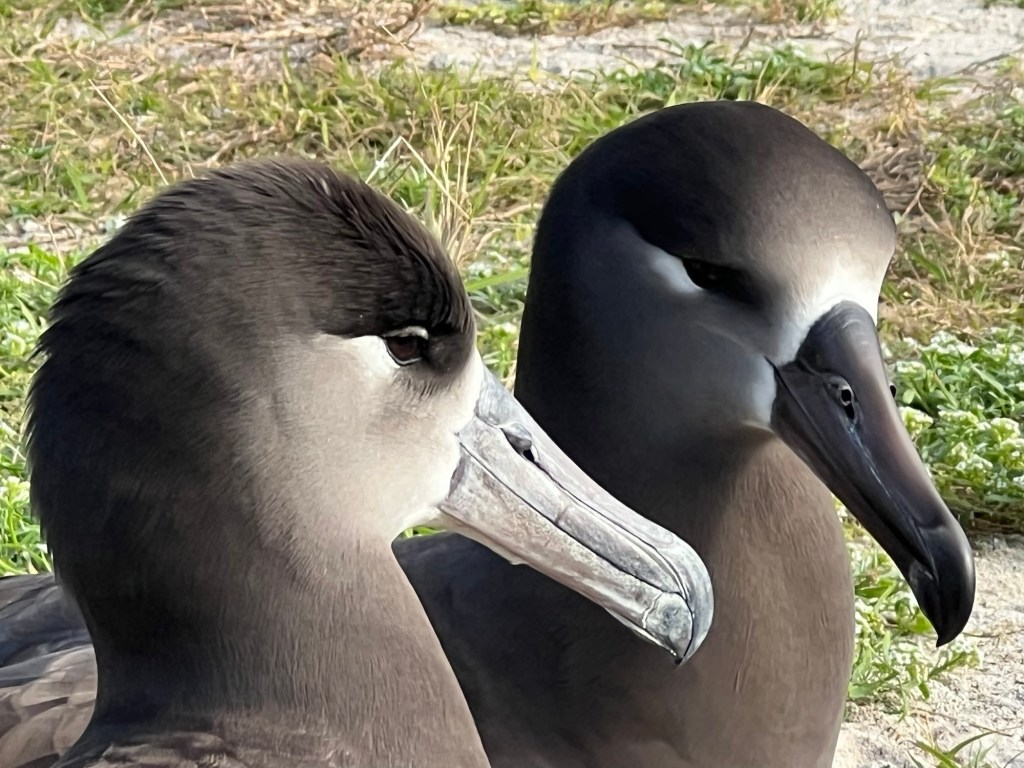
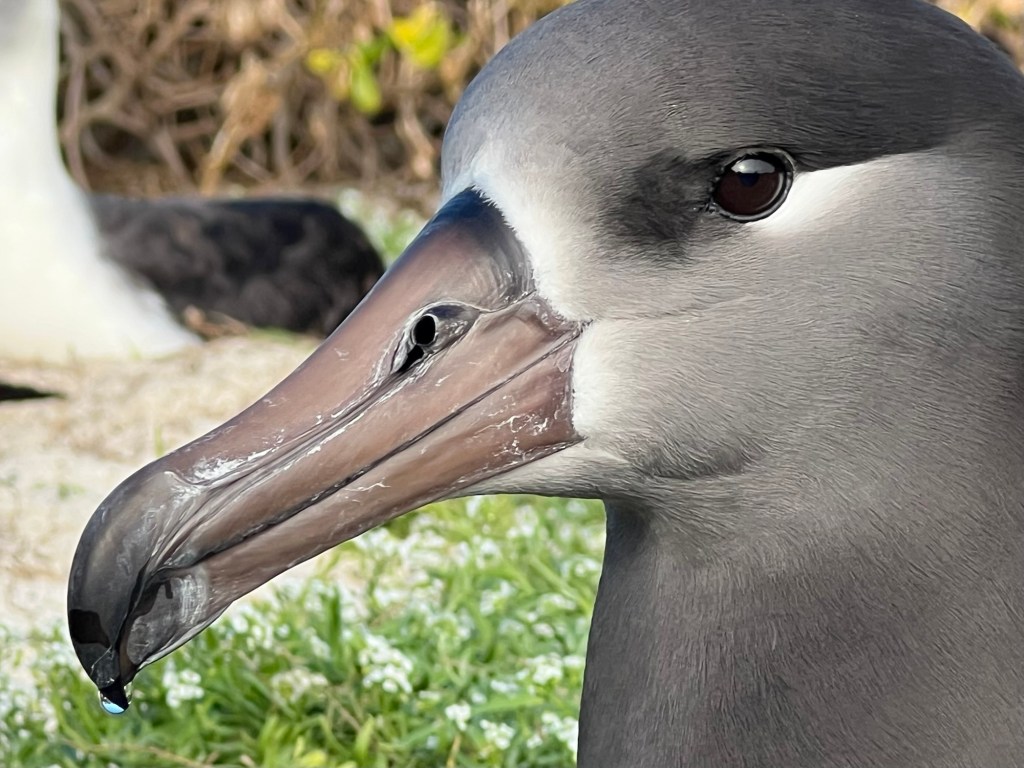
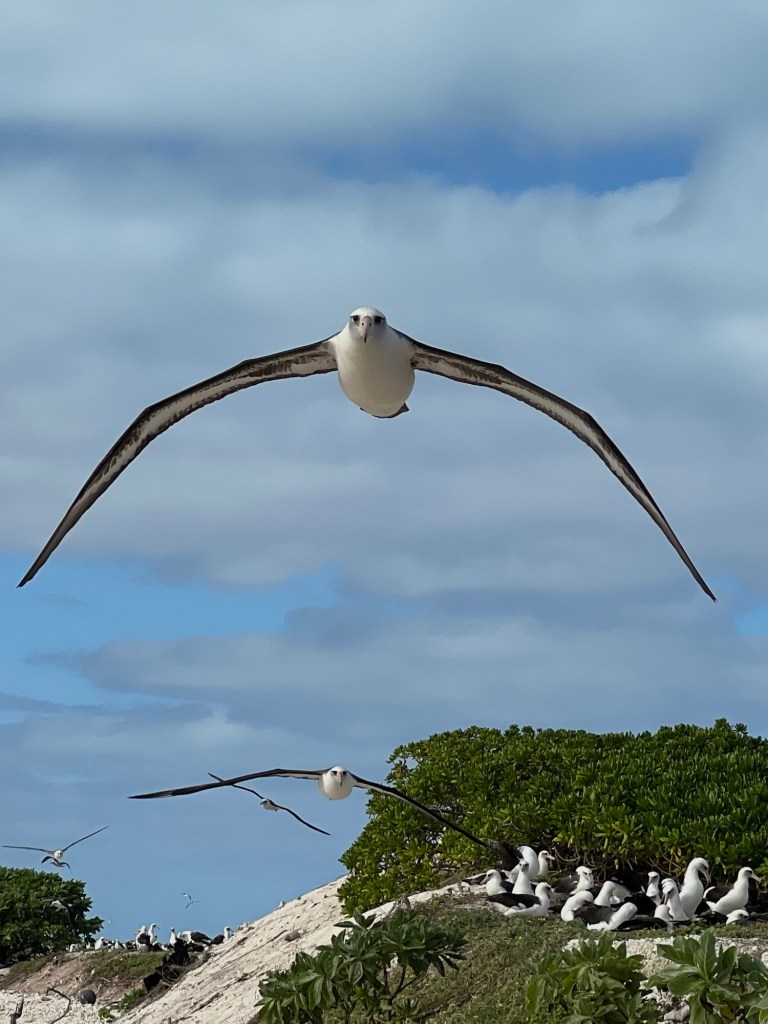
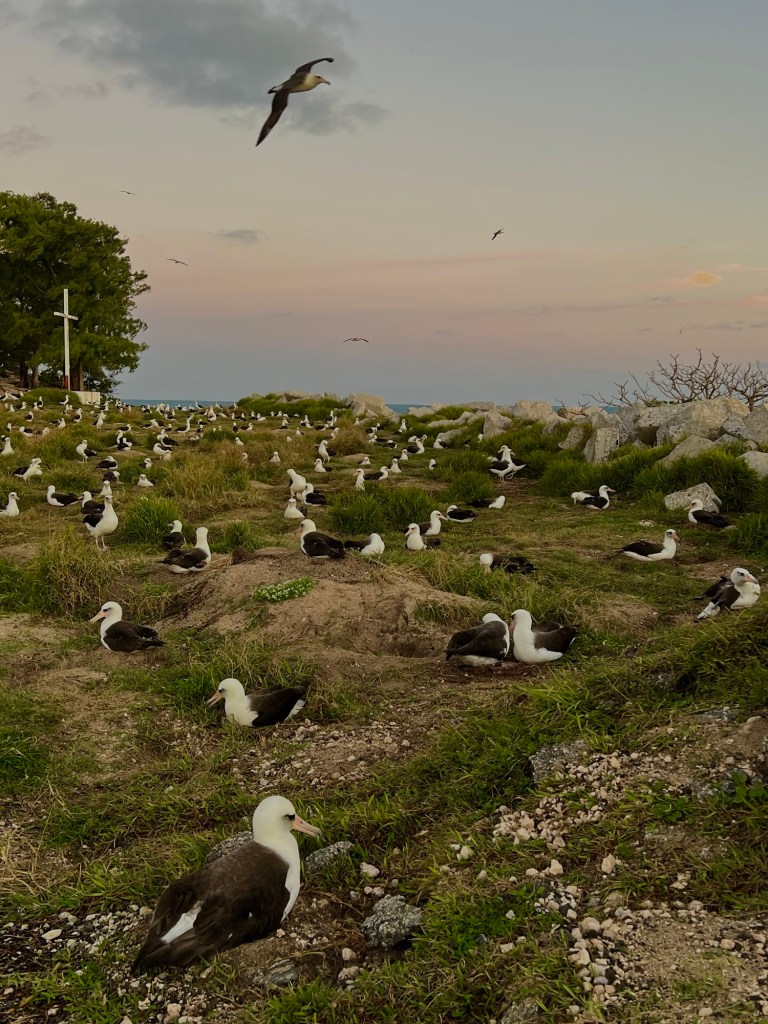
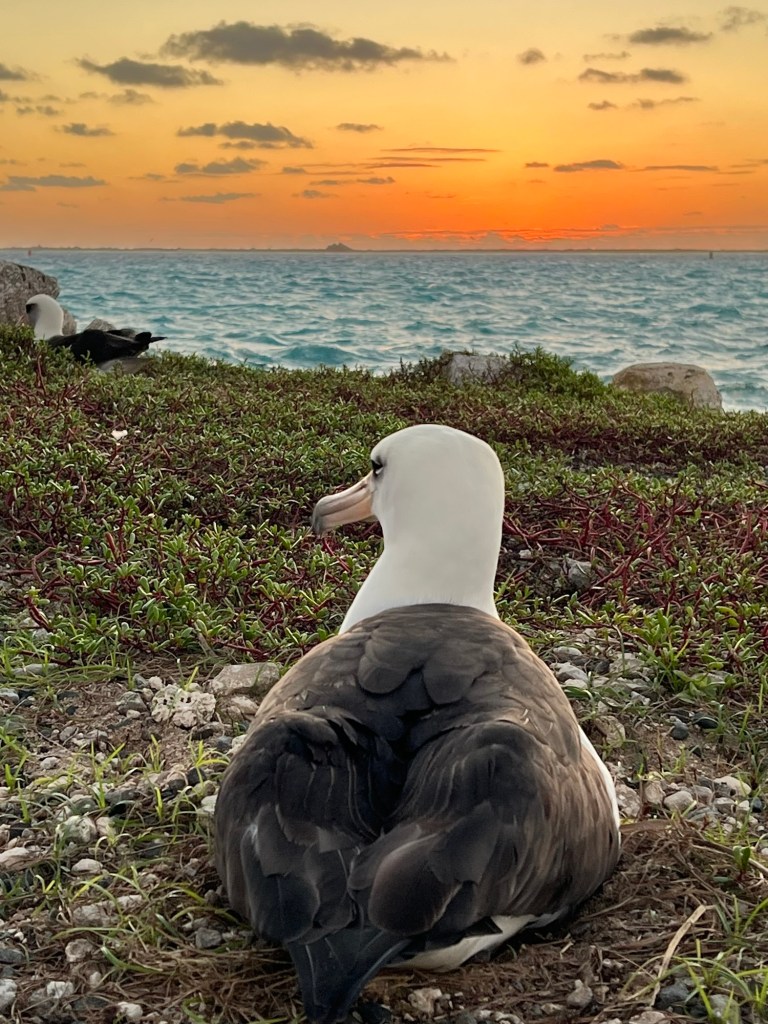
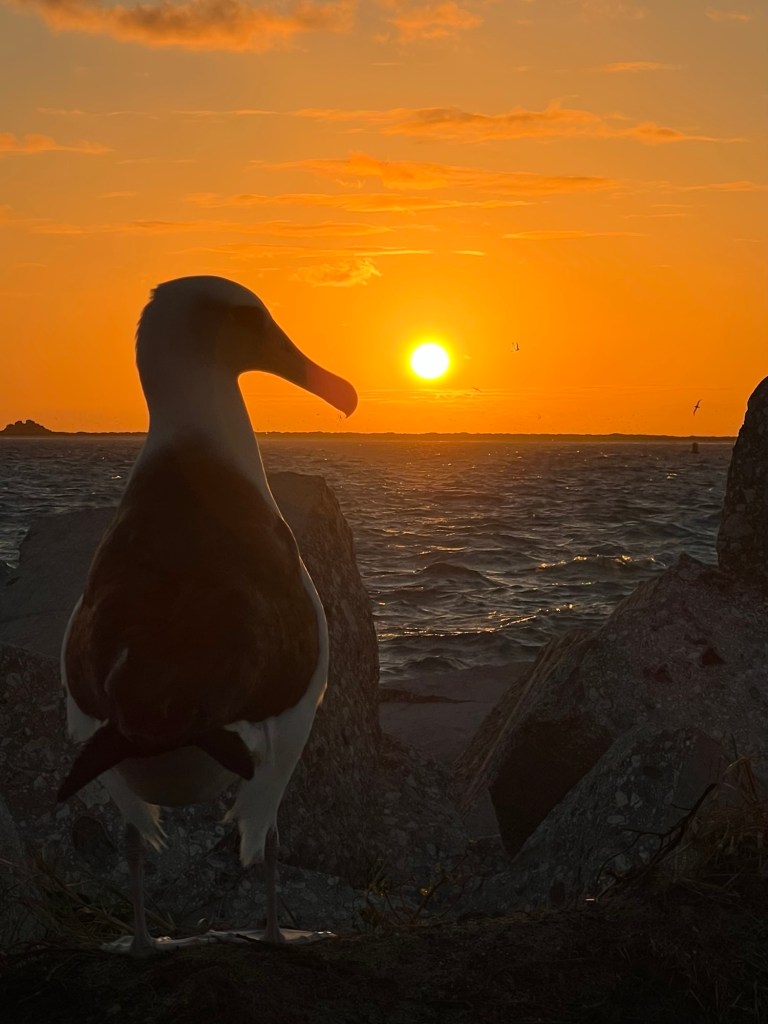
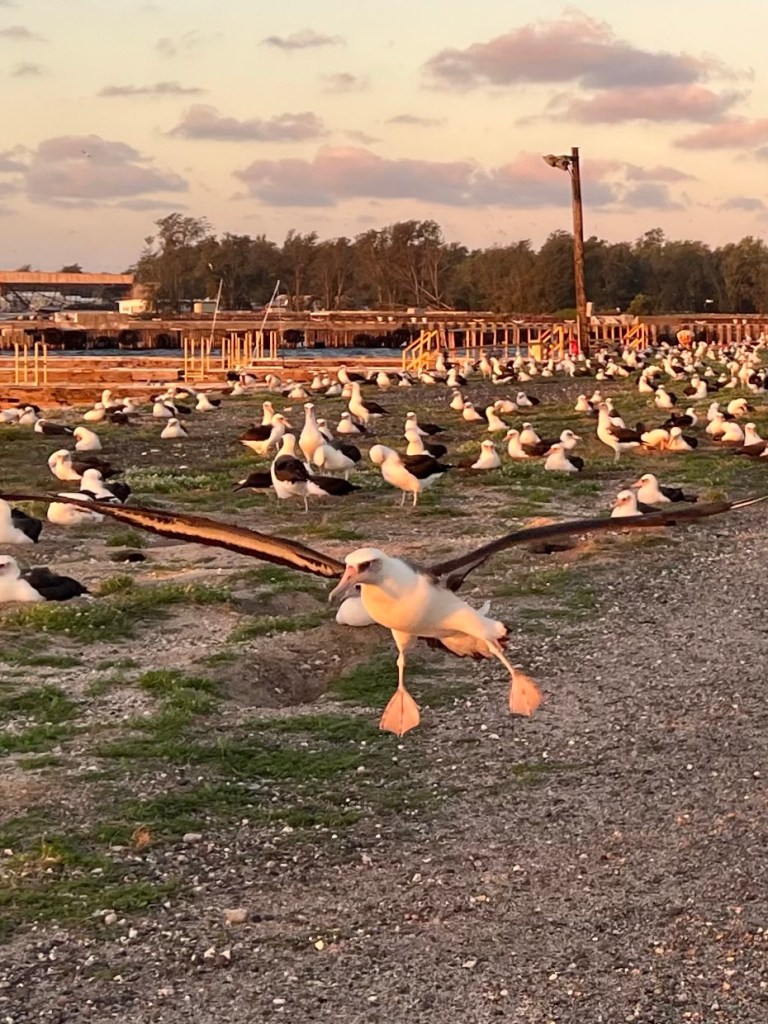
They’re popping up all over, first the Blackfooted chicks, closely followed by the Laysan. It’s a treat to see so many hatching before we leave next Tuesday (Jan 28).

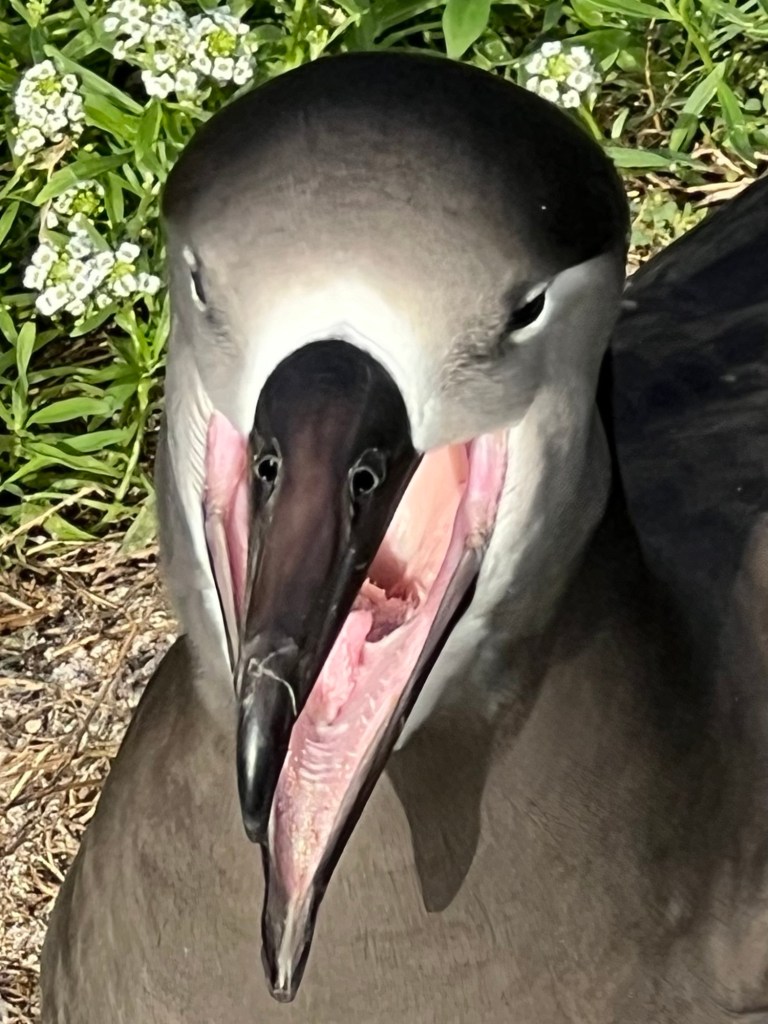
At this age the chicks, like many new borns, are simply mini eating and pooping machines. The parents seem loving and proud of their offspring as they preen and chat with them.

Even if the chick isn’t visible, there’s still evidence of their existence, with remnants of egg shell near the nest and the widespread wings of a protective parent.

The Count is Pau!

Our work is done…at least the actual counting part is.

After a no-count morning yesterday due to high winds and the fact that our remaining two sectors included some wooded areas, I was less than confident that we could get both started and completed in just an afternoon. However, our two teams rocked it.

Thanks to the FWS efforts that have cleared trails in a very heavy naupaka sector, one team was done in record time and was able to ‘hop next door’ to our sector to help us finish, despite the weather gods playing with us. Many of us started in rain gear (just in case) but, as the temperature rose during the afternoon, layers were stripped. Then, just as we were all on our last pass, we were dumped on by torrential rain and chilling winds. Both teams were in sight of one another, and both clicked our last nests at 3:55pm!👏🎉

So now we prepare to bid a fond farewell to six of our crew who leave on Thursday night’s plane to Honolulu, though there’s still plenty of work to occupy the rest of us who will be leftovers for another two weeks.

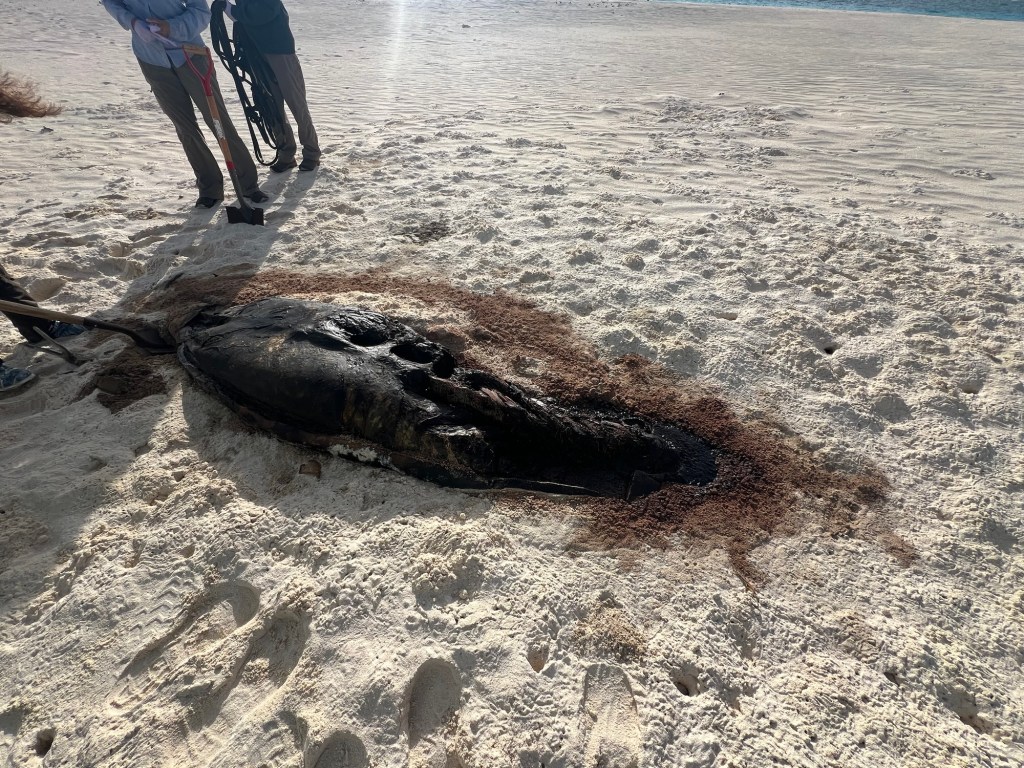
Today, we switched gears and joined FWS to move a whale carcass that had washed up a few days ago.

The next task was preparing for the upcoming Laysan duck banding, so we helped carry equipment to ‘Brackish’.

Laysan ducks at ‘Brackish’

After lunch, most of our team spent the afternoon helping FWS with seed planting in the greenhouse, while we leaders started our post-count tasks: testing clickers, identifying burrow shoes needing repairs, doing an inventory of remaining paint and other supplies.

Today the weather gods took pity on us; it was a glorious afternoon, and we had just enough time before dinner to enjoy a bike ride to Rusty Bucket, one of my favorite areas of the island, which holds special memories from past years.

Eastern Island

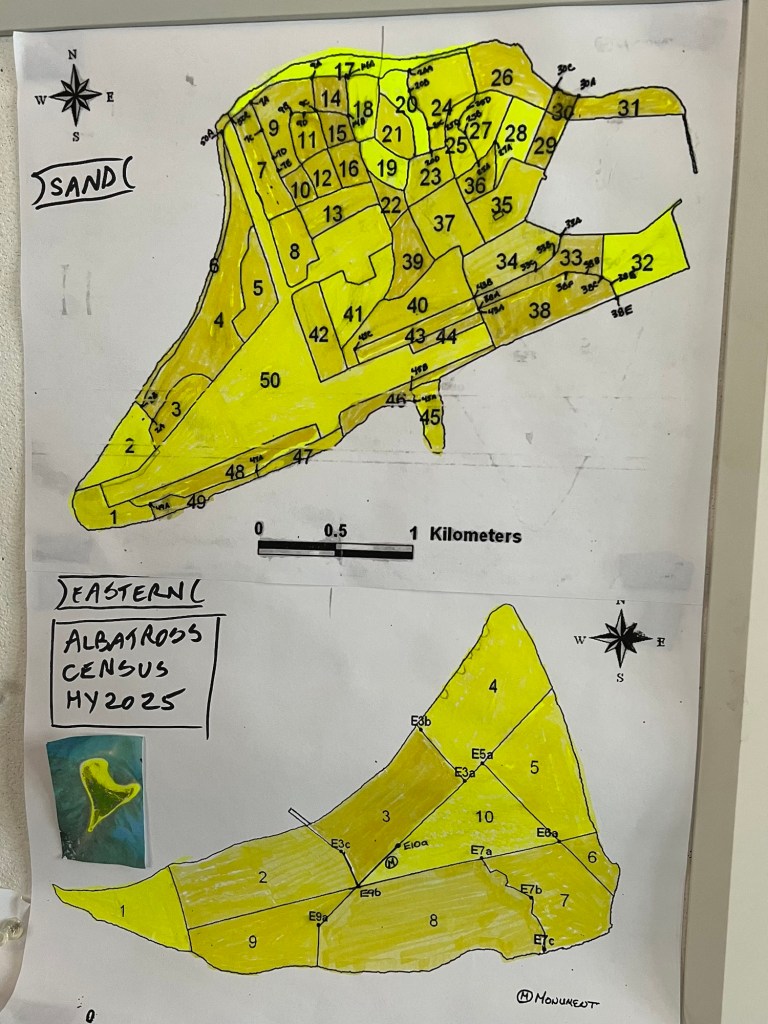
Eastern Island—creatively named, as it lies on the East side of the Atoll😉— is a boat ride from Sand Island where we all live. So, the weather and ocean conditions have to cooperate for us to get there to count.

Pihemanu/Midway Atoll

Eastern Island is something over a mile long and over 1/2 mile wide at its widest point. For our count purposes, it’s divided into 10 sectors, and most of them are humungous! This is my 5th count and I still can’t get my head around how much larger Eastern is than it appears on the map.

The first sector we counted this year took eight of us a full day (well, to be precise, seven for the first half of the morning, then eight). Oh, but what a glorious day it was!

Heading to Eastern early am

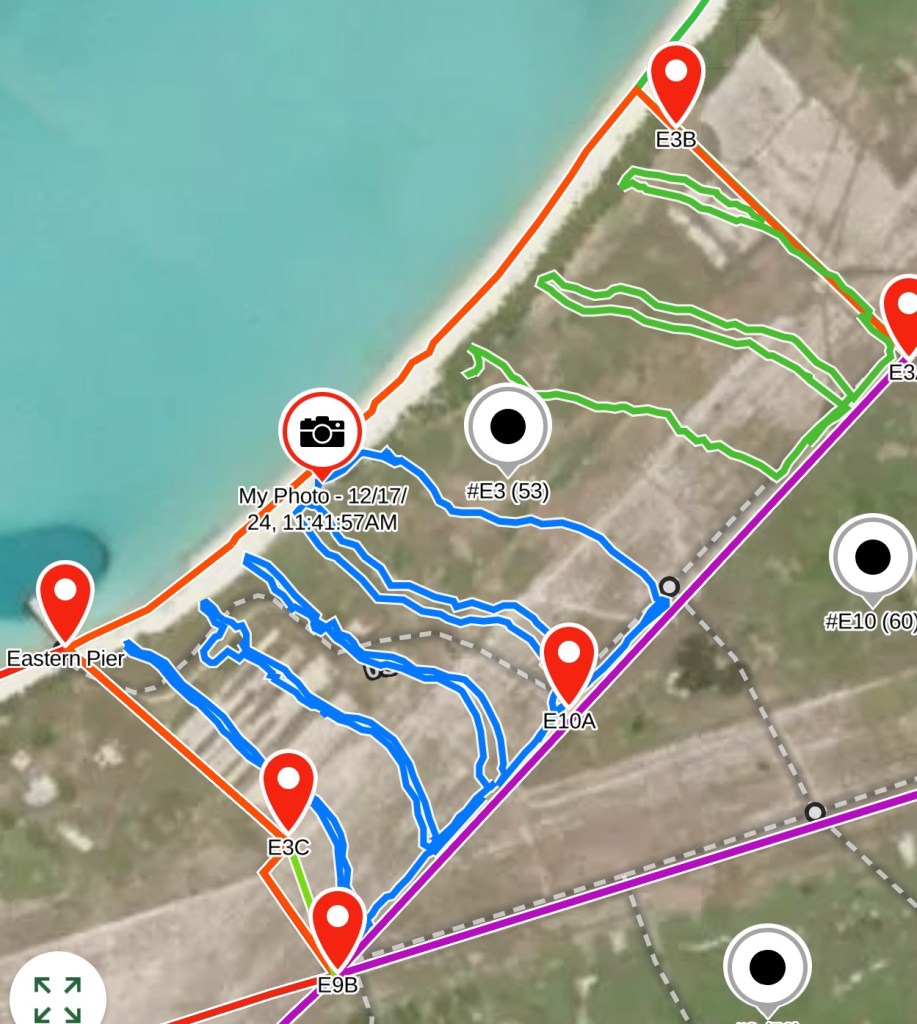
Sector E3 is a large (very very large) rectangle, outlined in blue in the image. Most of it is bordered to the north by a thick band of naupaka.

The most efficient way to count it is to send one person off to the naupaka to paint a line along the front edge, and count everything between it and the ocean, while the rest of the team transect the open area back and forth between the sector border (one of the old WW2 runways) and the painted line.

Here’s a image showing my individual transects (am: blue, pm: green) within the team. 3 hours in the morning, and another hour+ after lunch, followed by the long trudge back to the pier. You can see the tighter, more time-consuming track in the morning when we had one less counter (sometimes two less while one was deep in the naupaka) and also some trickier terrain to cover, such as extra pockets of naupaka bushes.

Thankfully, there are very few Bonin petrel burrows in that sector, so no need for burrow shoes, and we transected the sector mostly uninterrupted, apart from negotiating those smaller pockets of vegetation.

It’s not difficult to find an ideal picnic spot for a lunch break. The entire island is bounded by sandy beach, with a spectacular view of ocean and birds.

Lunch break
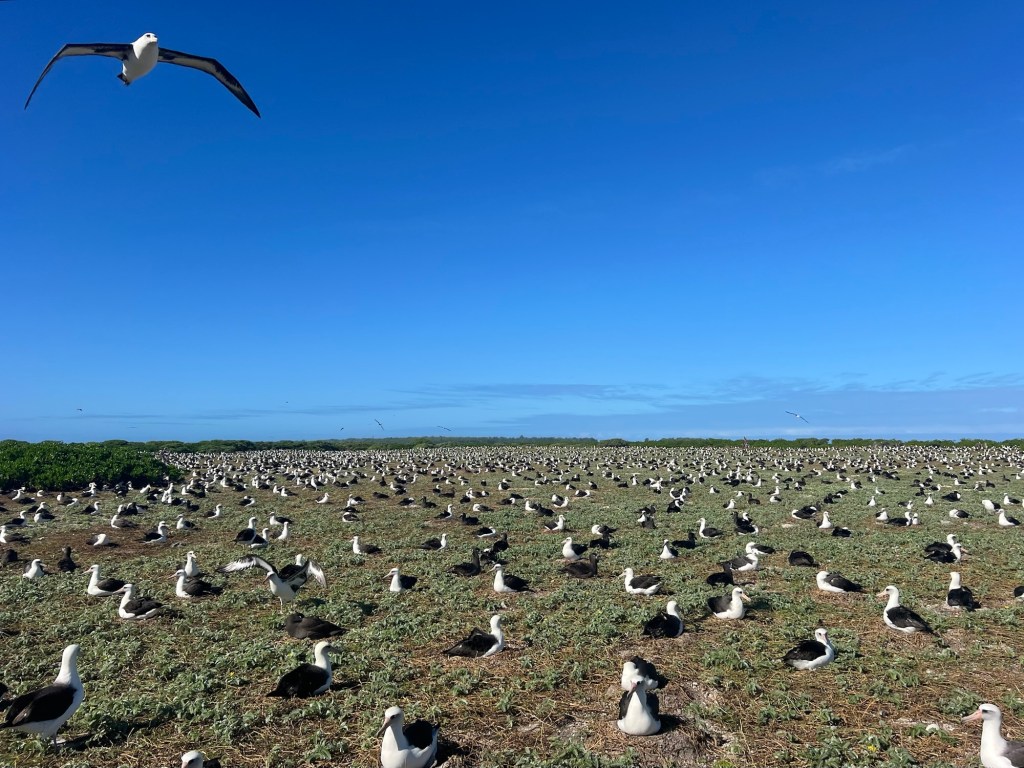
Typical Eastern Island landscape

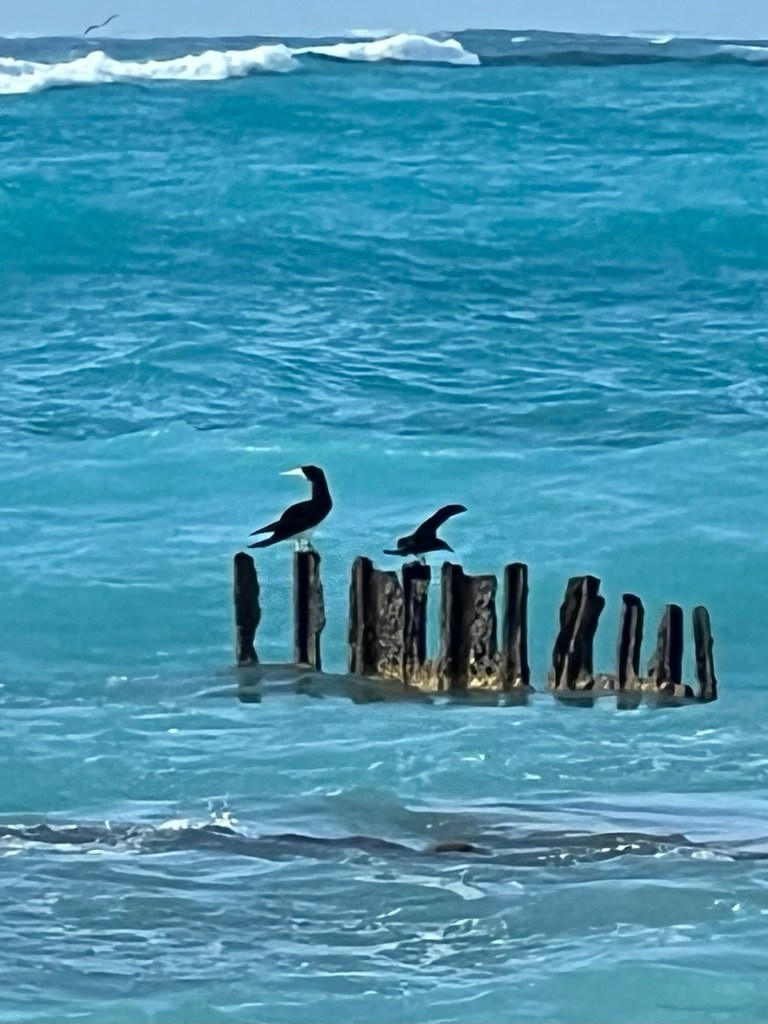
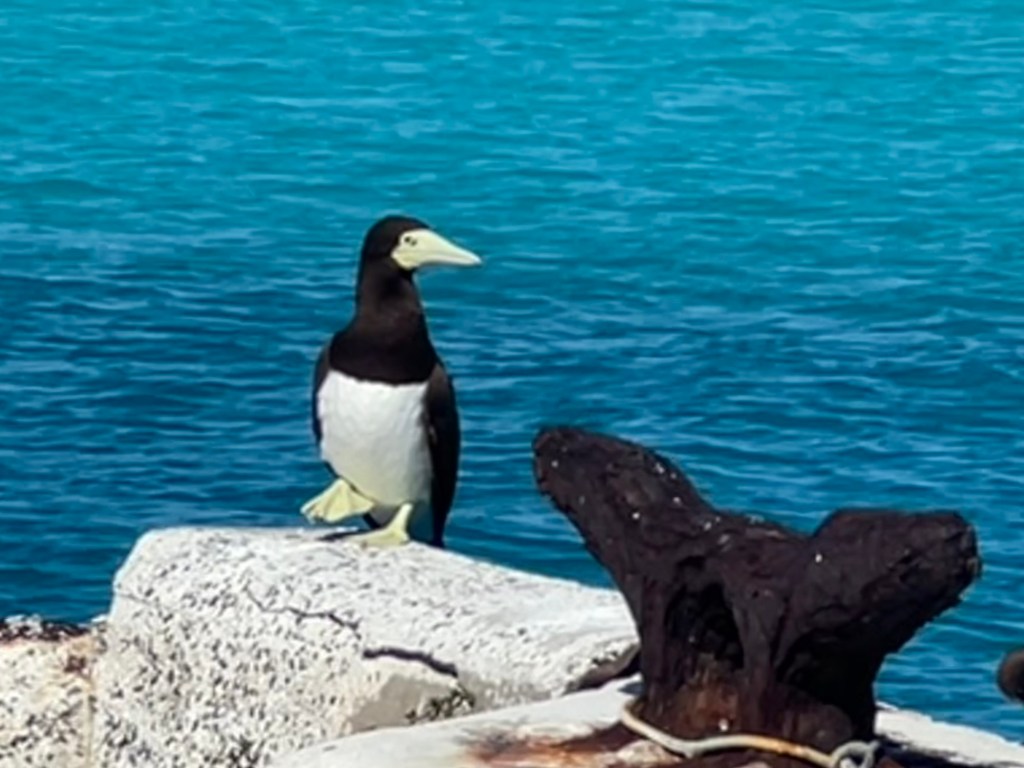
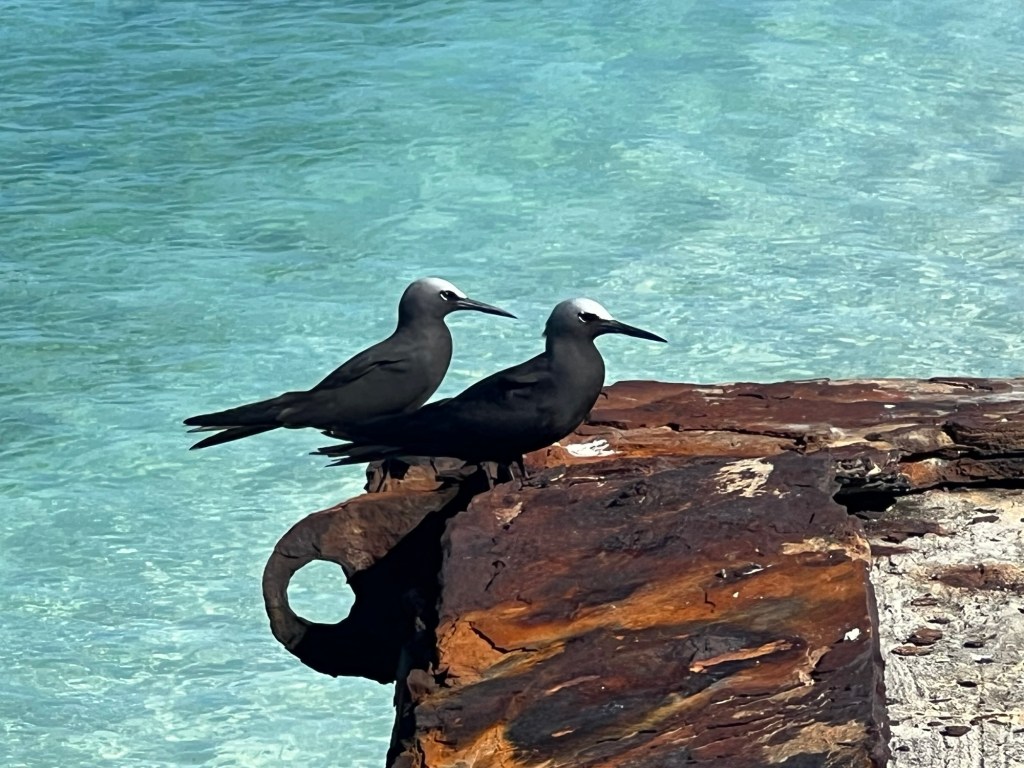
Back on the pier in the afternoon, waiting to be picked up by the landing craft, we were entertained by a brown booby cooling its feet, and a cute pair of brown noddies.

Brown booby
Brown noddy pair
Boarding landing craft for return to Sand Island

We returned to Eastern last Friday, this time with our full complement of 12 counters, plus again an additional FWS volunteer for the afternoon after he’d completed his own work. As shown in my track above, having just one extra body widens our line and can add many counted birds to each transect, substantially reducing the time needed for the sector, so we’re always grateful for the extra help.

If anything, Friday’s weather was even better for us, with a light breeze that reduced the temperature by a few degrees.

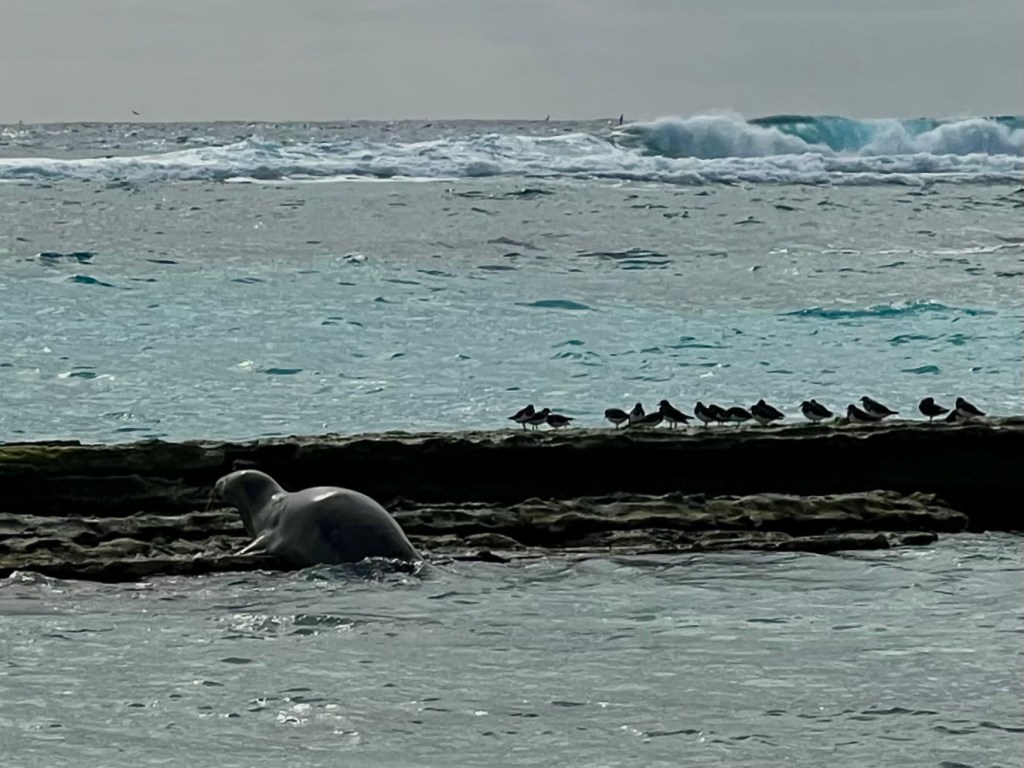
Every visit to Eastern is special, and worth all the effort we expend working our butts off on the count.😊 Friday also gave us a monk seal hauling out in front of us as we ate lunch on the south shore, a white tern awaiting our return to the pier, and a very playful pod of spinner dolphins escorting us on our way back to Sand Island.

Monk seal and ruddy turnstones
White tern
View from pier

Midway by Moonlight

We’re fortunate to have had a week of excellent weather, both for our counting efforts and to enjoy the Full Moon this weekend.

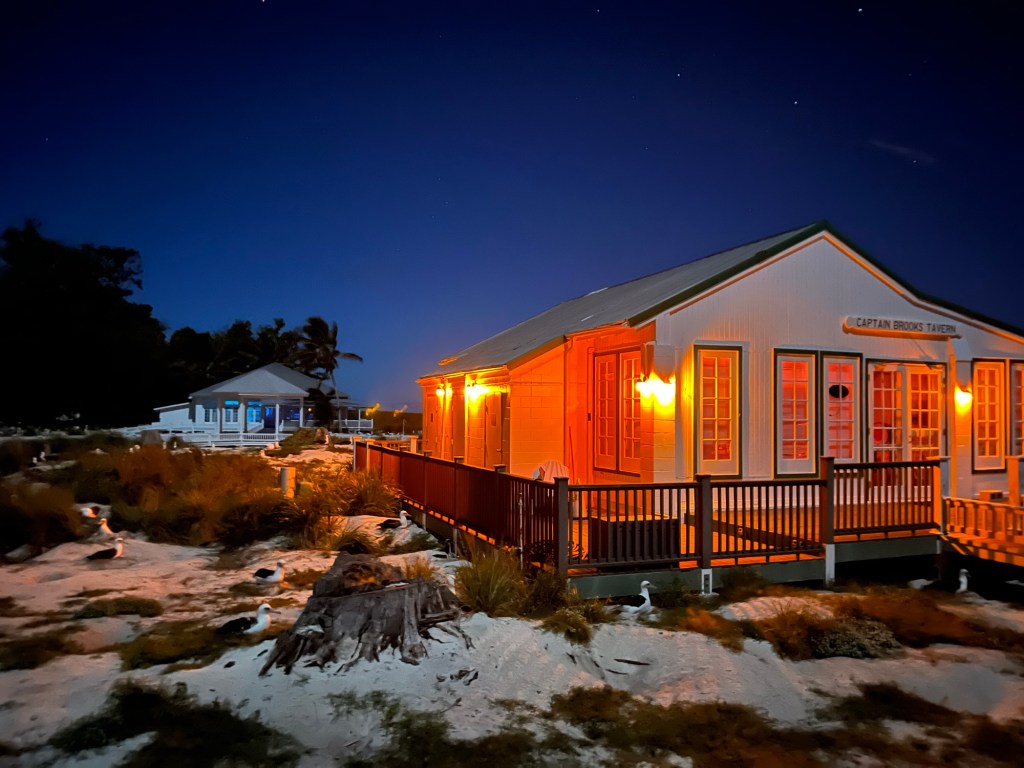
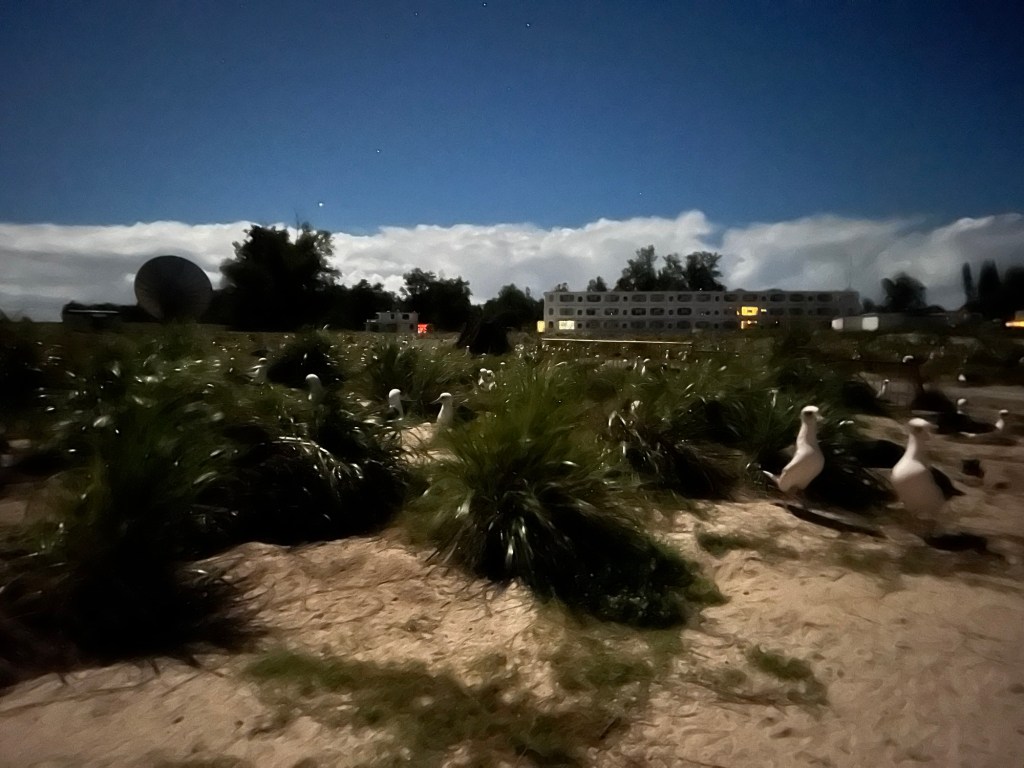
Friday was a movie night at Captain Brookes. One of the island firemen regularly shows a movie and it usually draws a gathering of 10 or 12. Walking home afterwards in bright moonlight was a treat, with the albatross whistling and clacking, while Bonin petrels patroled the skies and squawked on the ground around us as we walked.

Captain Brookes with Clipper House in the distance
Charlie Barracks in the distance

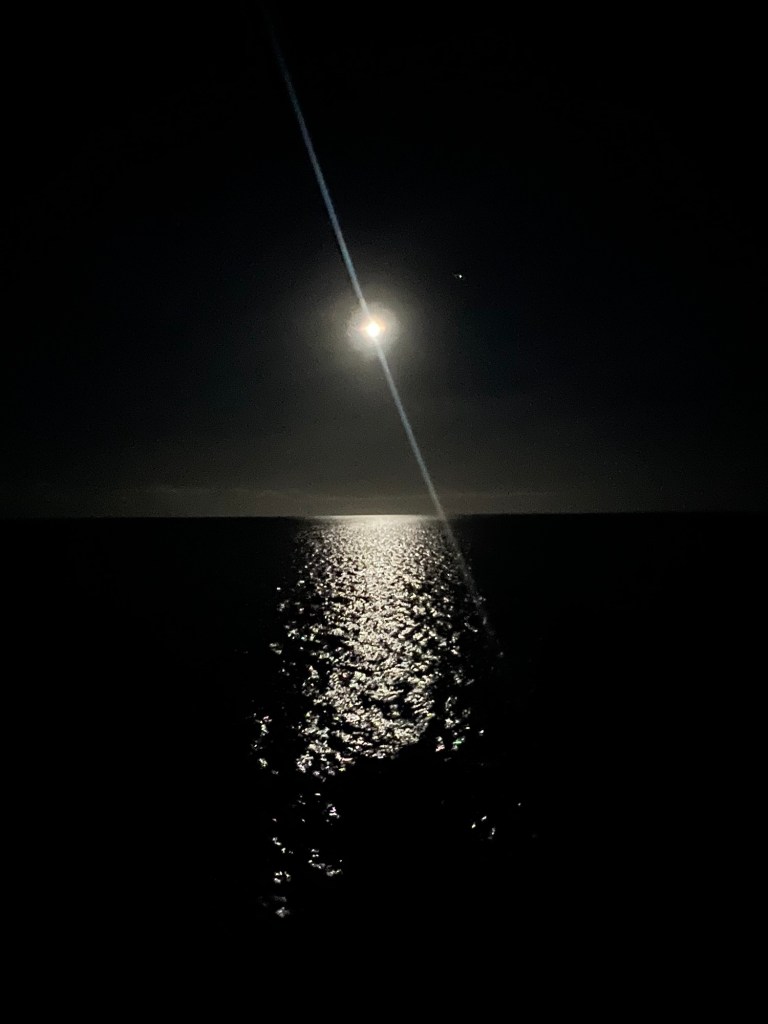
Last night (Saturday) I braved the swarm of Bonin petrels on my bike ride to Cargo Pier, to enjoy the Full Moon.

Cargo Pier & Turtle Beach by moonlight

I was surprised to have the pier to myself, a perfect time for quiet contemplation. I’m so grateful for another opportunity to experience this amazing tiny spot in the Universe.

Our girls are back in town

And so the world turns!

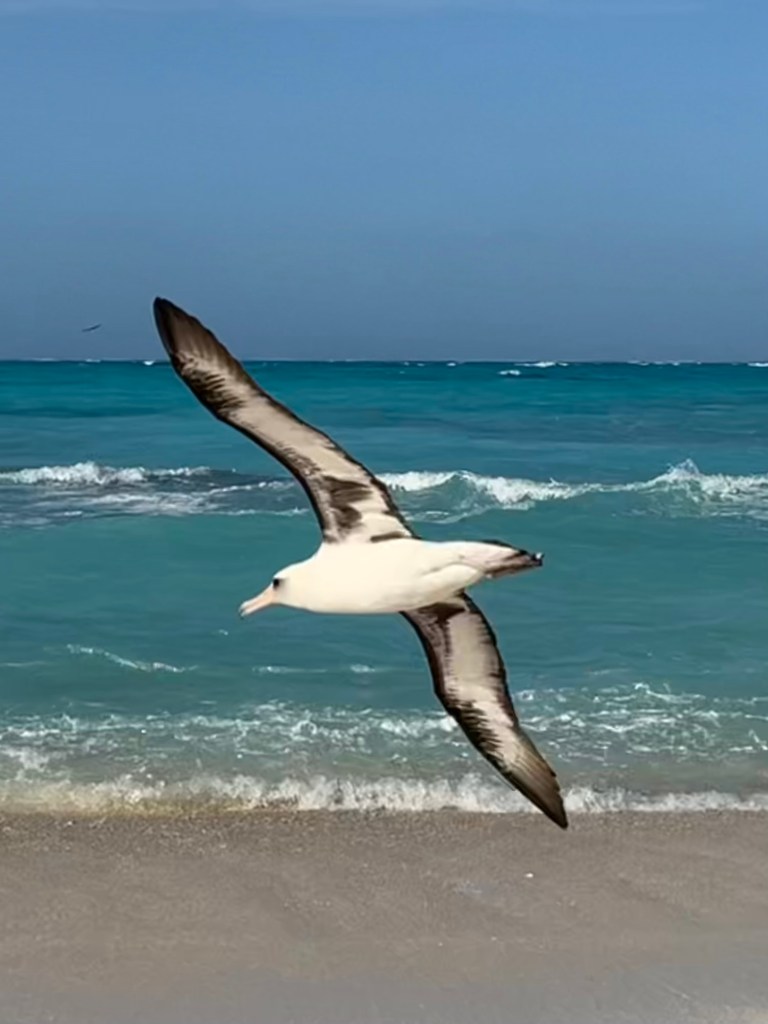
November is the month that the Laysan albatross return to Kauai to mate, nest, and raise their young…well, some of them will raise their young, while others, like our pair of females are more hopeful than successful.

Last year I posted the tale of our two. We were fascinated by their behaviors, since that was our first year in residence. This year we were delighted when they returned to our yard to try again. It’s a special day when the first albatross of the season is spotted in our neighborhood. This year the first one was about a week earlier than usual, November 4, but our two always seem to be among the later arrivals.

So it wasn’t until November 23 that 338 arrived back in town after spending the summer months somewhere off the coast of Alaska. 643 was just a few days behind her, arriving November 26. They spent the next day close together, clacking, whistling happily, and preening one another. They also scoped out some potential nesting sites.

2012-nestThey seemed no more savvy about their nest location than before! Last year they ended up at a low point of our front yard to the right of the garage (after 338 followed one of the eggs that had rolled down a slope and ended up just a few feet from the driveway).

This year they chose an equally unsuitable spot…deliberately, it seems!

338-by-poinciana

We were optimistic when 338 initially began hanging around on our front yard near our huge Poinciana tree. We hoped she’d snuggle into the side of the tree, on a flat patch, where the long established roots might provide a safe haven for her and her egg…

… but, no… perhaps she was influenced by 643, who knows!
338-and-643-Nov-2013

Together, they moved downhill, closer to the house (on the left hand side of the drive this time), and seemed intent on squatting in what we considered to be the least appropriate spot of the yard, where, during winter downpours, the storm waters gush off the driveway. Not the most comfortable spot to set up the family home.

Once an albatross pair have met up in November and (in the case of a heterosexual couple) have enjoyed their roll in the hay, they both fly off again for a week or so, for their albatross equivalent of a baby-moon.

IMG_9508

So, while our girls were away, Steve (with the blessing of our local albatross guru, Cathy) laid a tarp and a chair barrier, as a form of gentle persuasion (for their own good!) to find a more suitable location.
IMG_9460

However, bird-brained or doggedly persistent, whichever, when 338 returned on December 3 she was pretty determined to find a way back to that same spot.

…even if it meant sitting on a chair leg!

IMG_9466Eventually, though, she grudgingly conceded defeat…sort of! She settled just a couple of feet away on slightly(!) higher ground but even closer to the drive than last year and, sometime overnight, laid her egg**.

643 showed up the following day, swapped with 338, and promptly laid her own egg.

As is fairly typical for all-female partnerships, since they can  successfully incubate only one egg, she forced one of the eggs to the side, giving Cathy the opportunity to remove the abandoned cold egg.

IMG_9505So now 643 has settled down to take the first long shift while 338 is away at sea, feeding and building up her strength for the second incubation stretch.

Sadly, yet again this year, there is no plan to provide PMRF adoptive eggs to the Princeville nesters, so our two girls will eventually give up hoping for a chick and, sometime early year, will leave the egg and us for their Summer in Alaska.

…and so the world turns!

** Having reread my blog post from last year, I was interested to note the role-reversal: last season, 643 was the first to return and lay her egg, on December 3, followed by 338 the following day. I’ve no idea if rotating the first arrival is a regular pattern…I guess I’ll need a few more years’ research to see any pattern emerge! 🙂
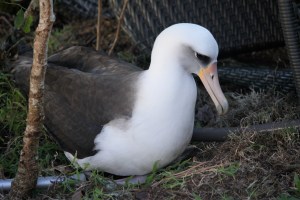
Even an albatross can have a bad hair day

The albatross return each year to breed on Kauai. Since they are exceedingly ungainly on land (hence their nickname of gooney birds) and require an extensive runway for landings and take-offs, a few roads in our area close to the bluff are prime nesting sites.

The adults return in November. Courtships, egg-laying, hatching, and chick-rearing follow. Eventually the parents leave the almost full grown chicks, and by mid-to-late July all the youngsters have fledged. All, it seems, except one this year.

Albatross bad hair dayThis one chick is evidently a late-bloomer, or just plain lazy, but I am delighted he hung around long enough for our arrival this week. I’ve had the pleasure of watching him grow during my previous visits in February and again in April, so it’s a treat to witness the final stage in this year’s cycle.

As the chicks lose their baby fluff and gain their sleek adult plumage, each has its own highly amusing pattern of ‘hair’ loss!