Kuaihelani New Arrivals

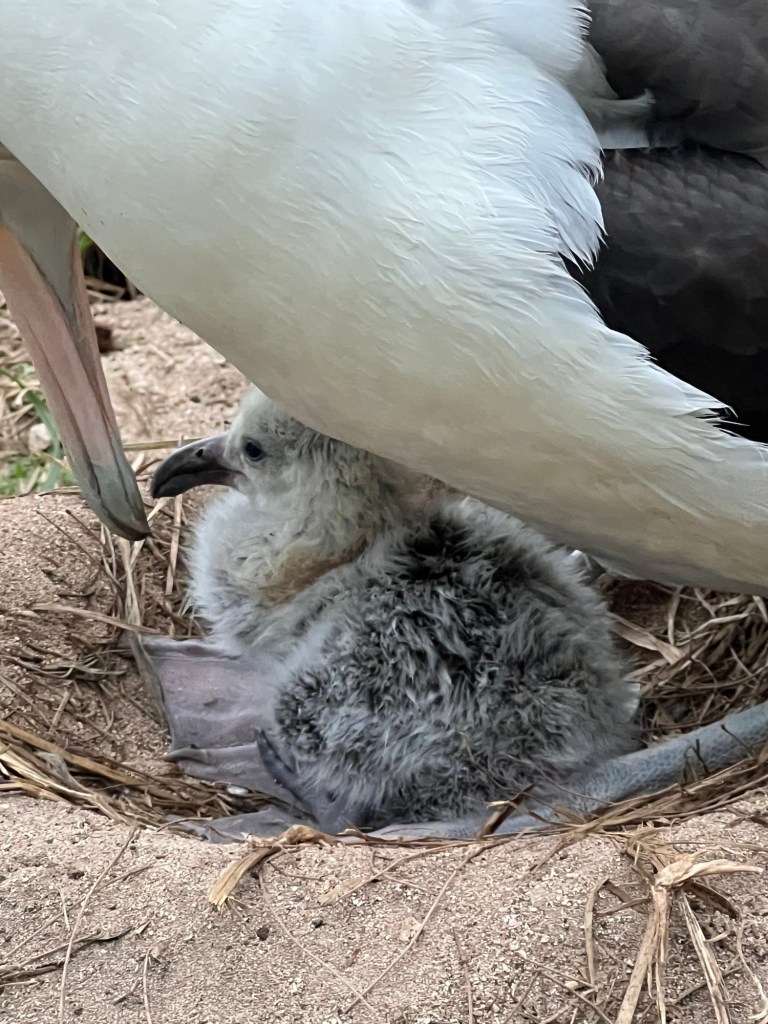
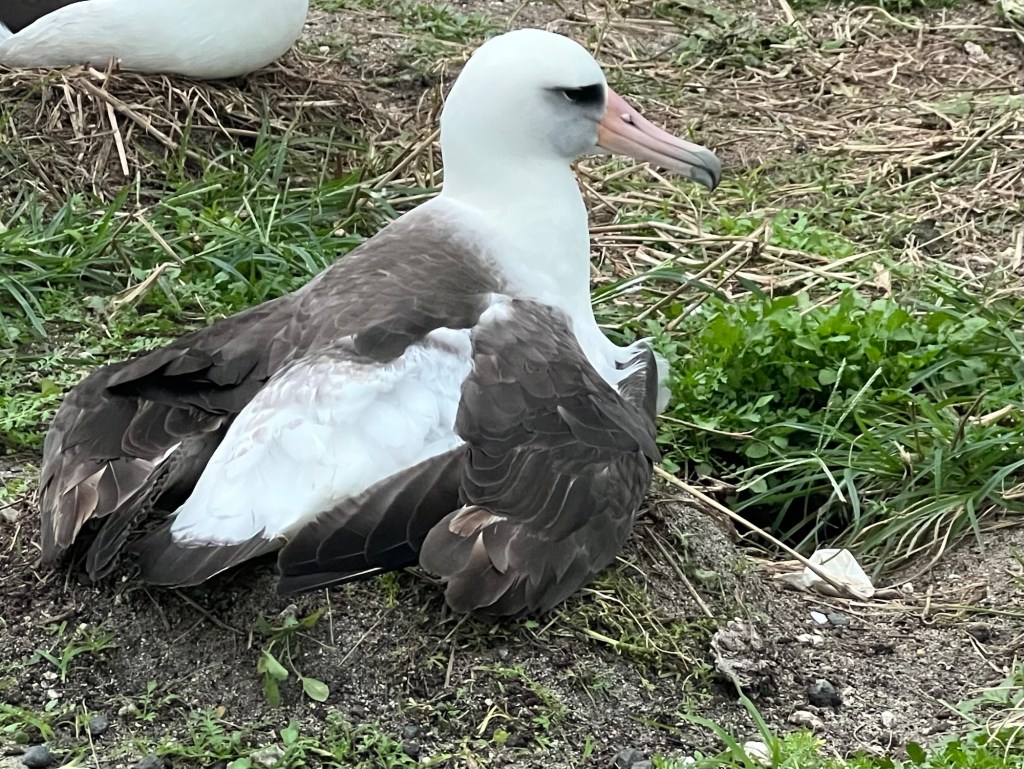
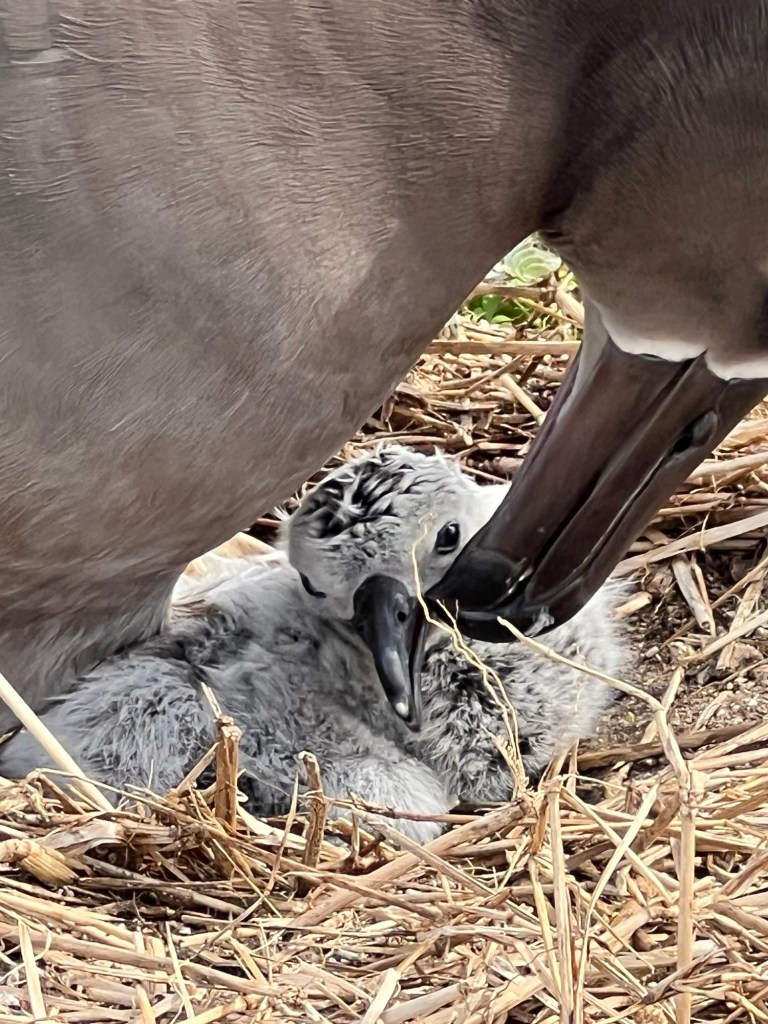
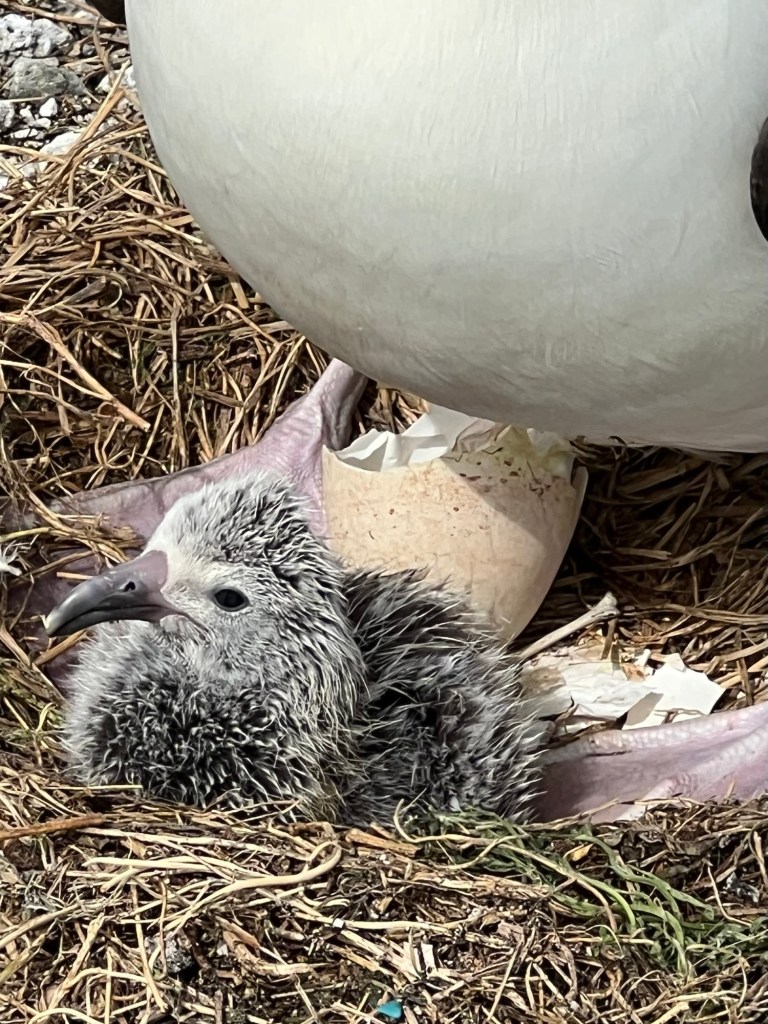
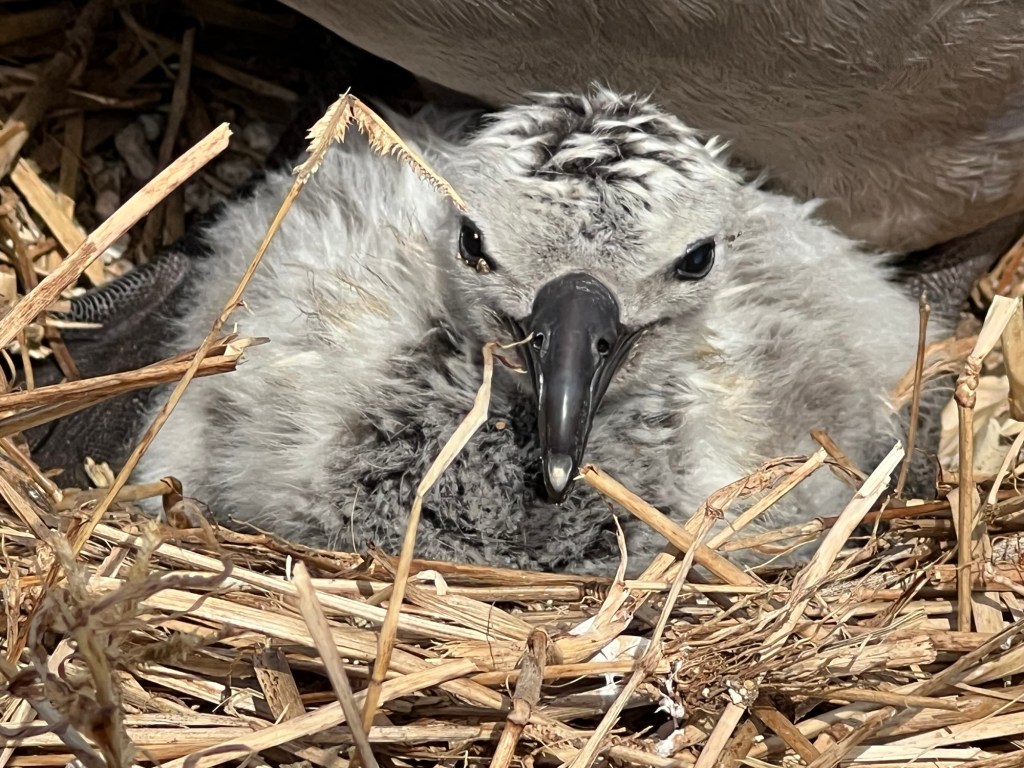
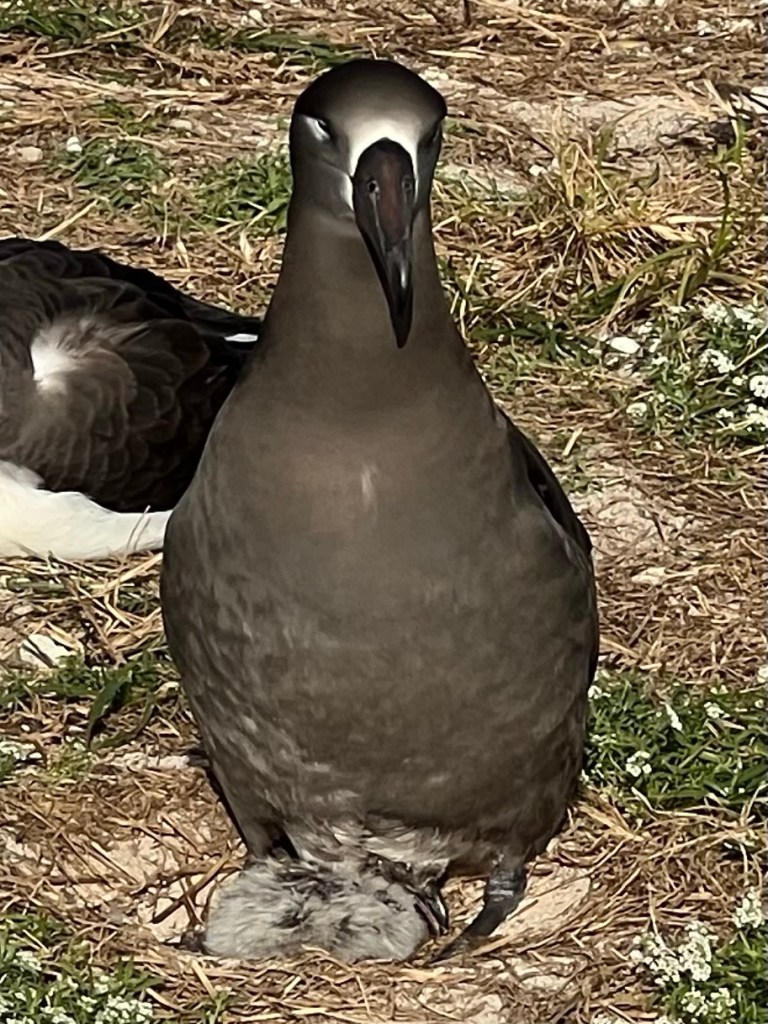
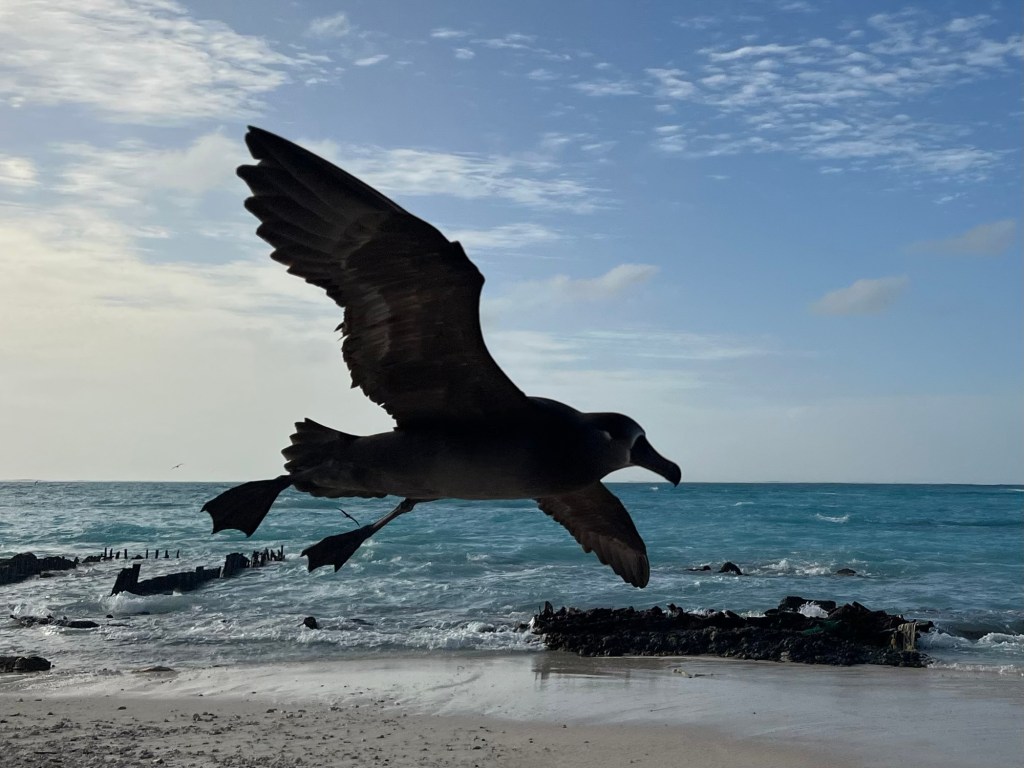
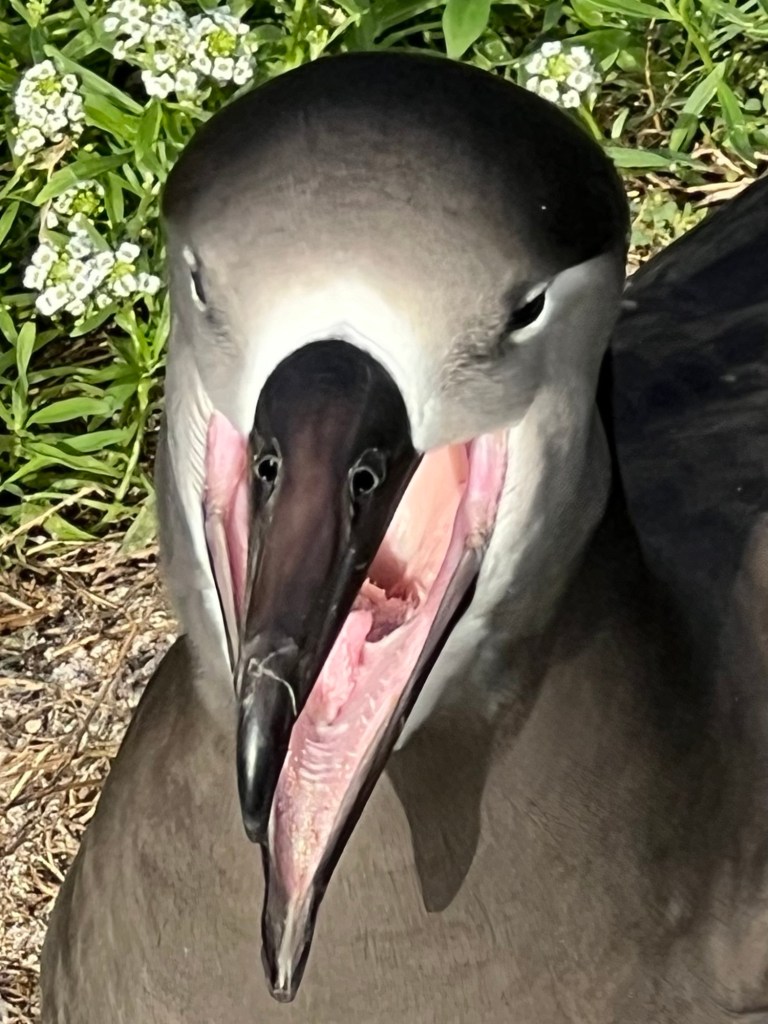
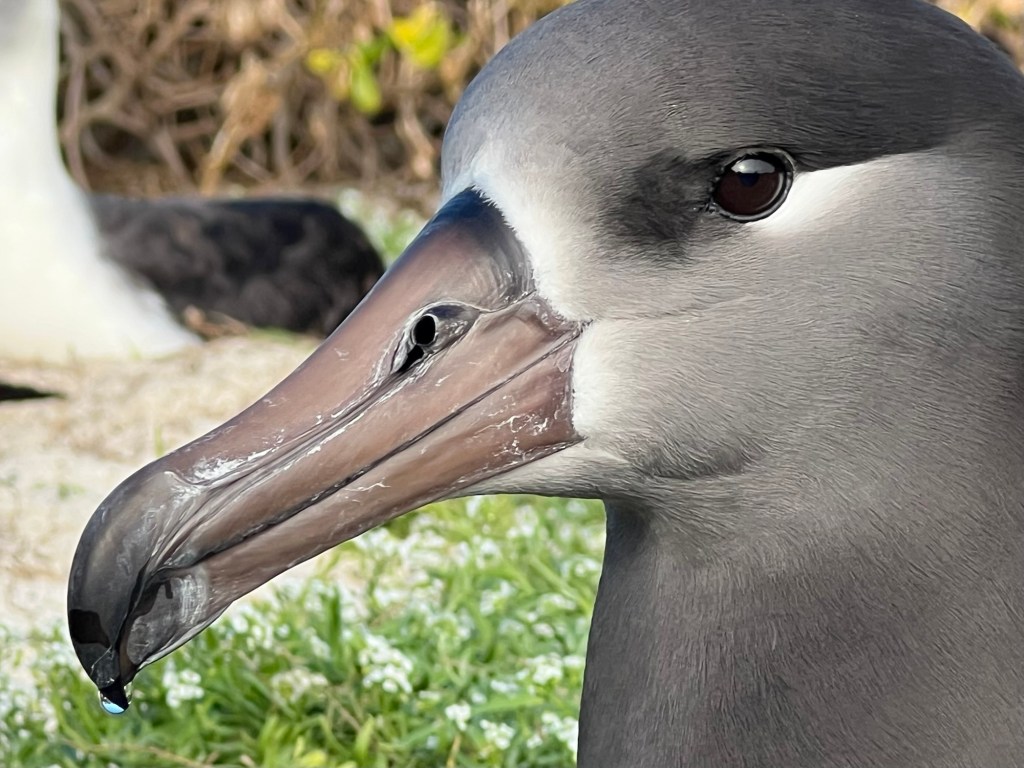
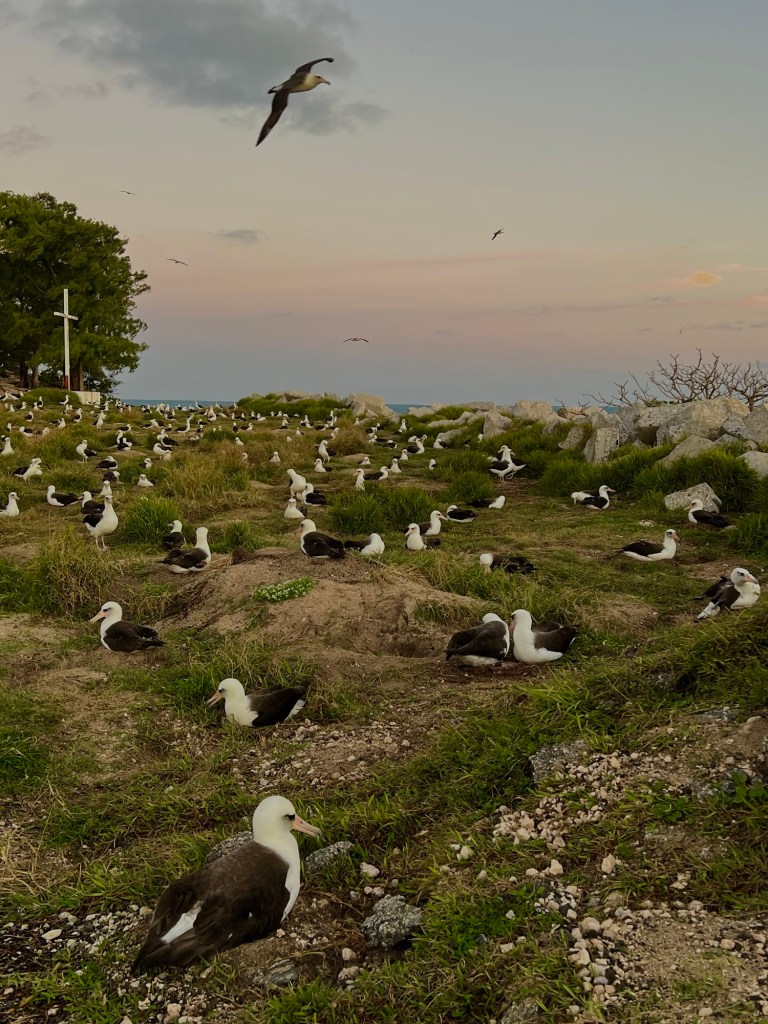
They’re popping up all over, first the Blackfooted chicks, closely followed by the Laysan. It’s a treat to see so many hatching before we leave next Tuesday (Jan 28).

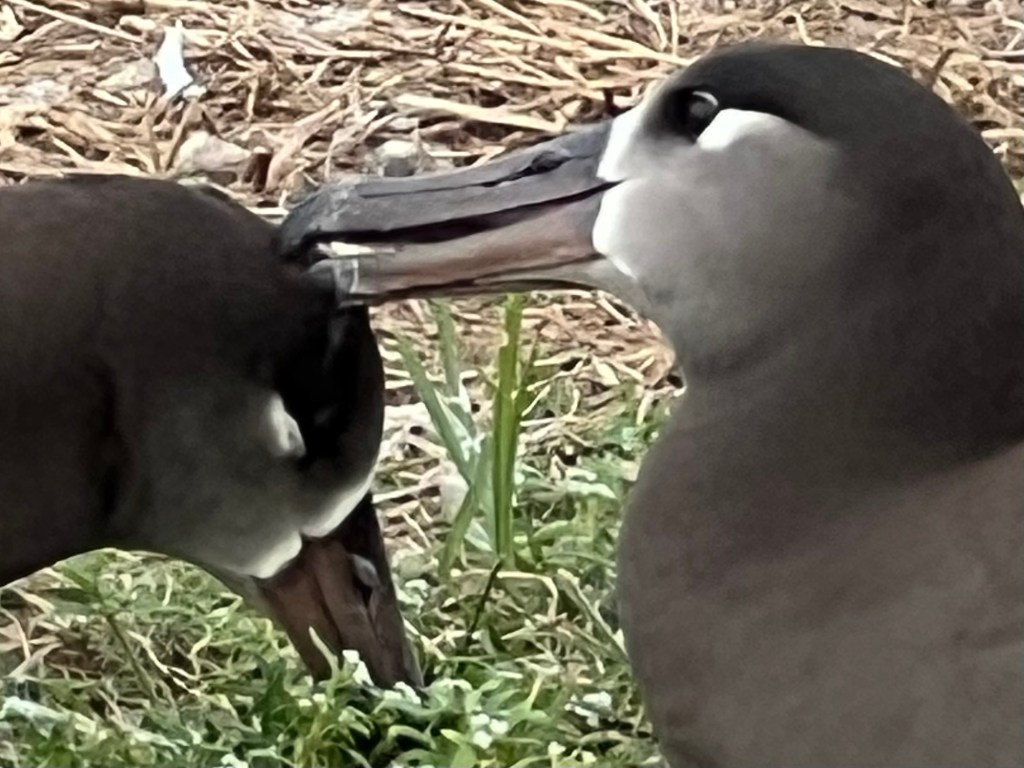
At this age the chicks, like many new borns, are simply mini eating and pooping machines. The parents seem loving and proud of their offspring as they preen and chat with them.

Even if the chick isn’t visible, there’s still evidence of their existence, with remnants of egg shell near the nest and the widespread wings of a protective parent.

First Chick of the Season

We saw our first chick today…and it was so fortunate, as half our crew flew out on tonight’s plane, so they were particularly delighted to see a chick before they left the island.

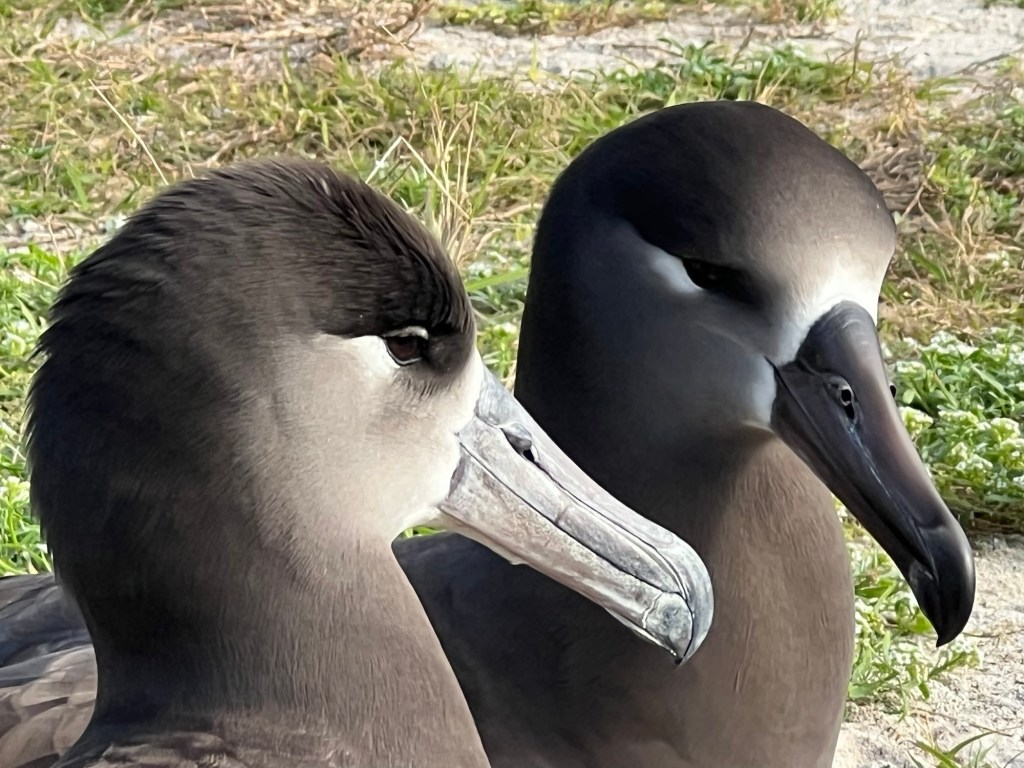
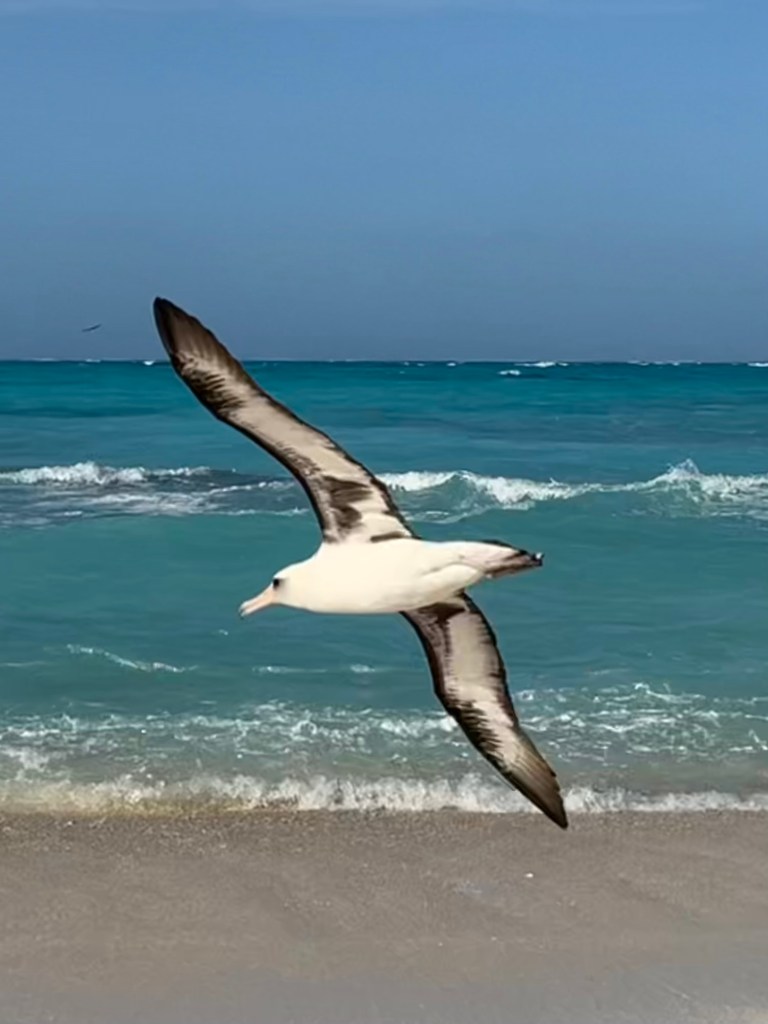
The Blackfooted albatross (BFAL) arrive just a few days before the Laysan albatross (LAAL), so it’s typically a BFAL chick that’s the first to be seen.

The chick was spotted by one of our volunteers who was biking to check out another egg that had been seen pipping earlier today. Apparently as she caught sight of the tiny gray fluffball she excitedly came to a screeching halt, as evidenced by the long skid mark!🤣

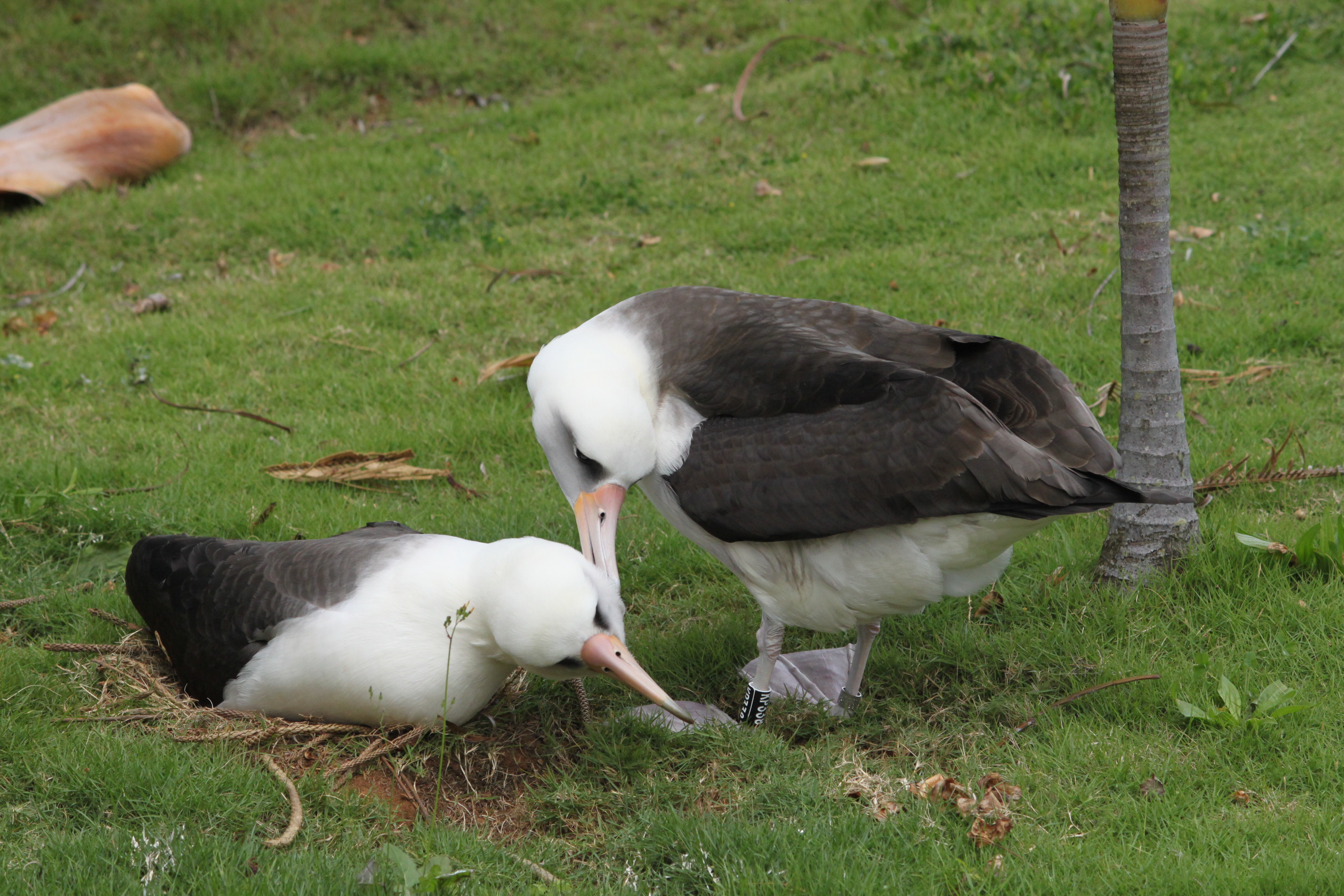
Both parents were together, gently preening one another and the tiny chick. who was likely less than a day old.

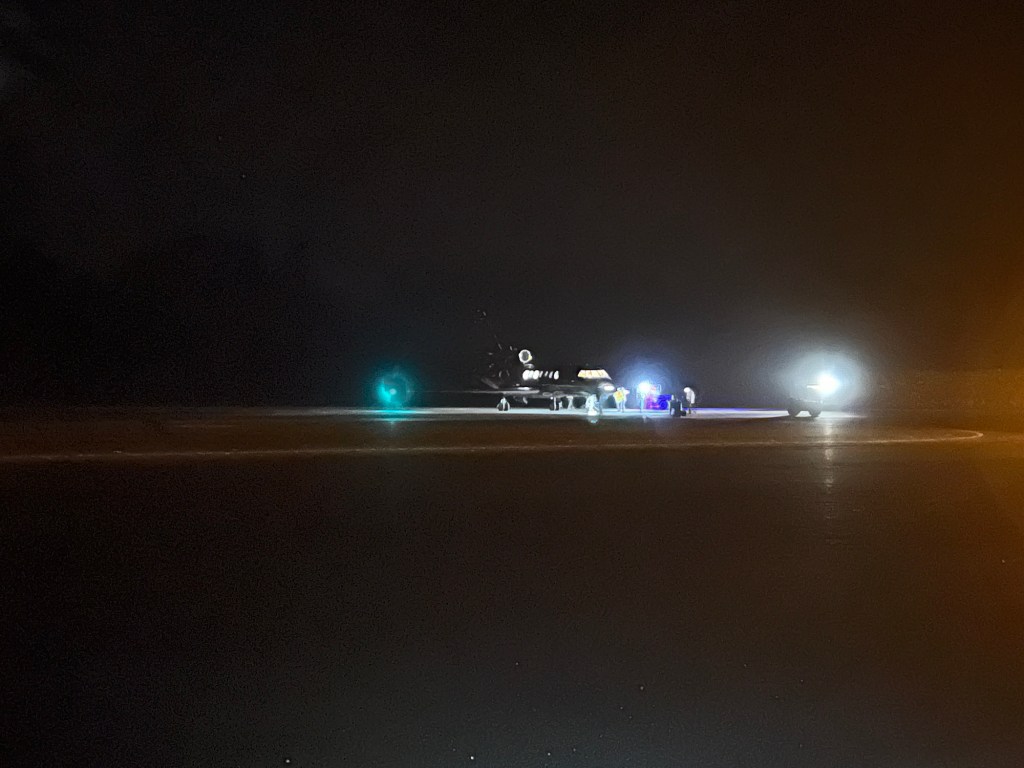
After dinner we gathered at Charlie barracks for the evening send-off, and some quite emotional farewells after such a great count; then a few of us followed them out to the airport apron (as close as we were allowed) around 9pm, and watched til the plane disappeared in the night sky.

Safe travels to them, and a hui hou!

The Count is Pau!

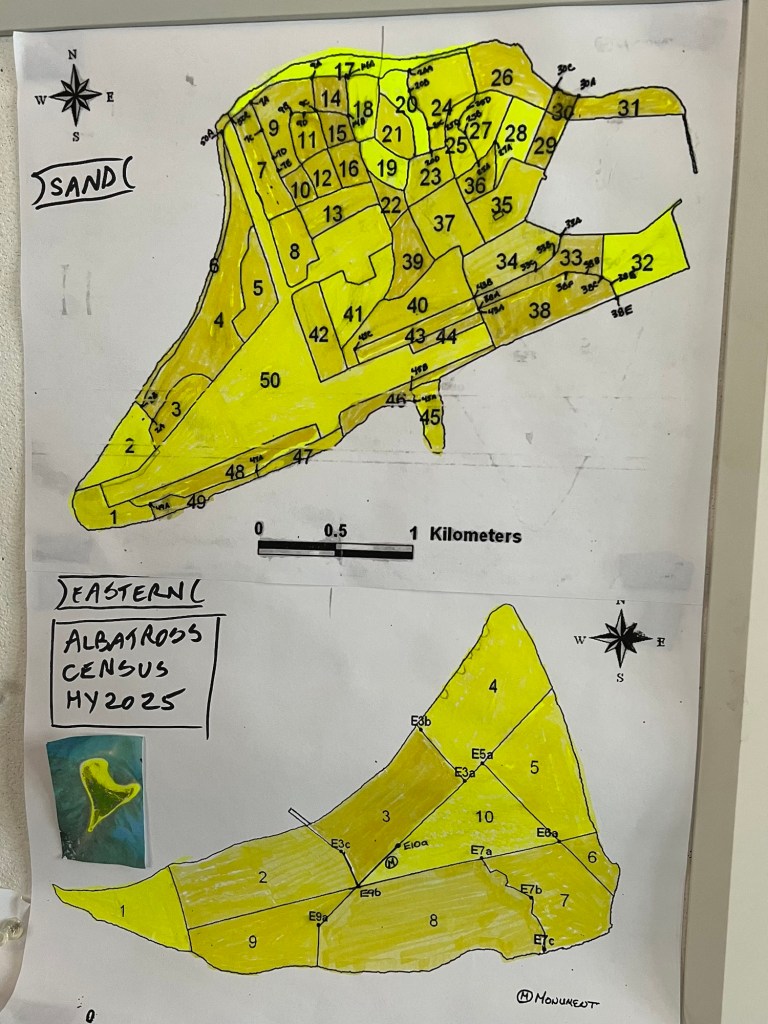
Our work is done…at least the actual counting part is.

After a no-count morning yesterday due to high winds and the fact that our remaining two sectors included some wooded areas, I was less than confident that we could get both started and completed in just an afternoon. However, our two teams rocked it.

Thanks to the FWS efforts that have cleared trails in a very heavy naupaka sector, one team was done in record time and was able to ‘hop next door’ to our sector to help us finish, despite the weather gods playing with us. Many of us started in rain gear (just in case) but, as the temperature rose during the afternoon, layers were stripped. Then, just as we were all on our last pass, we were dumped on by torrential rain and chilling winds. Both teams were in sight of one another, and both clicked our last nests at 3:55pm!👏🎉

So now we prepare to bid a fond farewell to six of our crew who leave on Thursday night’s plane to Honolulu, though there’s still plenty of work to occupy the rest of us who will be leftovers for another two weeks.

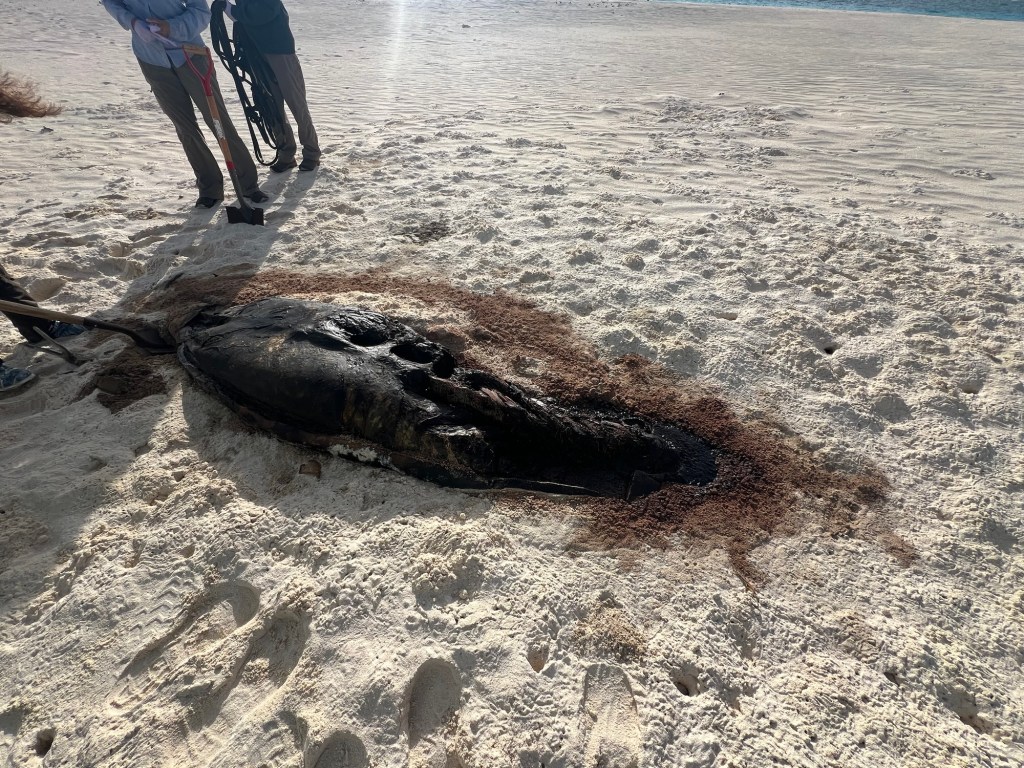
Today, we switched gears and joined FWS to move a whale carcass that had washed up a few days ago.

The next task was preparing for the upcoming Laysan duck banding, so we helped carry equipment to ‘Brackish’.

Laysan ducks at ‘Brackish’

After lunch, most of our team spent the afternoon helping FWS with seed planting in the greenhouse, while we leaders started our post-count tasks: testing clickers, identifying burrow shoes needing repairs, doing an inventory of remaining paint and other supplies.

Today the weather gods took pity on us; it was a glorious afternoon, and we had just enough time before dinner to enjoy a bike ride to Rusty Bucket, one of my favorite areas of the island, which holds special memories from past years.

Warm Welcomes

There is nothing like being welcomed with open arms and huge grins after a two year absence!

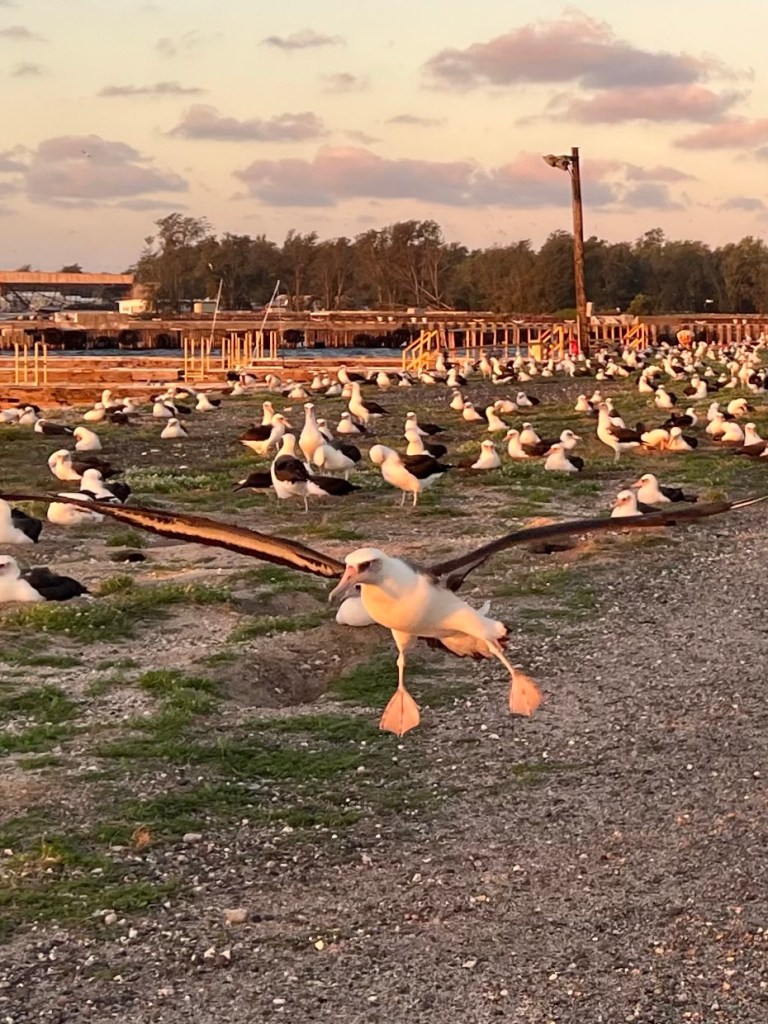
We finally touched down around 10:30pm Wednesday night, firstly to the welcome of a familiar white line of albatross lining the taxiway, and next to staff as we exited the plane, then finally to more staff and residents warmly greeting us at Charlie Barracks.

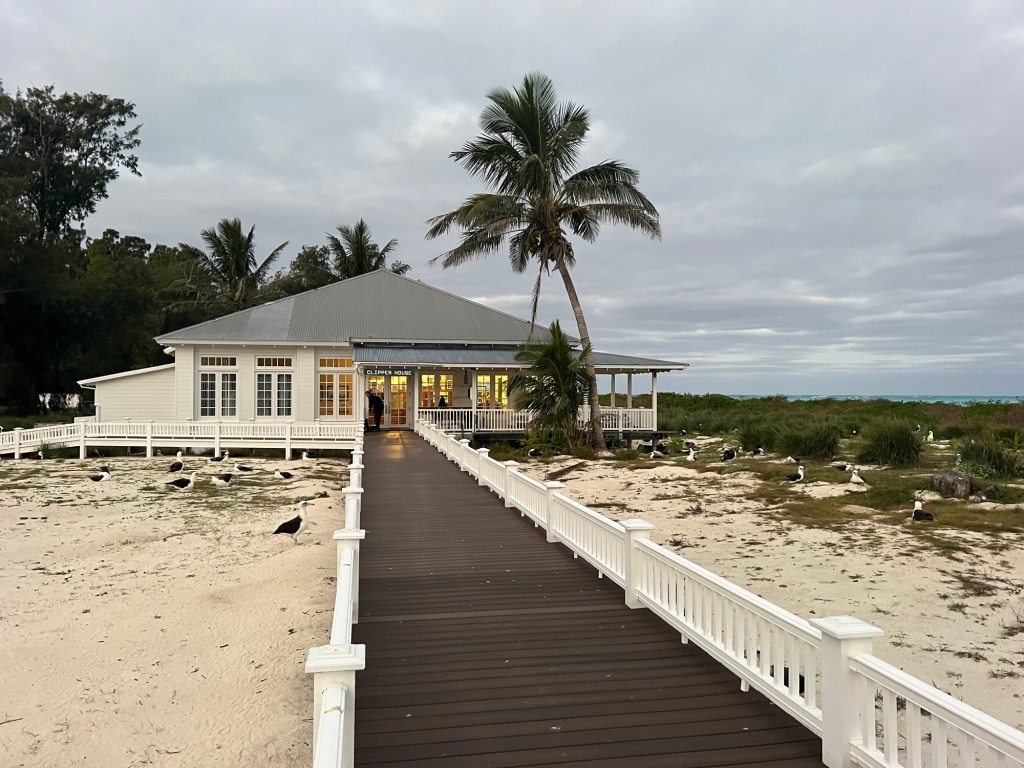
Thursday morning brought more hugs and smiles at Clipper House (our ‘restaurant’) especially from Pong and Kid, the marvelous Thai chefs.

Clipper House
The walk from breakfast back to our house

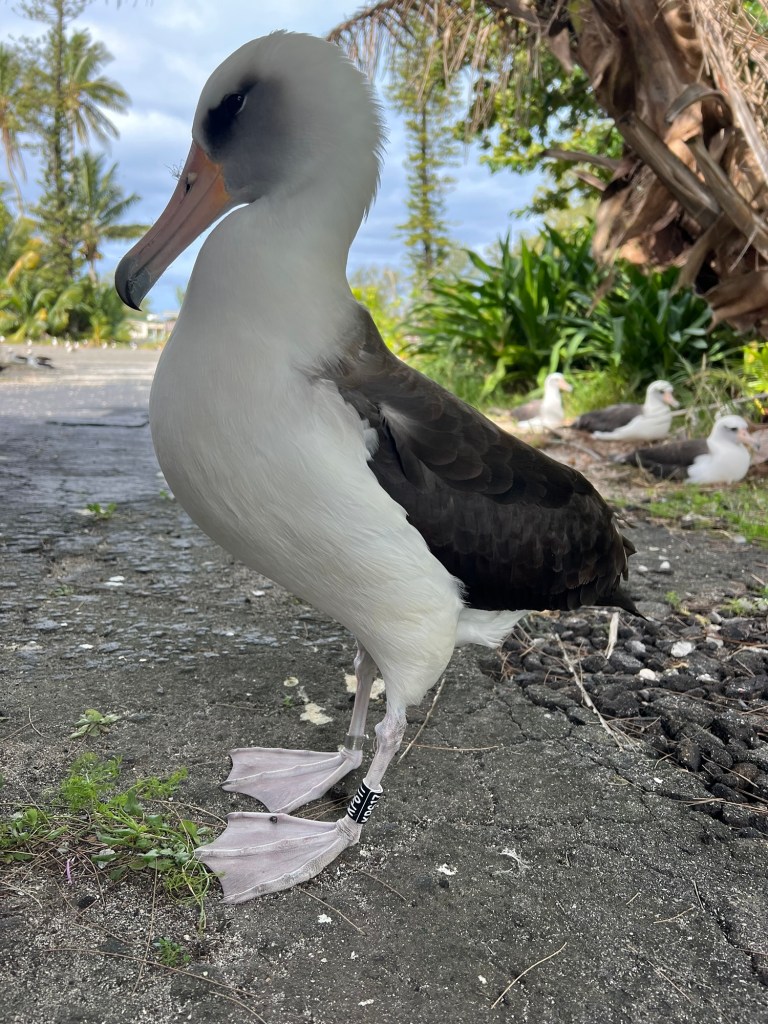
A surprise greeting as we opened our front door on Thursday morning was from KP617, a bird banded back home on Kaua’i, who was also hanging out with us two years ago.

I currently have no internet access at our quarters, our usual Empire House base, which incidentally in the days of the Naval base was The Brig!😀 That situation may well change, but in the meantime we’re fortunate to have occasional access to Starlink in a separate building. However, time is limited, so posts may be random and brief.

Empire Cafe, aka The Brig

A tale of two nests

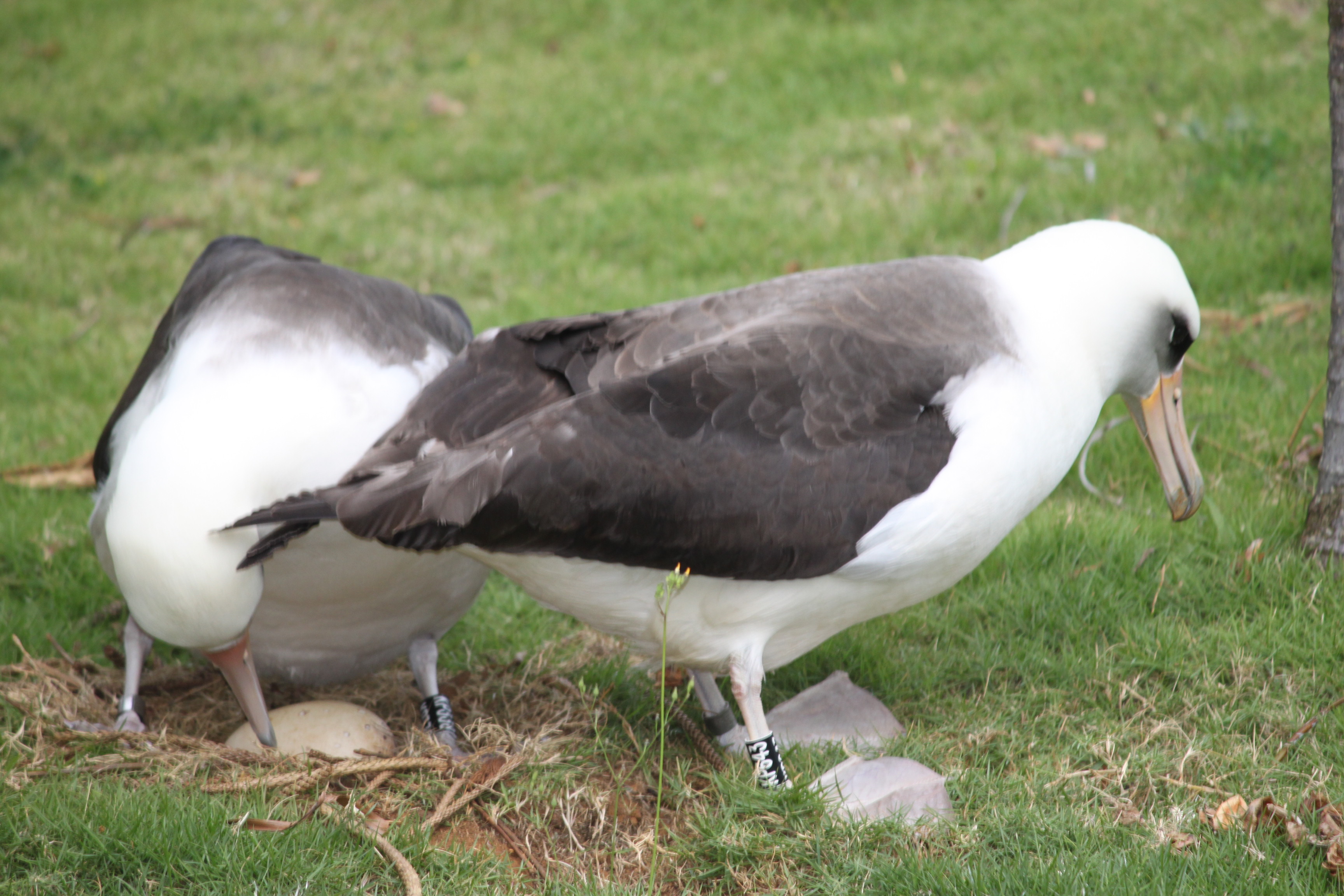
KP338 and KP643, or Click and Clack respectively as Steve and I have chosen to name them (unofficially), have been nesting in or near our yard for over 10 years, long before we bought this home in 2011.

IMG_7019

Click (KP338) and Clack (KP643)

Click and Clack are a long-term dedicated female-female couple; however, they have raised chicks in the past, mostly adoptive eggs from PMRF [hereʻs an excellent article explaining the PMRF adoption program], or from a neighboring failed nest, and sometimes because a randy male made ‘contact’ with one or other or both when they arrived on island.

In our neighborhood this year we have a number of female-female couples who have successfully hatched a chick, including one pair who have been successful more often than not. Check out my neighbor Cathy’s post at:  https://albatrossdiary.com/2018/01/30/6723/ **

For the first time, we personally have had the treat of a second nest in our own front yard. Another pair (female-female again), who had previously nested on our next door neighbor’s yard, decided on a spot against our side wall within sight of our ‘office’ slider.

IMG_9235

Our new residents: KP404 and KP756

As with our long-established resident pair, we have watched this devoted couple as they reunited in November after months away at sea, then settled on a nesting spot, built up their nest, swapped incubation duties, and awaited the possible arrival of their chick.

Sadly, it was not to be for them. The egg was infertile, and recently cracked and broke open. The incubating partner, KP756, spent a whole day meeping and mooing, walking around the nest, even doing some nest repairs, before finally abandoning her post and flying off to sea to feed. Three days later, her mate KP404 returned. I was surprised to see her immediately settle on the nest even though she was incubating nothing but a broken pile of empty eggshell. She stayed there overnight, but the next day she moved away and, as I write, is now sitting in exactly the spot where she awaited her mate’s arrival in November.

IMG_7144

KP404 (left) briefly visits Click and her newly-hatched chick after abandoning her own broken egg

The jury is out as to whether KP756 will return this season. It’s likely she has given up and will assume KP404 will do the same. However, the chances are that they will return next season to this same area, whether our yard or next door, to try again.

Back to Click and Clack, and a much happier outcome! On January 27 I noticed there was a hole in the egg and sign of a tiny bit of gray fluff. A chick was pipping! It can take anything from 2-4 days for the chick to finally extricate itself from the shell, and on the morning of January 29 the tiny chick was briefly but fully visible while Click shifted her position with a squirming little life beneath her.


Thrilled? You bet! Although there is always a chance that chicks will expire in their early days, this little one seems to be active and healthy. Now, we hope Clack returns soon, loaded with yummy fish oil to feed her offspring. Click has been on the nest since January 15 and, while the adults can hold back a certain amount of food for the newly hatched chick, it will be the returning partner who can provide the extra nourishment needed for fast growth and health.

Every November, we eagerly anticipate Click and Clackʻs return. In the 2014/2015 season they raised Pip (as the homeowners, we had the honor of officially naming their chick)! We haven’t seen Pip reappear yet (three years is usually the earliest that the adolescents first return to dry land), but weʻll be keeping an eye out next year for sure.

IMG_1608.JPG

Pip, May 2015, aged 3 months

** Cathy is our dedicated Princeville albatross guru/monitor/friend/savior! If youʻre interested in learning more about our Princeville birds, her blog My Albatross Diary will give you hours of entertainment and education.


Our girls are back in town

And so the world turns!

November is the month that the Laysan albatross return to Kauai to mate, nest, and raise their young…well, some of them will raise their young, while others, like our pair of females are more hopeful than successful.

Last year I posted the tale of our two. We were fascinated by their behaviors, since that was our first year in residence. This year we were delighted when they returned to our yard to try again. It’s a special day when the first albatross of the season is spotted in our neighborhood. This year the first one was about a week earlier than usual, November 4, but our two always seem to be among the later arrivals.

So it wasn’t until November 23 that 338 arrived back in town after spending the summer months somewhere off the coast of Alaska. 643 was just a few days behind her, arriving November 26. They spent the next day close together, clacking, whistling happily, and preening one another. They also scoped out some potential nesting sites.

2012-nestThey seemed no more savvy about their nest location than before! Last year they ended up at a low point of our front yard to the right of the garage (after 338 followed one of the eggs that had rolled down a slope and ended up just a few feet from the driveway).

This year they chose an equally unsuitable spot…deliberately, it seems!

338-by-poinciana

We were optimistic when 338 initially began hanging around on our front yard near our huge Poinciana tree. We hoped she’d snuggle into the side of the tree, on a flat patch, where the long established roots might provide a safe haven for her and her egg…

… but, no… perhaps she was influenced by 643, who knows!
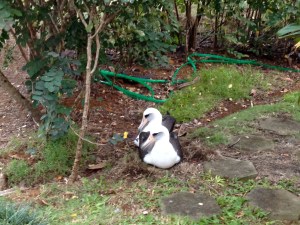
338-and-643-Nov-2013

Together, they moved downhill, closer to the house (on the left hand side of the drive this time), and seemed intent on squatting in what we considered to be the least appropriate spot of the yard, where, during winter downpours, the storm waters gush off the driveway. Not the most comfortable spot to set up the family home.

Once an albatross pair have met up in November and (in the case of a heterosexual couple) have enjoyed their roll in the hay, they both fly off again for a week or so, for their albatross equivalent of a baby-moon.

IMG_9508

So, while our girls were away, Steve (with the blessing of our local albatross guru, Cathy) laid a tarp and a chair barrier, as a form of gentle persuasion (for their own good!) to find a more suitable location.
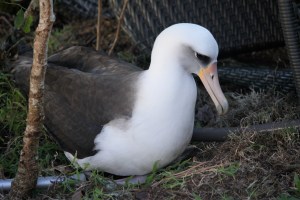
IMG_9460

However, bird-brained or doggedly persistent, whichever, when 338 returned on December 3 she was pretty determined to find a way back to that same spot.

…even if it meant sitting on a chair leg!

IMG_9466Eventually, though, she grudgingly conceded defeat…sort of! She settled just a couple of feet away on slightly(!) higher ground but even closer to the drive than last year and, sometime overnight, laid her egg**.

643 showed up the following day, swapped with 338, and promptly laid her own egg.

As is fairly typical for all-female partnerships, since they can  successfully incubate only one egg, she forced one of the eggs to the side, giving Cathy the opportunity to remove the abandoned cold egg.

IMG_9505So now 643 has settled down to take the first long shift while 338 is away at sea, feeding and building up her strength for the second incubation stretch.

Sadly, yet again this year, there is no plan to provide PMRF adoptive eggs to the Princeville nesters, so our two girls will eventually give up hoping for a chick and, sometime early year, will leave the egg and us for their Summer in Alaska.

…and so the world turns!

** Having reread my blog post from last year, I was interested to note the role-reversal: last season, 643 was the first to return and lay her egg, on December 3, followed by 338 the following day. I’ve no idea if rotating the first arrival is a regular pattern…I guess I’ll need a few more years’ research to see any pattern emerge! 🙂
Our albatross girls: futile not fertile


IMG_5681It seems that KP338 has finally decided enough is enough, and has left the nest that’s in our front yard.
She swapped with KP643 for the last time on March 12, and on that occasion they spent a particularly long time sitting side by side on the nest, ‘chatting’ together, and occasionally sitting up to look at, and chatter at, the egg.

Was it just my imagination or did I detect a worried look on their faces, and maybe frustration too?…

IMG_5672On the morning of March 14, I noticed 338 was standing over the egg for several minutes, with no sign of settling down; whereas usually, when a nesting bird needs a stretch, it’s a quick stand-up-shuffle-and-sit-down-again, to keep that precious egg warm.

By lunchtime she had left the nest, waddling around the front yard and back-and-forth across the driveway for a while, before settling down a few yards from the nest under the sago palm…yes, the same sago palm where both she and 643 had laid their eggs back on December 4 and 5, before 338’s egg rolled down the slope to its resting place nearer the garage.

IMG_5683

We won’t remove the egg yet (amazingly, it’s still whole after almost 3-and-a-half months!) unless of course it breaks and emits an unholy smell!

We’ll just let nature take its course. 338 is likely to  return to the nest a few times, even though she has now let the egg go cold. 643 might return, and they might still hang out in the neighborhood together for a while, just like our neighbor’s couple that I featured in my previous post.

If we’re lucky, they’ll treat us to some noisily entertaining and affectionate displays of their own, before eventually heading off to Alaska for the summer months.

I’m already looking forward to November, assuming they return for another try, when I’m hoping some randy male gets to one or other of them before they settle down together.

Laysan albatross couple dance like there’s nobody watching *

The couple in the video nested this year in a neighbor’s yard, but the egg wasn’t fertile and eventually broke, so now they’ve settled in the yard next door to their nest, and we see them almost daily displaying like this.

These displays are common among our neighborhood albatross at this time of year – either couples whose egg did not successfully hatch, like these two, or non-nesters seeking a partner for future years. Often, we also see larger groups of 4 to 6 adolescents ‘displaying’ together. It’s always fascinating to watch their moves!

Eventually this couple will fly north for the summer, but this continued ‘affection’ indicates that they plan to return to their nest, or close by, next year to try again.

* “You’ve gotta dance like there’s nobody watching,
Love like you’ll never be hurt,
Sing like there’s nobody listening,
And live like it’s heaven on earth.”  — William W. Purkey

Our albatross girls: the vigil continues

In my previous post, I introduced the pair of albatrosses nesting on our front yard, KP338 and KP643, and their infertile egg.

Last Tuesday, 338 returned to take over nesting duties from 643.

338 had departed on February 6, so she was gone for 13 days. That’s the shortest swap for our pair. The whole nesting process must be very tiring for both birds, and their stamina level must drop as the incubation period continues. The first nesting period is usually the longest (for 338 and 643, that was 26 days this season from December 4 to 30).

I was in the ‘office’ (at the front of the house) at 4:15pm when I heard them chatting together. The sound of a returning mate is very different from the interactions that a nesting bird might have with passing ‘acquaintances’.

IMG_7912I watched as 338 settled down beside 643 (still on the nest) and as they preened and chatted; then 338 stood up and wandered around, picking at grass or leaves, and dropping them nearer the nest.

Finally, 643 lets 338 take over the nest

Finally, 643 lets 338 take over the nest

I’m not sure whether 643 was reluctant to leave the nest (I’m told that pairs swap quite quickly on an egg, but are more resistant to their mate once the chick is hatched), but it took some 15 minutes before 643 relinquished her warm spot to 338.

Roles were then reversed,  with 338 plucking grass and debris for the nest, occasionally stopping to chat and preen her mate, while 643 adjusted herself on the egg.

I didn’t see 643 leave, but I know it was some time between 5:00 and 5:25pm, while I was walking Freya and watching whales at the bluff. Such is the unfortunate conflict of activities that nature provides at this time of year! 😉

I wish I knew if our pair had ‘discussed’ their egg, and reached a decision as to whether to give up on their hope of an offspring this year. Still, for the moment, it seems as if 338 is content to take another turn.