Eastern Island

Eastern Island—creatively named, as it lies on the East side of the Atoll😉— is a boat ride from Sand Island where we all live. So, the weather and ocean conditions have to cooperate for us to get there to count.

Pihemanu/Midway Atoll

Eastern Island is something over a mile long and over 1/2 mile wide at its widest point. For our count purposes, it’s divided into 10 sectors, and most of them are humungous! This is my 5th count and I still can’t get my head around how much larger Eastern is than it appears on the map.

The first sector we counted this year took eight of us a full day (well, to be precise, seven for the first half of the morning, then eight). Oh, but what a glorious day it was!

Heading to Eastern early am

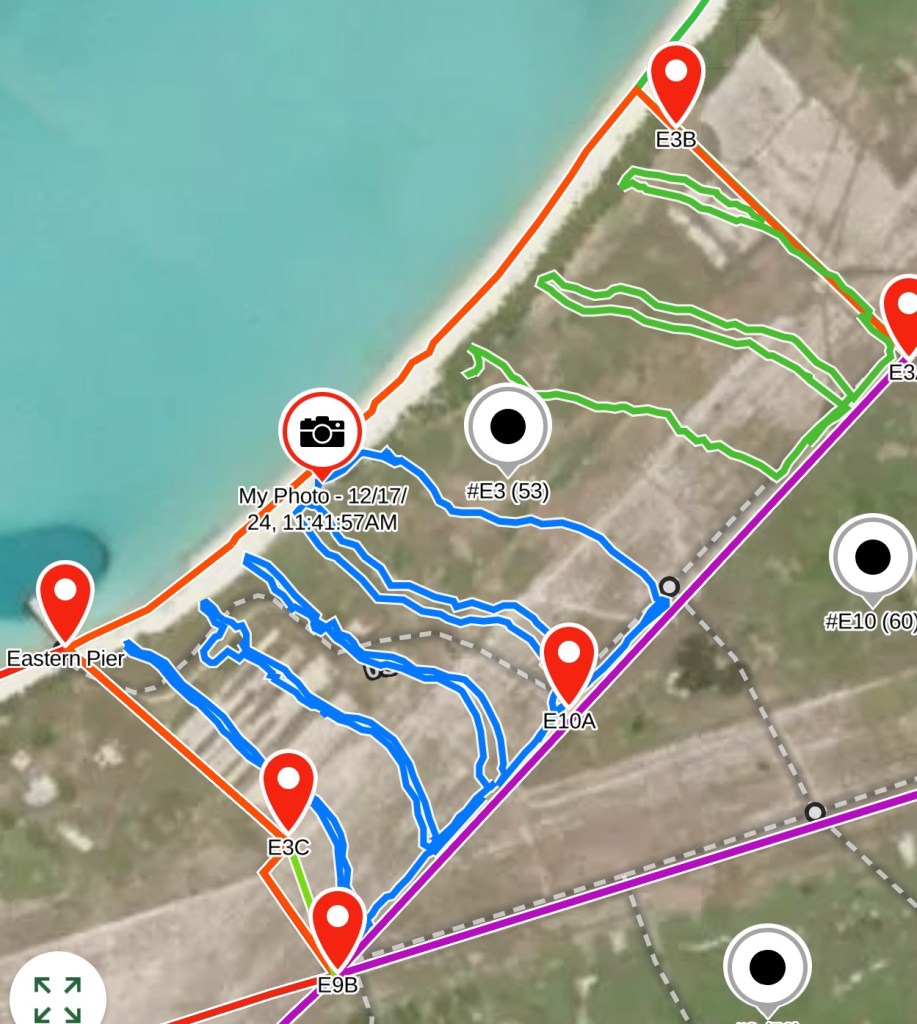
Sector E3 is a large (very very large) rectangle, outlined in blue in the image. Most of it is bordered to the north by a thick band of naupaka.

The most efficient way to count it is to send one person off to the naupaka to paint a line along the front edge, and count everything between it and the ocean, while the rest of the team transect the open area back and forth between the sector border (one of the old WW2 runways) and the painted line.

Here’s a image showing my individual transects (am: blue, pm: green) within the team. 3 hours in the morning, and another hour+ after lunch, followed by the long trudge back to the pier. You can see the tighter, more time-consuming track in the morning when we had one less counter (sometimes two less while one was deep in the naupaka) and also some trickier terrain to cover, such as extra pockets of naupaka bushes.
Thankfully, there are very few Bonin petrel burrows in that sector, so no need for burrow shoes, and we transected the sector mostly uninterrupted, apart from negotiating those smaller pockets of vegetation.

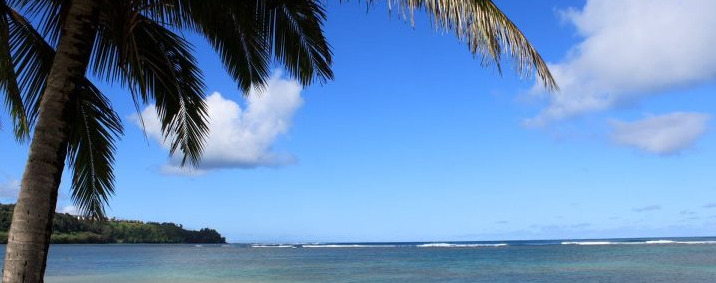
It’s not difficult to find an ideal picnic spot for a lunch break. The entire island is bounded by sandy beach, with a spectacular view of ocean and birds.

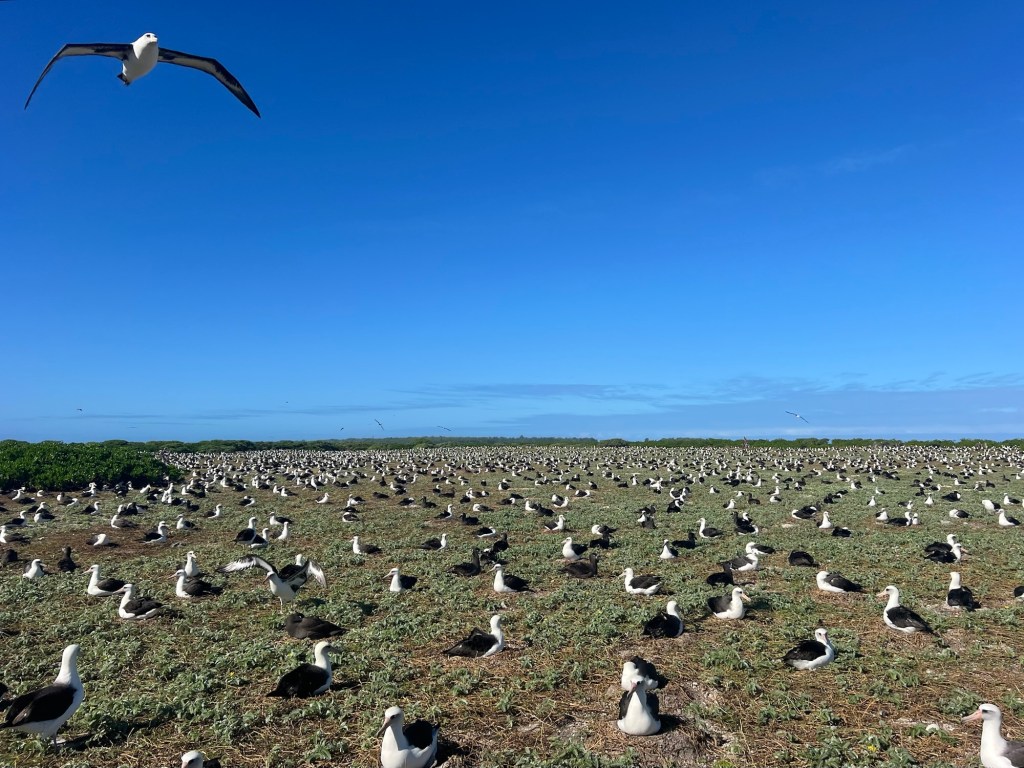
Lunch break
Typical Eastern Island landscape

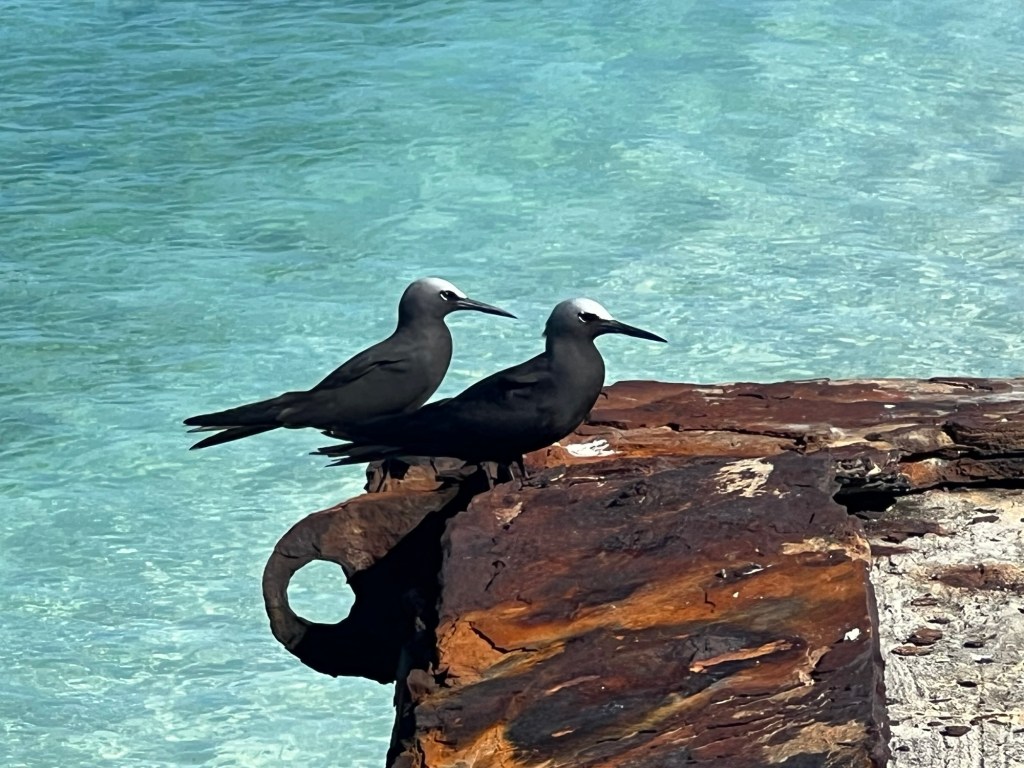
Back on the pier in the afternoon, waiting to be picked up by the landing craft, we were entertained by a brown booby cooling its feet, and a cute pair of brown noddies.
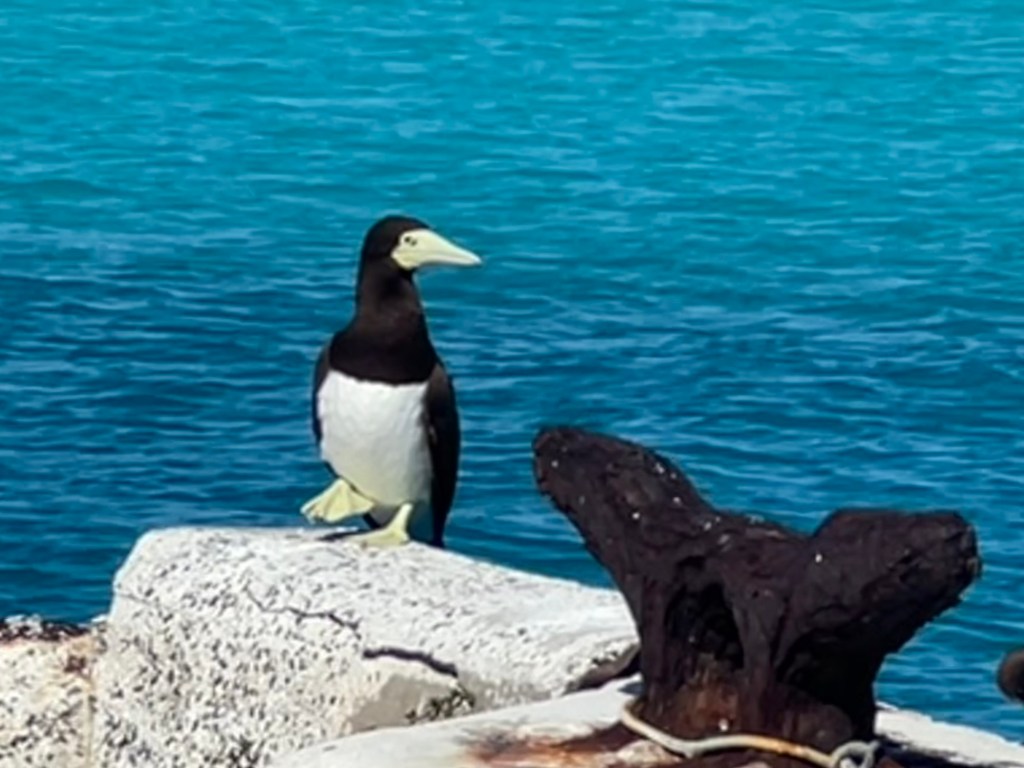
Brown booby
Brown noddy pair
Boarding landing craft for return to Sand Island

We returned to Eastern last Friday, this time with our full complement of 12 counters, plus again an additional FWS volunteer for the afternoon after he’d completed his own work. As shown in my track above, having just one extra body widens our line and can add many counted birds to each transect, substantially reducing the time needed for the sector, so we’re always grateful for the extra help.

If anything, Friday’s weather was even better for us, with a light breeze that reduced the temperature by a few degrees.
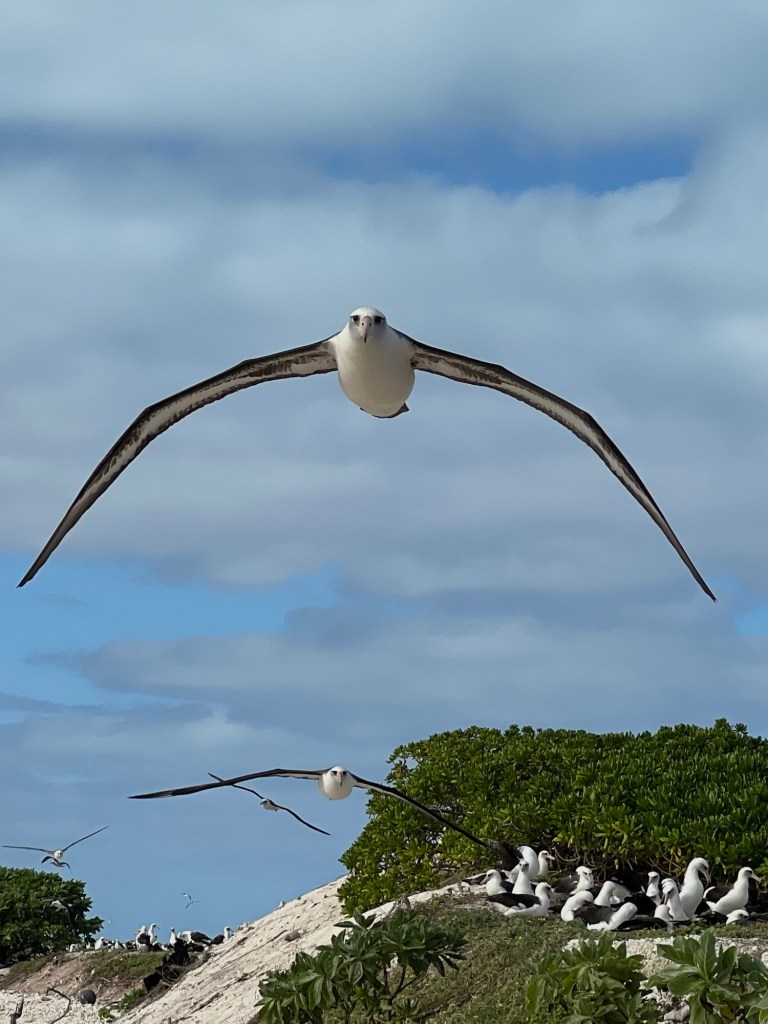
Every visit to Eastern is special, and worth all the effort we expend working our butts off on the count.😊 Friday also gave us a monk seal hauling out in front of us as we ate lunch on the south shore, a white tern awaiting our return to the pier, and a very playful pod of spinner dolphins escorting us on our way back to Sand Island.
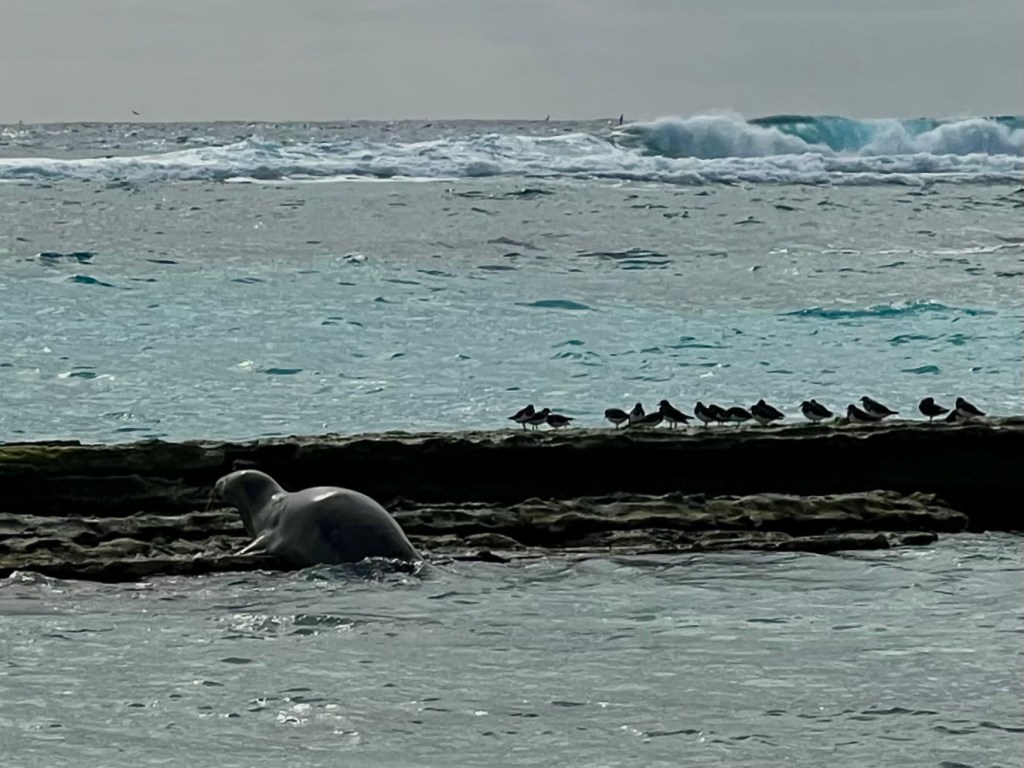
Monk seal and ruddy turnstones
White tern
View from pier

Saturday’s free-for-all at the Refuge

Free admission to the Kīlauea Point National Wildlife Refuge, that is!

KPNWR

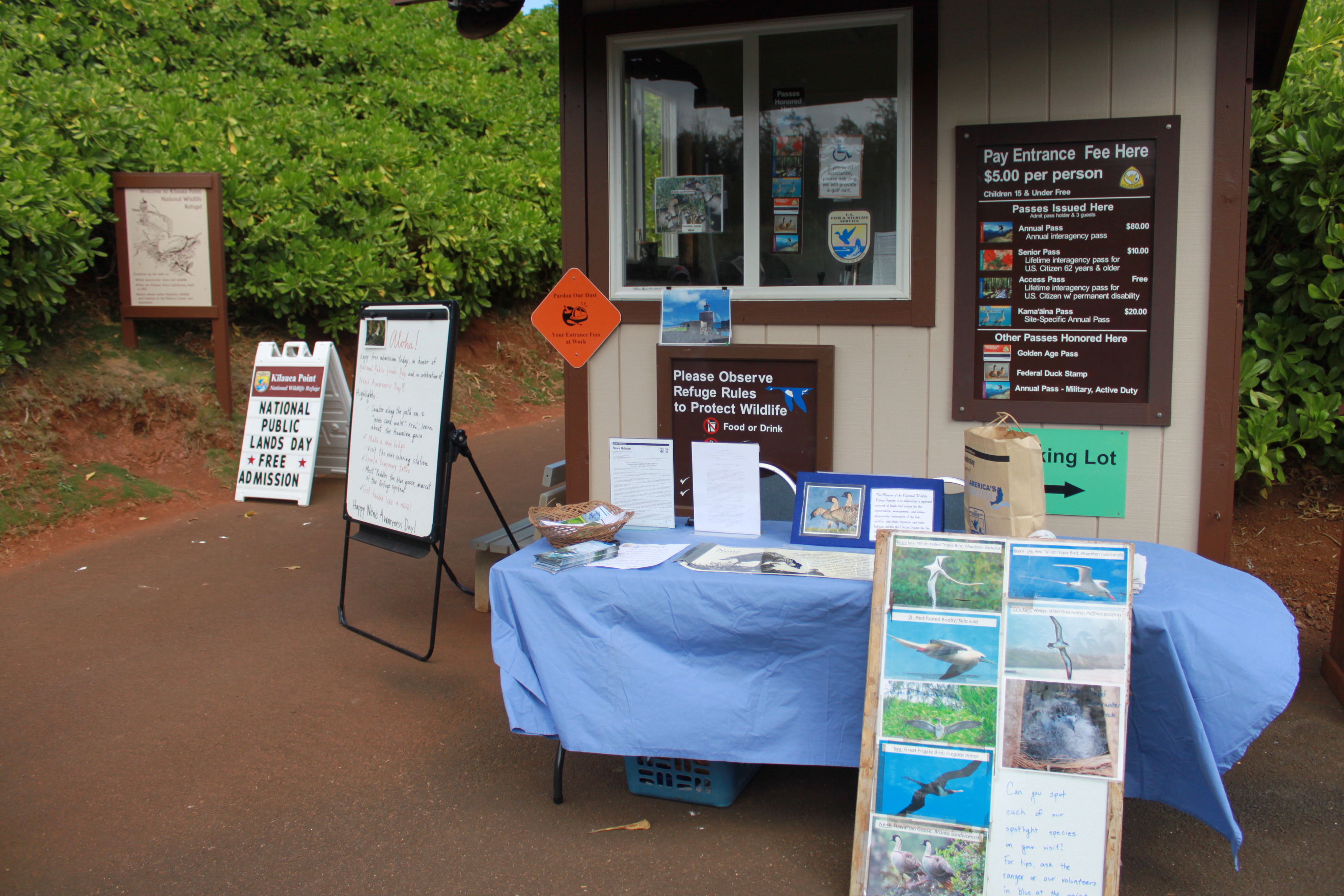
KPNWR entranceIn case it escaped your notice(!), last Saturday was National Public Lands Day (NPLD), as so eloquently proclaimed by our President. In recognition of the occasion, the Kīlauea Point National Wildlife Refuge offered a fee-free day.

While kids age 15 or under have free admission every day, our fee-free days are a big deal for all the bigger kids, no age limit.

Nene - Hawaiian State BirdNPLD also coincided with our Nēnē Awareness Day. So, this was an opportunity to showcase our State Bird, the nēnē (Hawaiian Goose) , and educate and entertain our visitors with relevant information and activities.
The rangers did a great job of preparing for the event.

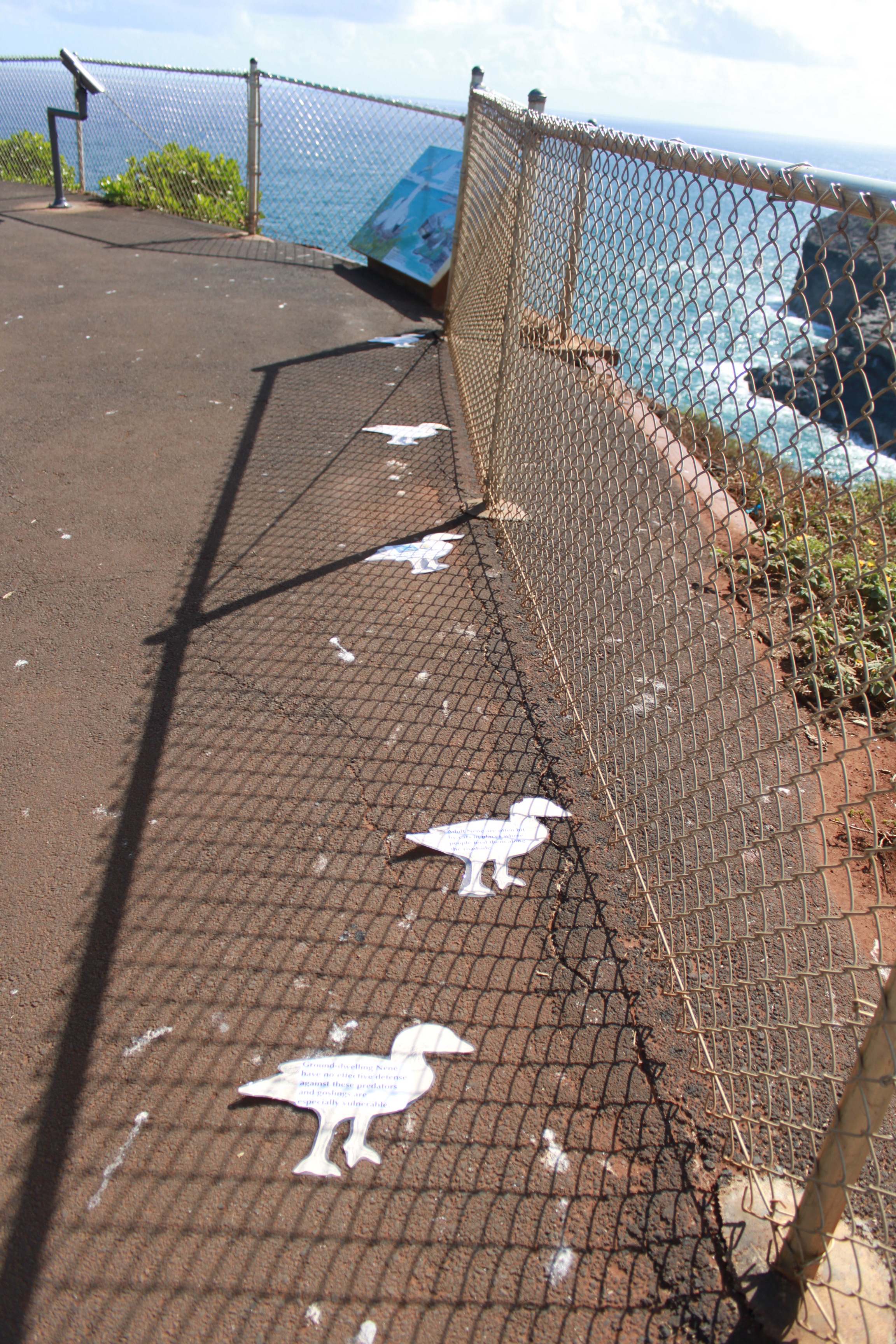
Nene walkOne of my favorite features was the Nēnē Walk. (OK, it doesn’t look quite so great in my photo, what with the fencing and poop, and the fact you can’t read the cards…perhaps you had to be there!)

As visitors wandered from the entrance along the pathway to the lighthouse, the rangers had laid a number of nēnē cards, each with a snippet of information. For example, I was shocked to discover that in 1949 the nēnē population was down to a mere 30! Today? Somewhere around 2,500! They are still endangered, but it’s a remarkable success story so far. [For those friends in California, the nēnē is not the same as the pesky canada goose. The nēnē is protected and revered, as opposed to being regarded as a noisy, messy pest!]

Matt, Forestry and WildilfeMatt, from the State Division of Forestry and Wildlife was on-site to provide nēnē banding information. Kids were ‘banded’ in the same way…well, not quite…they were given a temporary paper band around their wrist, rather than a permanent plastic band around their ankle; still, like the nēnē, girls were banded on the left wrist, and boys on the right.

The ‘tattoo’ station was also very popular, and not just with the children. Many adults proudly displayed their temporary tattoos to me as they left.

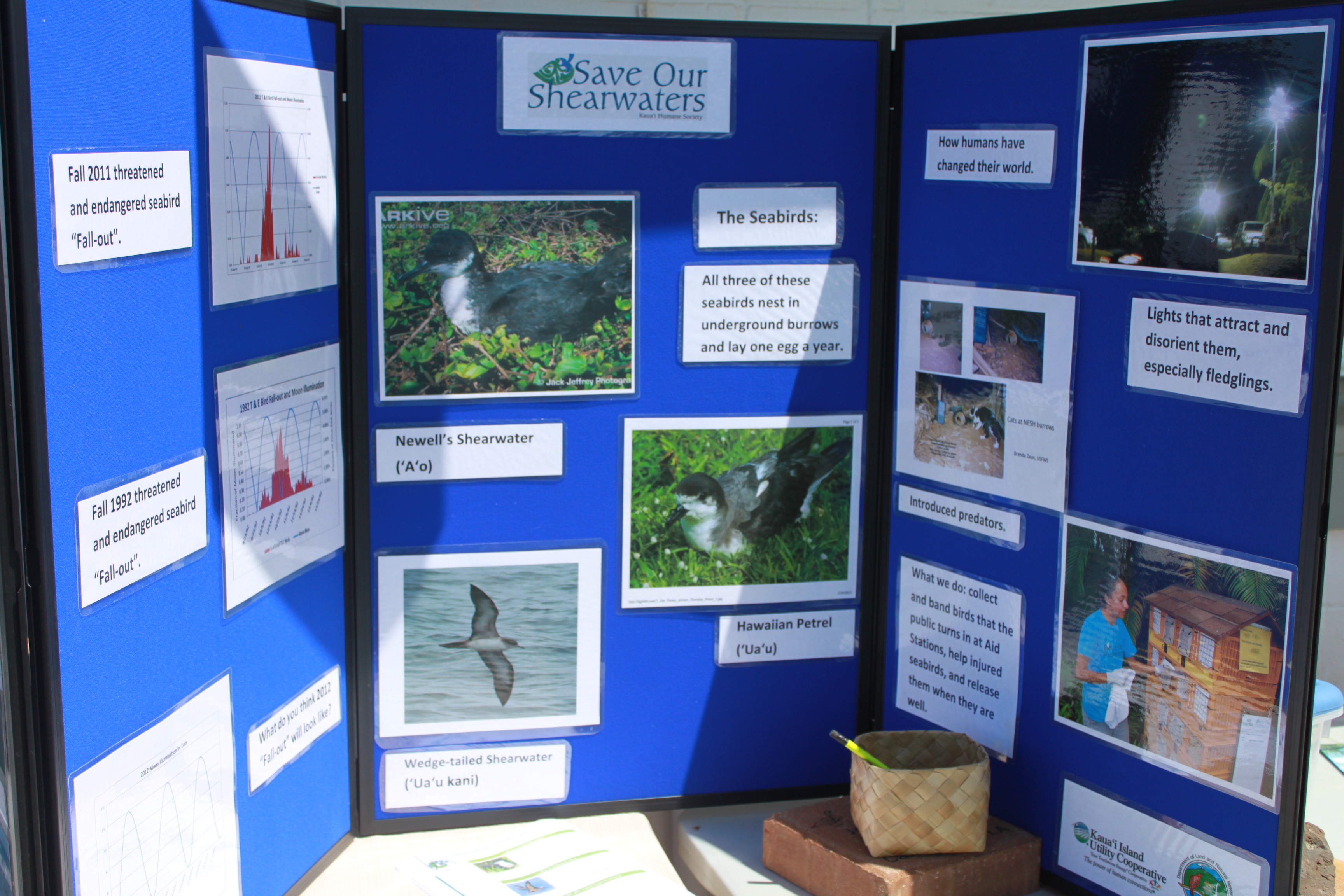
Save our ShearwatersVolunteers also manned an exhibit highlighting the Save our Shearwaters campaign. On Kauai, there is particular concern at this time of year for the Newell’s shearwater fledglings who are often disorientated by lights, particularly bright lights pointing upwards. The wedge-tailed shearwaters fledge a little later, in November. With increased awareness of the plight of these endangered seabirds, and to avoid violating the Endangered Species Act (ESA) and Migratory Bird Treaty Act (MBTA), night-time roadworks and other floodlight activities cease each year between September 15 and December 15.

Another reason for celebration on Saturday, was the $25,000 check that Kīlauea Point Natural History Association and the U.S. Fish and Wildlife Service received from Hampton Hotels, as part of their Save-A-Landmark program. The donation will be used for the ongoing Kīlauea Lighthouse Restoration.

The Kīlauea Lighthouse is the 60th site to be acknowledged by the company since Save-A-Landmark was launched in 2000, and was selected in 2011 for the award through a national voting campaign in which Hawai‘i residents and lighthouse supporters from around the world cast more than 25,000 votes on its behalf. A pretty impressive feat by such a tiny state!

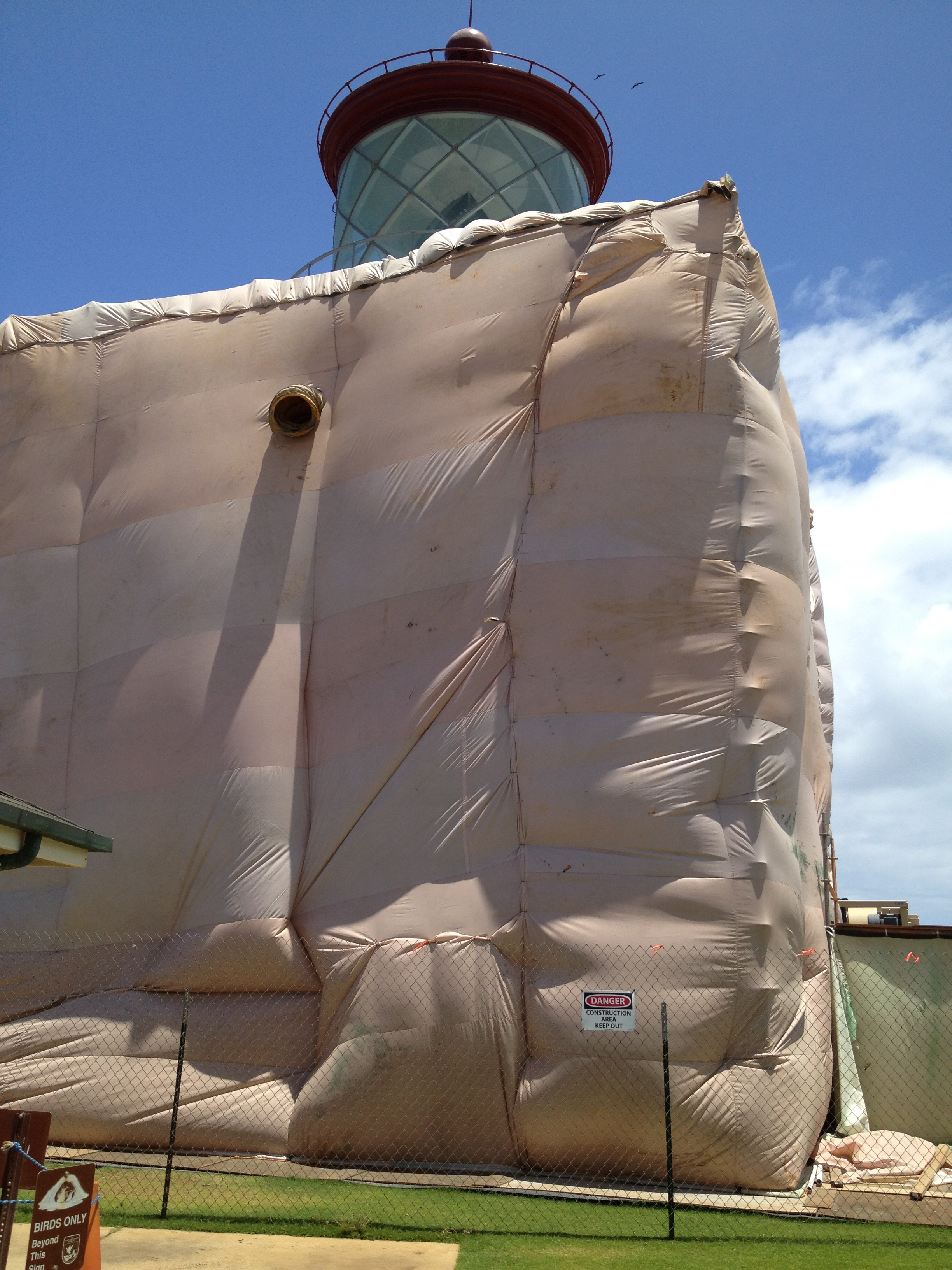
Kilauea LighthouseThe lighthouse is in full renovation mode at the moment, with its body covered for lead-based paint removal and installation of new windows (the original openings having been bricked up in the 1930’s). The plan is to have it completed, and returned to its original splendor, prior to its centennial celebration on May 1, 2013 (which coincidentally is my brother’s birthday…think about it, bro, that could be quite a birthday party for you!)

* Thanks to US Fish and Wildlife Service (USFWS) for the nēnē photo, and Kīlauea Point Natural History Association (KPNHA) for many of the details above. ‘Like’ them on Facebook to keep track of future activities.