The Mango Tree Project

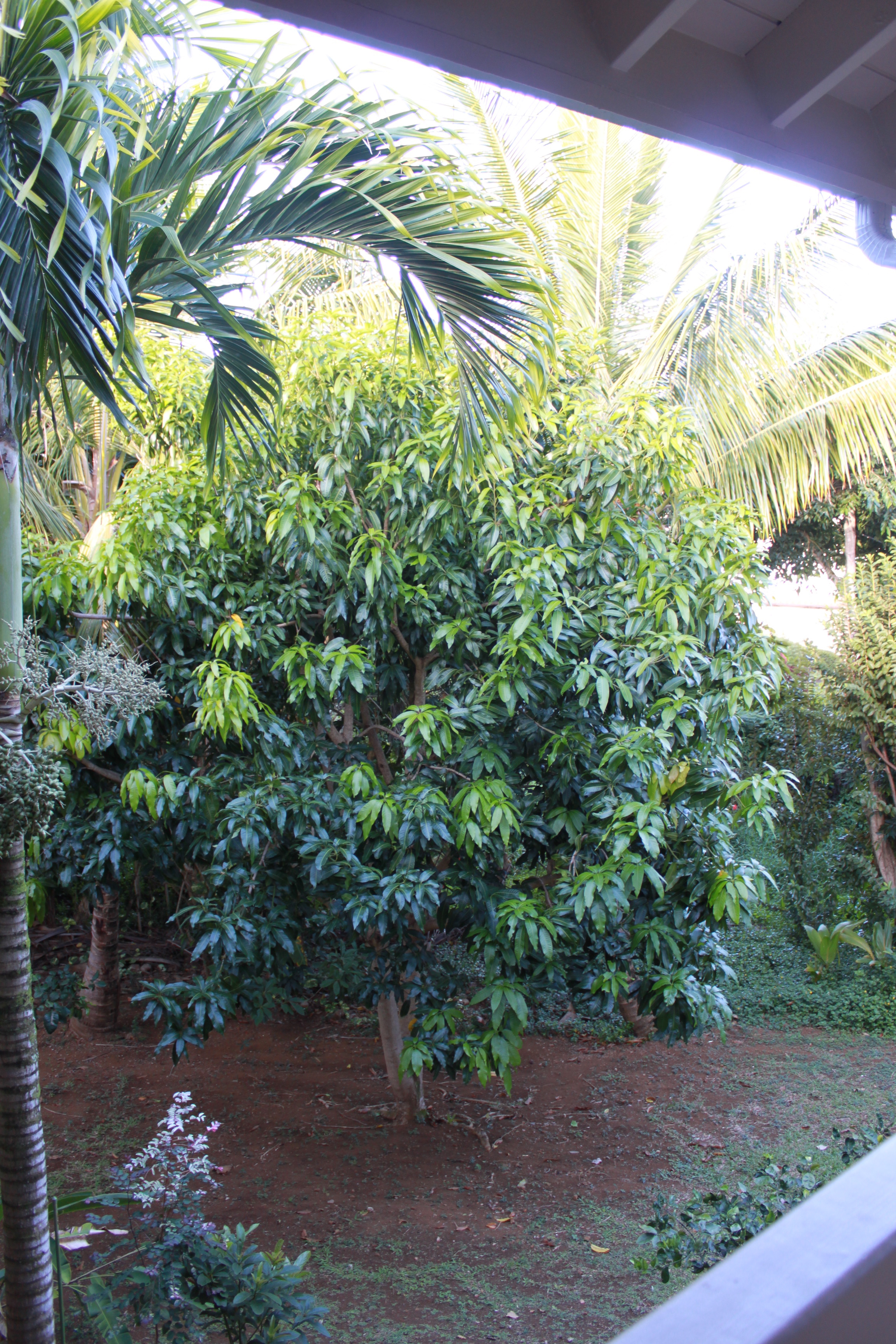
Mango prior to its near-death experienceIn our back yard stands a large mango tree.

Correction!

The effects of a chain saw massacreIn our back yard stood a large mango tree.

Today, that mango tree is a mere skeleton of its former self.

Weep not, however, as we have a cunning plan!

The huge mango-tree-that-was overshadowed much of the back yard, and with little benefit as we’ve not seen a single mango on it in the year+ that we’ve owned the house. It cost us a fortune to have it trimmed last November, and it was already back to its previous size.

Turns out that Steve’s massage therapist Pete (yes, Steve found an excellent chap who’s managing to keep Steve’s poor old damaged body ticking over with regular deep tissue massage) is something of a horticulturist/landscape gardener in his spare time. An odd combo perhaps, but we’re beginning to realize odd combos are pretty much the norm on this island.

Pete has another friend who’s an expert in growing different varieties of mango, and Pete has experience in grafting mangoes, to provide one tree that will fruit at different times of the year. (Heck, if we end up with mangoes of any damn type at one time of the year, we’ll be happy! Different types at different times? Clover!)

Pete and his victim

Hence our mango tree project!

Step 1: Pete (for a very reasonable fee) chain saws our existing tree to near-death.

Hanalei transfer (recycling) station

Step 2: Steve and I haul the debris from the back yard, up a wicked slope in searing heat to the front yard, and borrow a friend’s truck to take it to the local tip. (Anything to save a few bucks on haulage!)


[Steps 1 & 2 achieved!
]

Step 3: We wait and watch for some new shoots to appear.

Step 4: Pete grafts new varieties to existing shoots.

Step 5: We step back, wait, and pray.

Step 6 (in theory): We harvest tons of mangoes, and have a tree that we can ourselves keep trimmed to a manageable size!
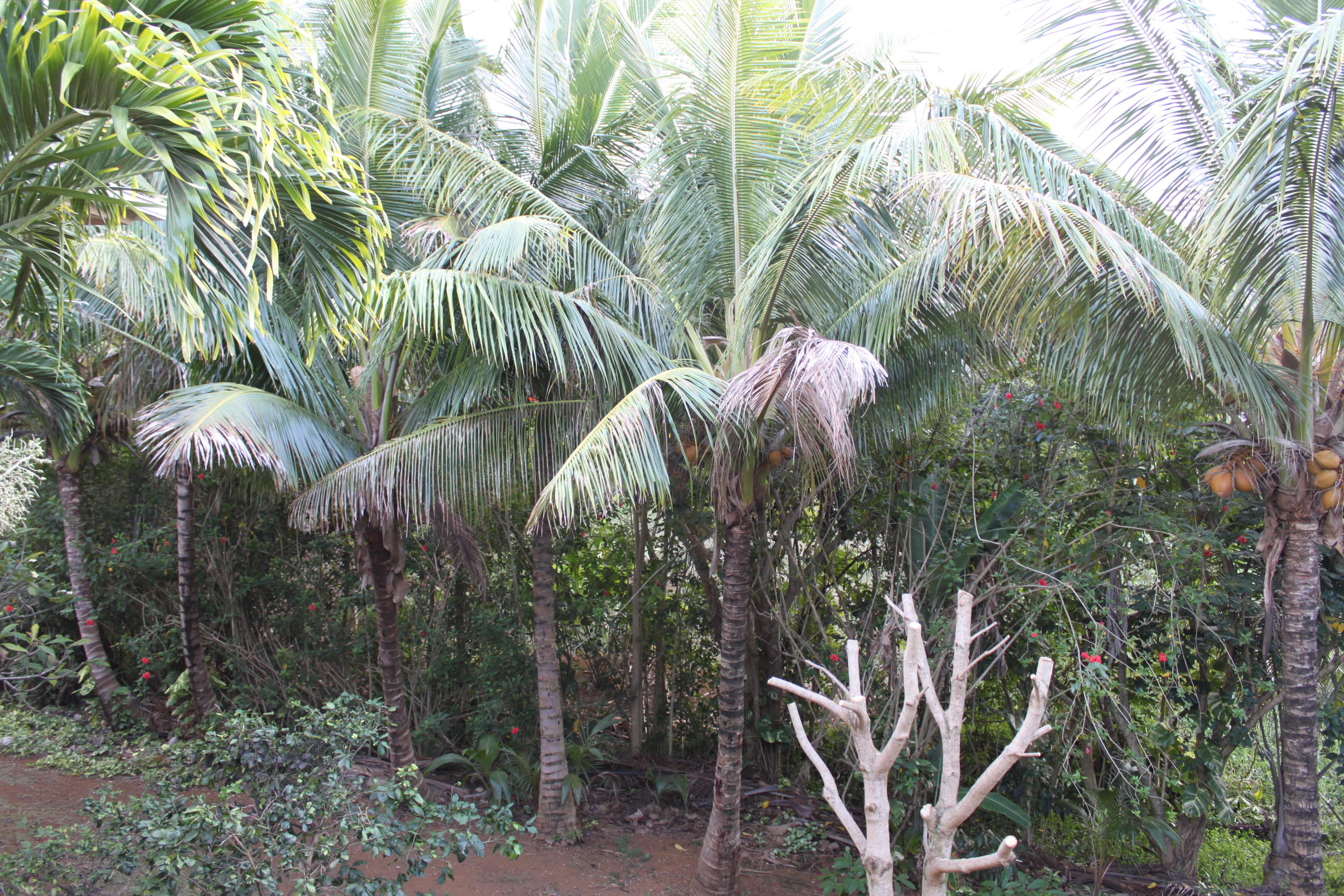
Coconut AveBehind the mango, in fact across the whole back border of the property, is a row of coconut palms. Steve has been ‘negotiating’ with me for months, trying to persuade me that we should have the majority of them removed to let more light into the property. The theory (there’s that word ‘theory’ again!) being that this should encourage more growth of our sickly looking citrus trees, or more precisely our pathetic, mangled citrus bushes, and also (with luck) reduce our mosquito population.

I know he’s right (of course), but I’ve been resisting the demise of so many trees, following hard on the heels of the two attractive but admittedly useless pink tacomas that were removed last year to reduce the shade on our solar panels, as well as the enormous almost-barren avocado tree that had been planted as little more than a seedling 20 years ago in a totally inappropriate location.

We had finally come to a relatively amicable agreement, to conduct a 50% coconut cull but, thankfully, my tenacious negotiations had delayed that massacre. So, thanks to me, we still have a screen at the back border while our mango tree recovers.

Once we’re assured of some growth on the mango tree, we’ll start the coconut tree project, but that could be months away. Meantime, we are enjoying plenty of our home-grown coconut juice, fresh off the trees!

Saturday’s free-for-all at the Refuge

Free admission to the Kīlauea Point National Wildlife Refuge, that is!

KPNWR

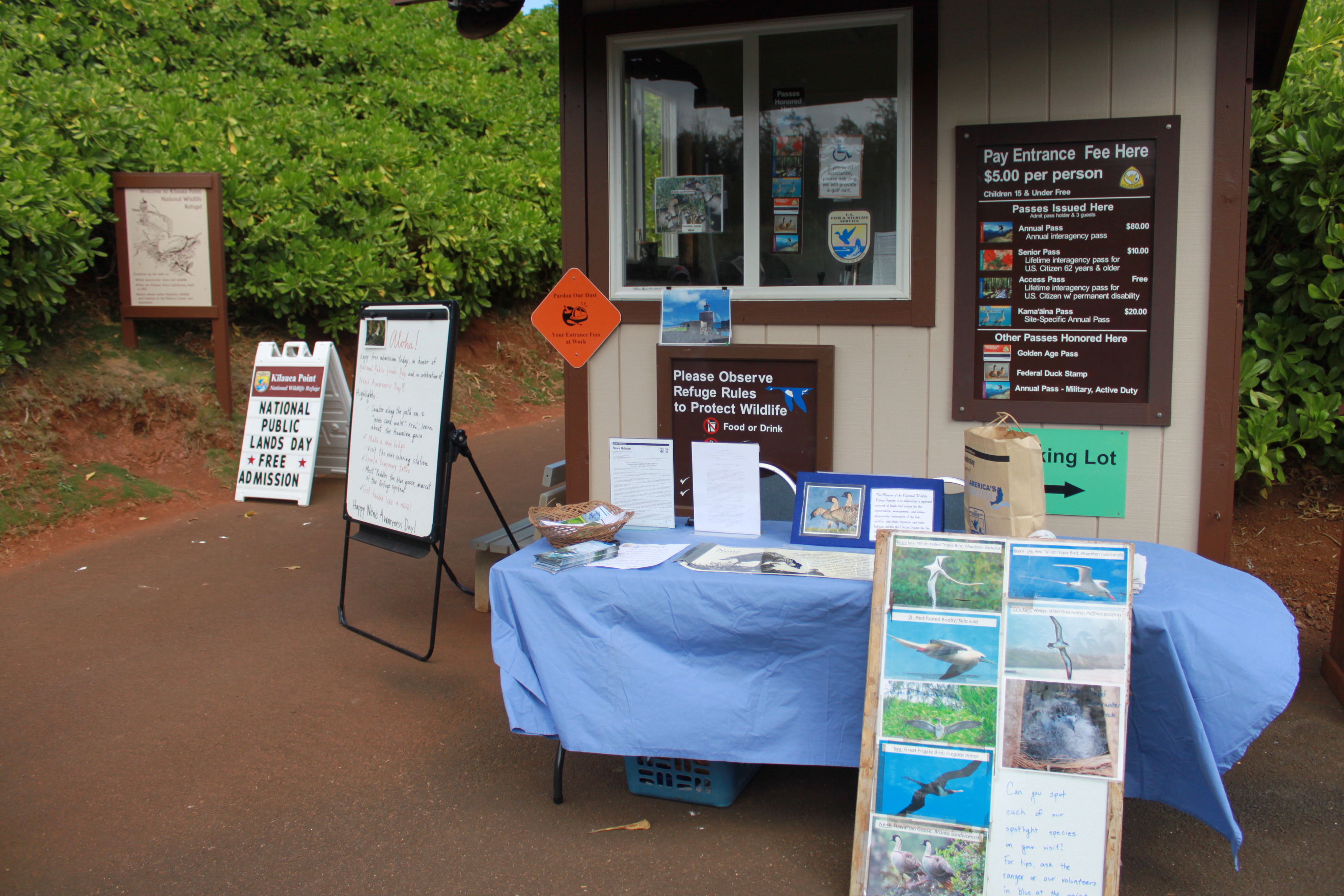
KPNWR entranceIn case it escaped your notice(!), last Saturday was National Public Lands Day (NPLD), as so eloquently proclaimed by our President. In recognition of the occasion, the Kīlauea Point National Wildlife Refuge offered a fee-free day.

While kids age 15 or under have free admission every day, our fee-free days are a big deal for all the bigger kids, no age limit.

Nene - Hawaiian State BirdNPLD also coincided with our Nēnē Awareness Day. So, this was an opportunity to showcase our State Bird, the nēnē (Hawaiian Goose) , and educate and entertain our visitors with relevant information and activities.
The rangers did a great job of preparing for the event.

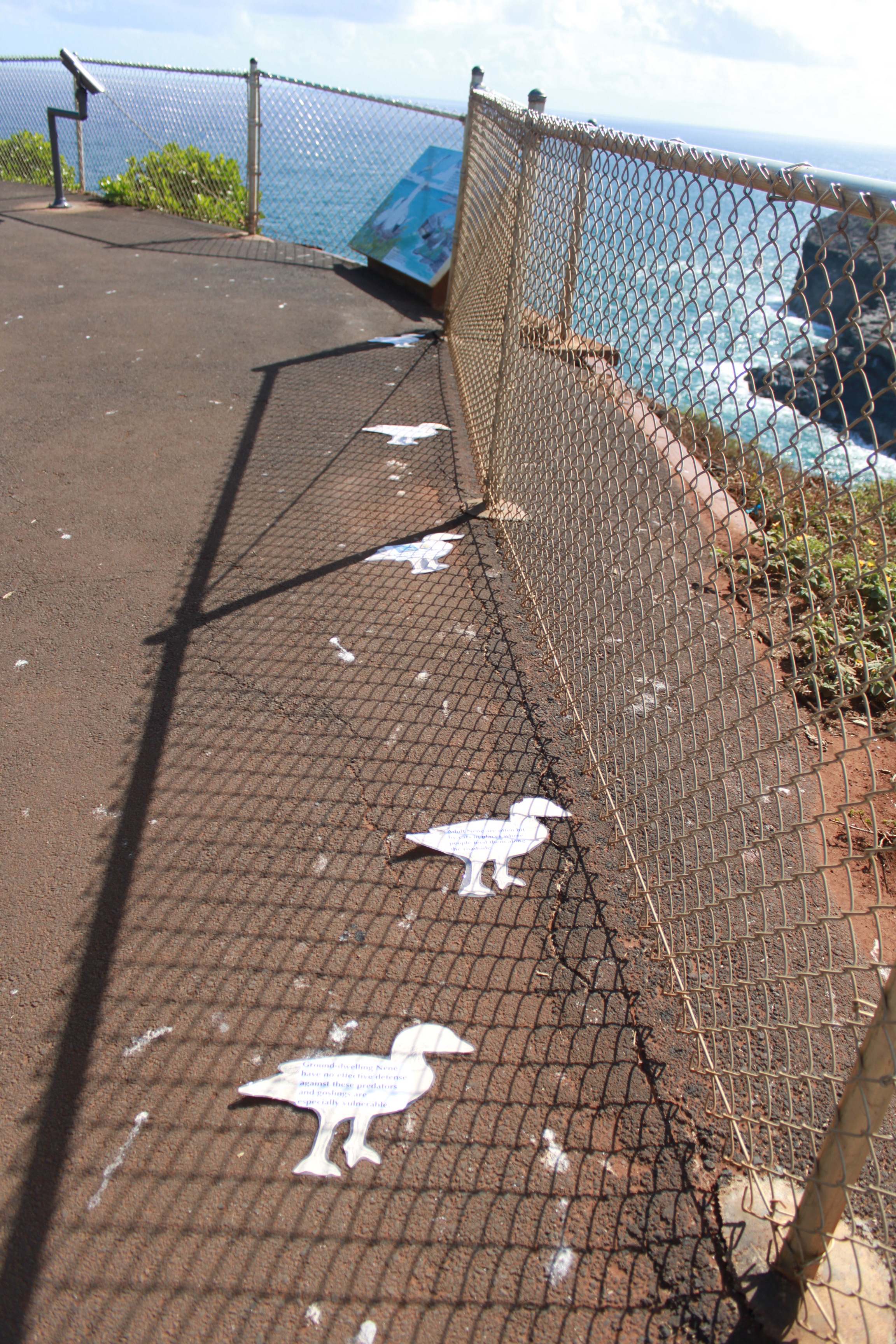
Nene walkOne of my favorite features was the Nēnē Walk. (OK, it doesn’t look quite so great in my photo, what with the fencing and poop, and the fact you can’t read the cards…perhaps you had to be there!)

As visitors wandered from the entrance along the pathway to the lighthouse, the rangers had laid a number of nēnē cards, each with a snippet of information. For example, I was shocked to discover that in 1949 the nēnē population was down to a mere 30! Today? Somewhere around 2,500! They are still endangered, but it’s a remarkable success story so far. [For those friends in California, the nēnē is not the same as the pesky canada goose. The nēnē is protected and revered, as opposed to being regarded as a noisy, messy pest!]

Matt, Forestry and WildilfeMatt, from the State Division of Forestry and Wildlife was on-site to provide nēnē banding information. Kids were ‘banded’ in the same way…well, not quite…they were given a temporary paper band around their wrist, rather than a permanent plastic band around their ankle; still, like the nēnē, girls were banded on the left wrist, and boys on the right.

The ‘tattoo’ station was also very popular, and not just with the children. Many adults proudly displayed their temporary tattoos to me as they left.

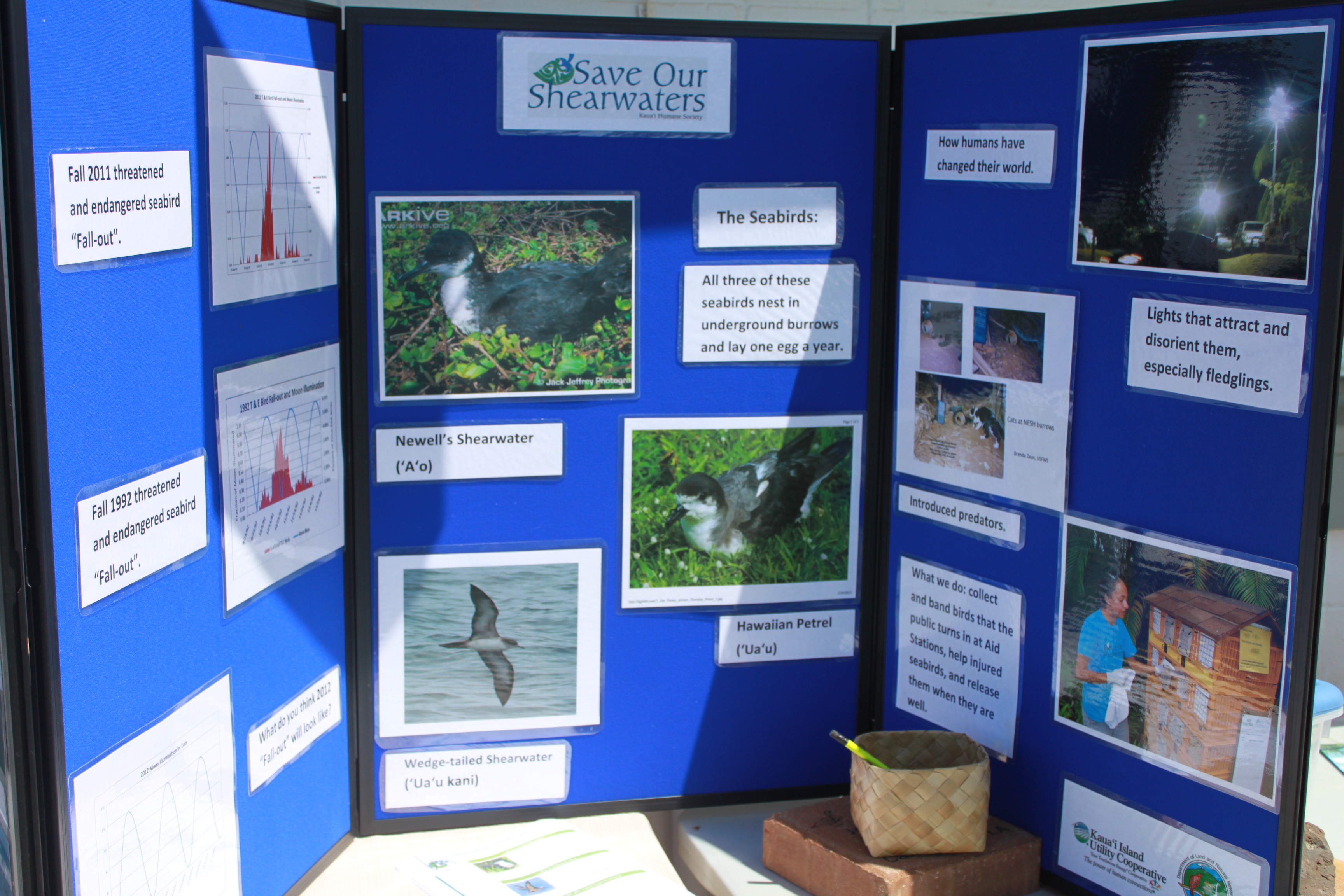
Save our ShearwatersVolunteers also manned an exhibit highlighting the Save our Shearwaters campaign. On Kauai, there is particular concern at this time of year for the Newell’s shearwater fledglings who are often disorientated by lights, particularly bright lights pointing upwards. The wedge-tailed shearwaters fledge a little later, in November. With increased awareness of the plight of these endangered seabirds, and to avoid violating the Endangered Species Act (ESA) and Migratory Bird Treaty Act (MBTA), night-time roadworks and other floodlight activities cease each year between September 15 and December 15.

Another reason for celebration on Saturday, was the $25,000 check that Kīlauea Point Natural History Association and the U.S. Fish and Wildlife Service received from Hampton Hotels, as part of their Save-A-Landmark program. The donation will be used for the ongoing Kīlauea Lighthouse Restoration.

The Kīlauea Lighthouse is the 60th site to be acknowledged by the company since Save-A-Landmark was launched in 2000, and was selected in 2011 for the award through a national voting campaign in which Hawai‘i residents and lighthouse supporters from around the world cast more than 25,000 votes on its behalf. A pretty impressive feat by such a tiny state!

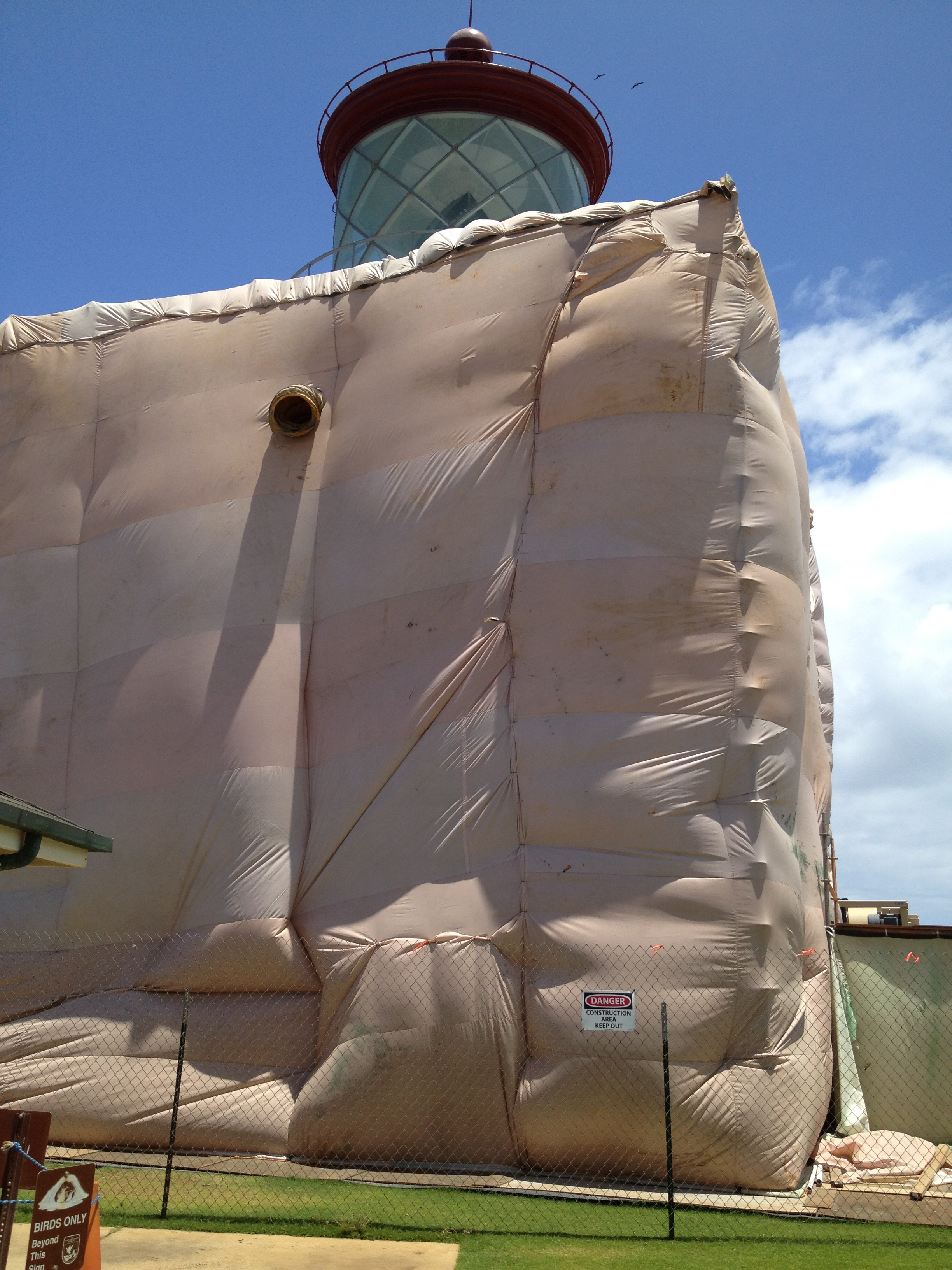
Kilauea LighthouseThe lighthouse is in full renovation mode at the moment, with its body covered for lead-based paint removal and installation of new windows (the original openings having been bricked up in the 1930’s). The plan is to have it completed, and returned to its original splendor, prior to its centennial celebration on May 1, 2013 (which coincidentally is my brother’s birthday…think about it, bro, that could be quite a birthday party for you!)

* Thanks to US Fish and Wildlife Service (USFWS) for the nēnē photo, and Kīlauea Point Natural History Association (KPNHA) for many of the details above. ‘Like’ them on Facebook to keep track of future activities.

2012 Kauai IN STEP Children’s Science Show

Volunteering at the Kilauea Point National Wildlife Refuge (here’s a previous post if you missed it), is already opening all sorts of unexpected and enjoyable opportunities to me, in addition to simply chatting with and informing visitors at Kilauea Point.

Last week I was at the Kauai IN STEP Children’s Science Show in Lihue. It’s a two-day science and technology fair, where businesses/groups explain to kids (from 4th, 6th, and 8th grades) how they use technology in their day-to-day work. This year KPNWR were one of five groups invited to participate – the others being the Pacific Missile Range Facility (PMRF), Kauai Utility Cooperatie (KIUC), Hawaiian Telecom, and the National Oceanic & Atmospheric Association (NOAA) which manages the Hawaiian Islands Humpback Whale National Marine Sanctuary.

The kids were split up into groups and were shuttled between the five stations for a mere 10 minute presentation at each.

Myself and another volunteer were there with a Ranger (Sheri), ostensibly to talk about the various technologies that help us at the Refuge, but at the same time to enthuse them about conservation, and maybe light a fire in them that might lead to a future career, or at least foster another caring volunteer.

The kids were tremendous. They came to us in groups of anything from 10 to 25 or more, and had to deal with a great deal of noise and chaos around them, as we were all in a large conference hall. They sat on the floor and were (mostly) fascinated to listen to Sheri, as she explained how the birds were here long before us, and talked of the responsibility we have to safeguard them. We fielded a remarkable number of thoughtful questions from genuinely interested minds.

Sheri’s pitch was guaranteed to peak their interest. Many of these kids go hunting with their dads, and have some familiarity with, for example, the remote scout cameras that we use to keep track of birds and also their predators. So, she pointed out a camera that was ‘watching’ them from the moment they arrived.

Garmin GPSThe idea of using technology as a form of ‘spying’ appealed to that age group. 😉 So their eyes opened even wider as we demo’d the ‘burrow-cam’ (a car mechanic’s flexible inspection camera), as well as the handheld GPS gizmo that rangers use to record the position of the remote cameras.

One of the most successful visual aids was the brief video clip we had set up on a continuous loop in the center of our display table. Recorded by an infra-red remote camera, it captured a cat scaring a Nene (Hawaiian goose) from its nest and attempting to grab an egg.

That story had a happy ending: after repeated attempts, the cat was unsuccessful, the Nene returned, and the chick eventually hatched. Since we had the GPS location of that specific camera, the rangers were able to trap the cat a few days later; it was neutered by the Kauai Humane Society and relocated.

Not born again, just another first birthday

September 22…my first birthday celebration on the island!

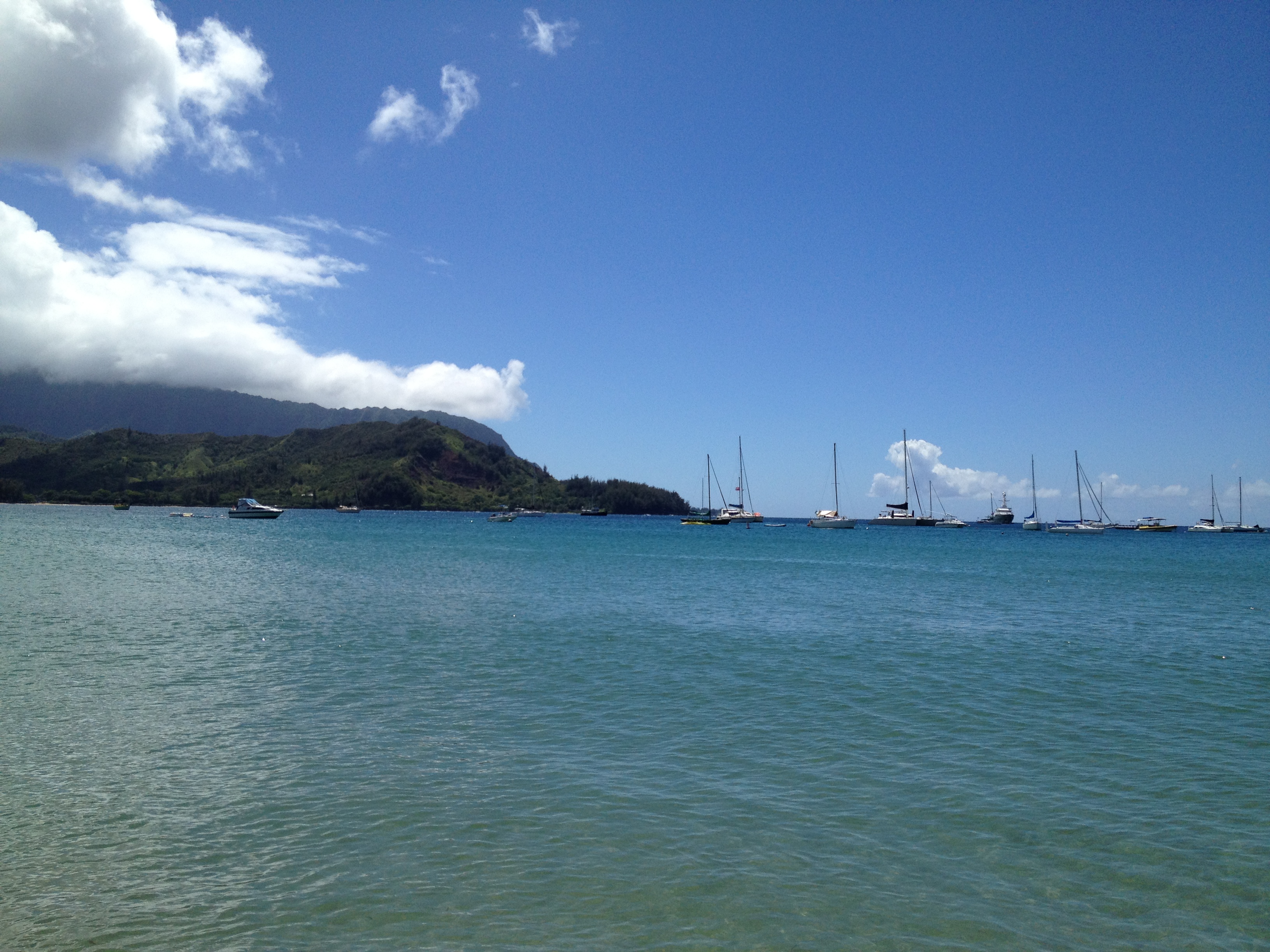
It started with Tai Chi at the Hanalei Pavilion Beach Park, overlooking the ocean at Hanalei Bay. Serenely beautiful and uplifting.

That was followed by a visit to the Hanalei Farmer’s Market…a regular Saturday event…

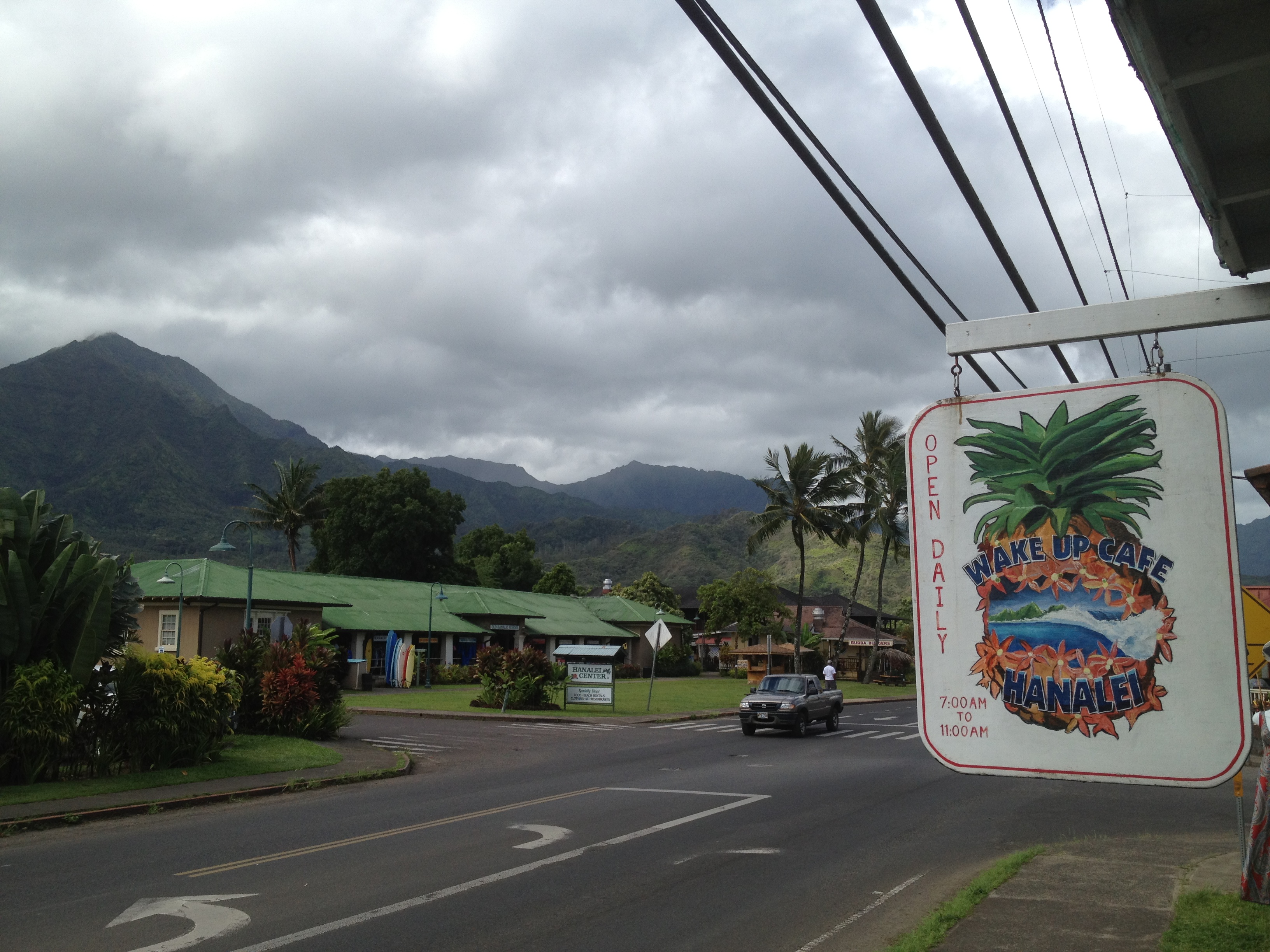
…and then brunchfast at the Hanalei Wake Up Cafe – love their excellent omelettes and bottomless coffee mugs.

Later in the morning, Steve and I took a bike ride around Princeville, with a couple of stops…one at the St. Regis, and another at the Westin (to check out the venue for the evening event). We planned the route so that we’d end with a gentle coast downhill to the house. Yes, I know Princeville is pretty damn flat, but neither of us have had the bikes out for a good run since we moved, so the legs were feeling a tad pathetic.

Mid-afternoon, I got a call from the tennis club (Hanalei Bay Resort) saying a friend was looking to hit for a while. Perfect timing! Steve’s been closely following the Fedex Cup, and particularly this final weekend, so I left him in front of the box and got a good one-and-a-half hours workout with a wiry, canny, player whom I first met on my visits last year and thoroughly enjoy playing. Sadly, he’ll be returning to his other home in Thailand in October…a common phenomenon on this island where many folks split their year between two or more homes.

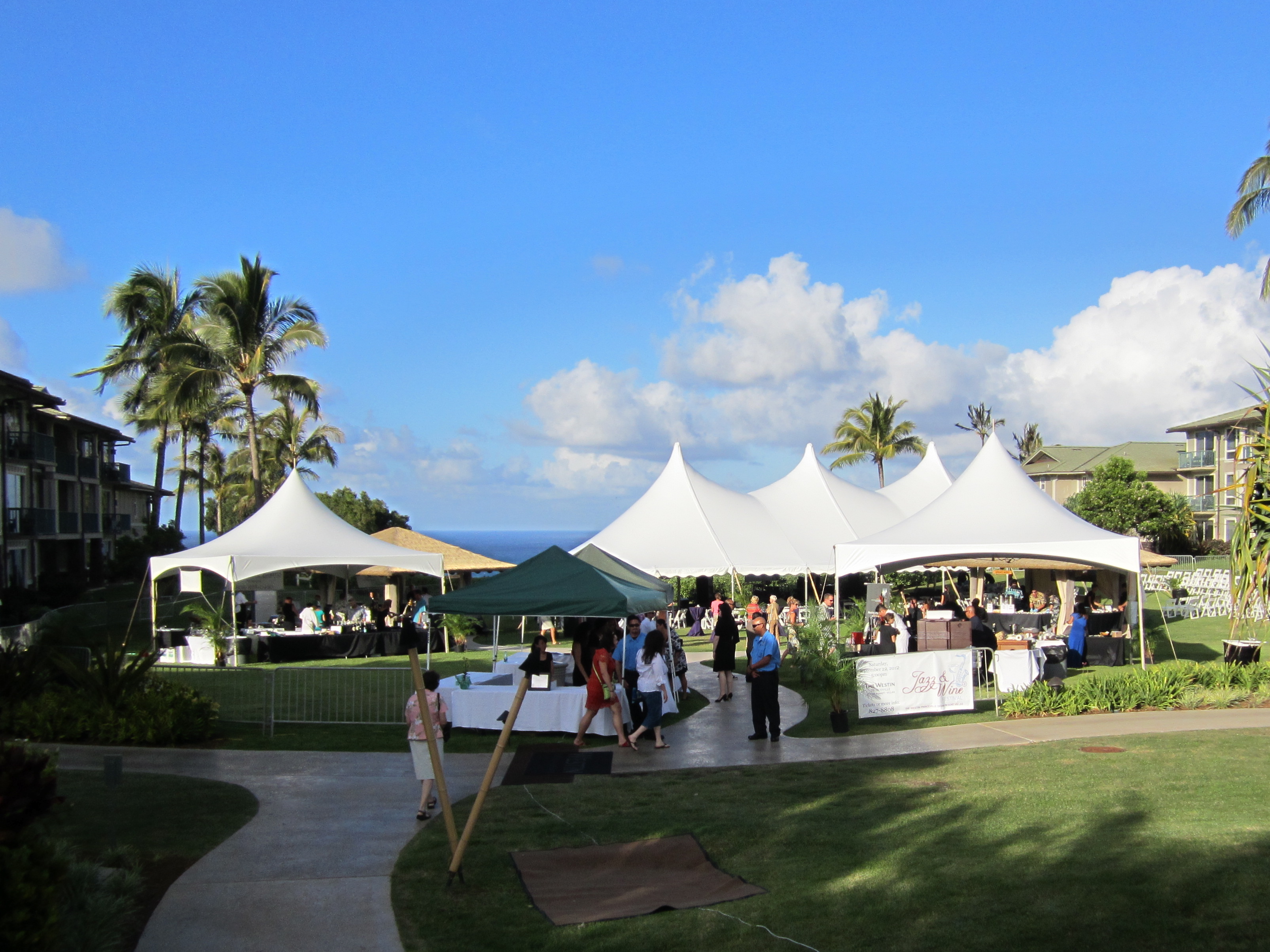
I returned with just enough time for a much needed shower before Steve and I left for my ‘birthday party’. By pure fluke (perhaps less so since this year it fell on a Saturday), my birthday coincided with the Westin’s Jazz and Wine Festival. It was a celebration of and by the various restaurants around the island, together with suitable wine pairings, and some excellent jazz musicians. Proceeds from the silent auction went to the Kauai Lifeguards Association, who perform a necessary and unenviable role here, given the number of visitors who are unaware of the hidden dangers at many of the beaches.

We spent the evening in the company of a number of interesting and amusing folks, enjoying the entertainment, food, and beverages…the latter so much so that we were pleased we’d had the foresight to ride our bikes instead of relying on four wheels.

The trip home was slightly challenging due to the effects of inebriation, but was without incident…until, that is, we reached our driveway, where Steve successfully slowed to a stop but forgot to take his foot off the pedal! 🙂

Darn it! Why is it that the camera isn’t readily available at the most inviting moments?!

20 Years on from Hurricane Iniki

This week marked the 20th anniversary of the day Hurricane Iniki struck Kauai and caused massive destruction across the island.

We knew of Iniki before we moved here, and we viewed several clips on YouTube showing the power of the hurricane, both during and after, but we learned much more this week from a local TV station, KGMB, which replayed a news broadcast from that day in 1992 that brings home the trauma that the islanders suffered, especially due to the lack of warning, something that has evidently been improved upon in recent years with advances in technology.

I was fascinated to see the path that Iniki took (and why), since it at first appeared to be skirting the Hawaiian islands relatively harmlessly to the south, as it grew in intensity from a tropical storm, but then took a disastrous turn north.

Another KGMB news segment this week recalled the aftermath of that day, but focused on the tremendous community spirit at the time, and how well the island has recovered since.

We were aware of the risk of hurricanes when we bought our home here. The hurricane season typically runs from June to November (though these days there doesn’t seem to be anything typical about the weather anywhere in the world), and the community is frequently encouraged to be prepared – know of evacuation routes, maintain food and water reserves, etc. – but it’s not something that overshadows our day-to-day lives. It’s not much different from living in an earthquake zone, as we did in California where we were perched almost on top of the San Andreas faultline. We’ve simply traded one of Mother Nature’s risks for another.

However, it’s comforting to know that our current home was locally dubbed ‘The Shelter’ when it was built, immediately after Iniki swept through. [Incidentally, while there are several evacuation centers, such as school halls, provided for visitors, there simply isn’t enough room for everyone, so, in the event of a hurricane, residents are requested to shelter-in-place! Bummer, that!]

The previous property on this lot was completely destroyed, its roof sheared off and structure so badly damaged and buckled that it was an insurance write-off, so the lot was cleared.

Not surprisingly, the owners had no wish to suffer a repeat performance, and employed an experienced architect and builder, in an attempt to ensure that their replacement home could withstand a similar onslaught.

The house is a single-storey dwelling built into a sloping lot, so that its roofline is way below that of the surrounding houses, with the back supported on 16″ square solid concrete pillars. The roof is tied down with metal hurricane clips at every rafter (as opposed to every 3 or 4 in many houses). In brief, just about everything in this house is over-spec’d as far as hurricane-proofing is concerned.

It’s also wired for a generator. Just a flick of a switch can divert us from the grid to a generator tucked in the over-large crawl space under the back of the house; a crawl space, incidentally, that’s deep enough and tall enough to provide shelter for us, and probably several neighbors too, with plenty of room to store food and water reserves. [The photo shows merely a third of it!]

While I’m not freaked out by the possibility of a hurricane, it’s very reassuring to know that if ever the island-wide alert is issued to shelter-in-place, we have as a good a chance as any, and better than many, of still having a roof over our heads when the storm subsides.

On the lookout for mongooses and other invasive species on Kauai

I previously mentioned that I’m now volunteering at the KPNWR (Kilauea Point National Wildlife Refuge).

I thoroughly enjoy working being there. I’m learning so much from the rangers, and have such fun conveying all that I learn to the visitors.

One of the privileges of being a volunteer is that we get to attend the monthly meeting…a couple of hours on a Friday morning.

The first half of the agenda is an established sequence of updates, to keep us all up-to-date with what’s going on at the refuge, including a biological report…whatever’s happening depending on the time of year (currently, the wedge-tailed shearwaters have hatched a few weeks ago and are growing, and the Newell Shearwaters are approaching their fledging season); followed by, among others, an update from the KPNHA (Kilauea Point Natural History Association) which runs the Visitor’s Center.

After those various reports, for the second half of the meeting we’re treated to a “Featured Nature Nugget” speaker. Today, three members of KISC (Kauai Invasive Species Committee) joined us, to discuss the invasive species on Kauai and how to recognize them. Tiffani Keanini fascinated us with her talk and samples.

MongooseOur main interest was the mongoose (a truly vicious looking b*stard), since we’ve been hearing of several sightings and a couple of captures in recent months, and they would be a particular threat to our ground nesting birds and hatchlings if they were to establish a colony on this island.

However, we also learned of several plants that threaten the environment in a number of ways.

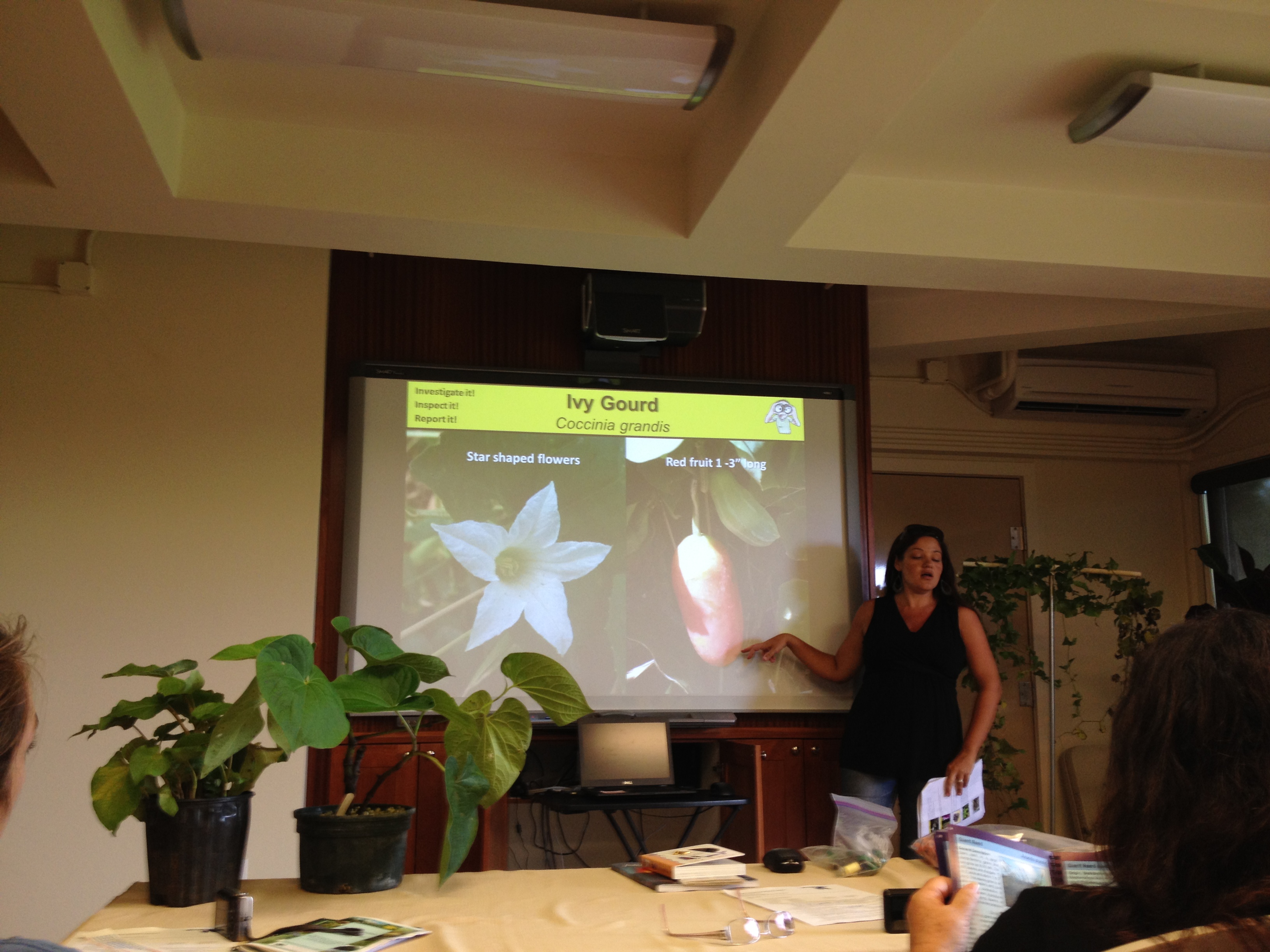
Ivy Gourd

The Ivy Gourd is the vine standing on the far right behind the speaker. Its flower and seed pod are shown in the slide.

For example, Pampas Grass (well known to my California friends) is a big no-no here. Apparently, some well-meaning but naïve homeowners have tried to plant them in their yards. However, I’m now on the case … looking for any further PG occurrences.

Other examples were the Ivy Gourd (“regarded as very invasive and on the Hawaii State Noxious Weed List”), plus another vicious, but teeny critter, the Little Fire Ant, which was inadvertently transported from South America and made its way to the North Shore of Kauai via a landscaping company working on an individual homeowner’s yard in the area.

A good reminder for me was how seeds can be spread inadvertently by hikers. KISC pleaded with us to brush off our boots whenever we’ve been for a hike, to avoid spreading the seeds of one species (particularly an invasive species) from one part of the island to another (which reminded me of a trip to the Galapagos Islands with a good friend back in 2002, when we diligently washed off our boots, snorkel equipment, etc., whenever we left one island to go to another).

Gotta love the KISC guys who provided us all with free boot brushes, as well as key rings and fridge magnets, to try to spread the word.

Heads up, any keen hikers who comes to visit us! From now on you will definitely be subjected to the boot brush!

No Rain – No Rainbows! *

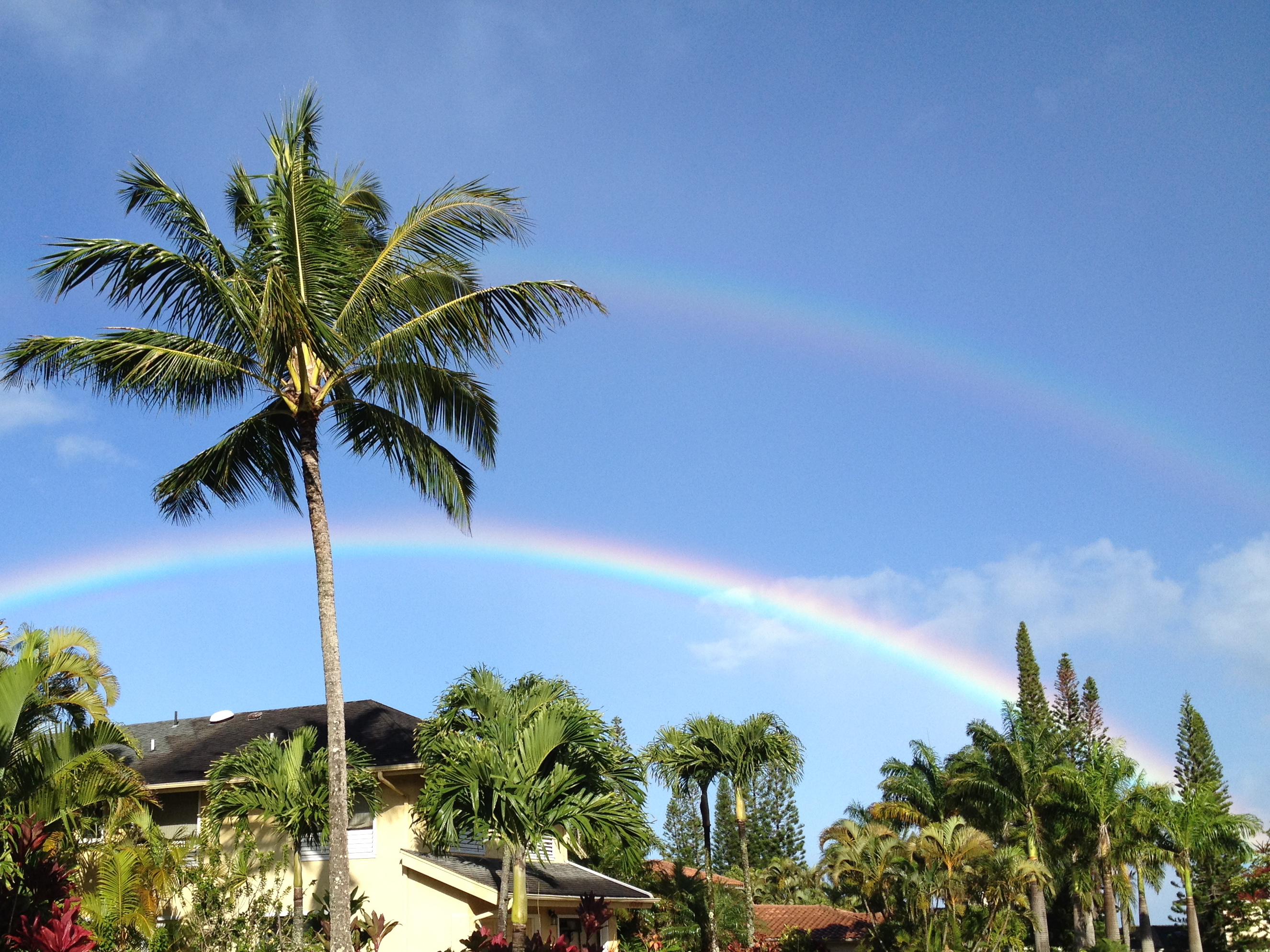
I set off with Freya for our usual stroll this morning…opened the door to a gentle passing shower. Not enough to stop us; in fact, rather refreshing!

Turned the corner from Keoniana to Kaweonui and was treated to this!…
Double rainbow

Out at the point, the rainbow was starting to fade, but the moon was still up…

I do love where we live!

* Researching the origin of this popular saying led me to Kimo’s Hawaiian Rules (below). Turns out, according to Lonely Planet, that it’s Kauai’s own Nite Owl T-Shirts that takes credit for bringing together this collection of rules.

Kimo’s Hawaiian Rules

Never judge a day by the weather.
The best things in life aren’t things.
Tell the truth – there’s less to remember.
Speak softly and wear a loud shirt.
Goals are deceptive – the unaimed arrow never misses.
He who dies with the most toys – still dies.
Age is relative – when you’re over the hill, you pick up speed.
There are 2 ways to be rich – make more or desire less.
Beauty is internal – looks mean nothing.
No Rain – No Rainbows

However, we also have G.K. Chesterton to thank for that last one:  And when it rains on your parade, look up rather than down. Without the rain, there would be no rainbow.

Enjoy many more of his best quotes here.

The metamorphosis from house to home

Well, that was a mighty busy couple of weeks!

Matson containerOur containerized home arrived from California a week ago last Thursday, and we’ve been unpacking, sorting, and rearranging ever since (with admittedly some beach, tennis, and golf time in between our surges of homemaking).

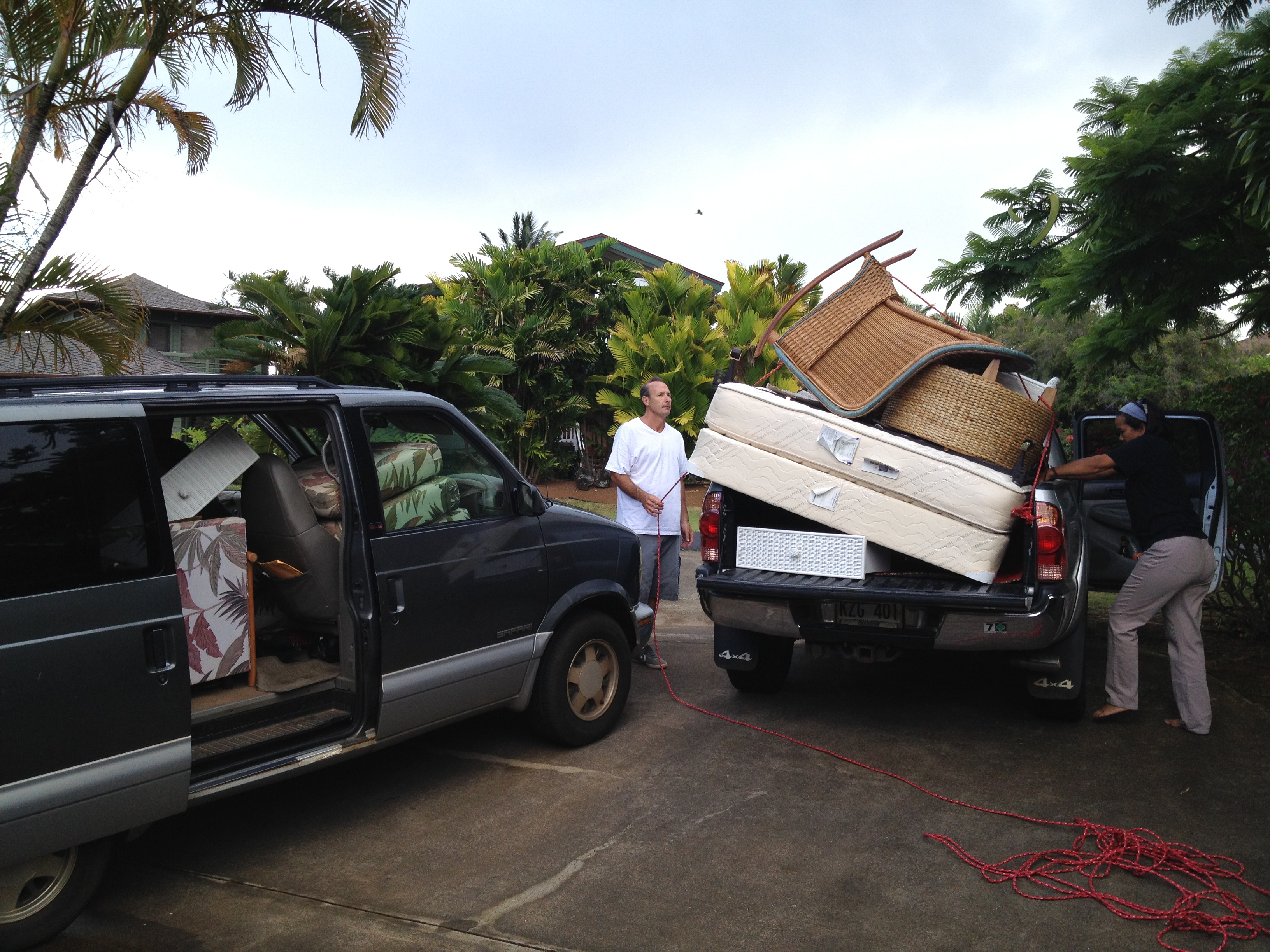
Final furniture collectionThe previous few days had been spent removing the existing furniture, to make room for the incoming items. I found a non-profit housing project in Koloa whose manager was so delighted to have the donations that she was happy to collect the bulky furniture. It took them a few days to organize a couple of trips, but to our relief the last load disappeared the day before the container showed up.

Since we had bought the house last year (June 2011) with the initial intention of using it for our own and for friends’ vacations for, oh, perhaps a couple of years or more, until we were ready to make the ‘big move’, it had been very convenient that the purchase came with furniture included.

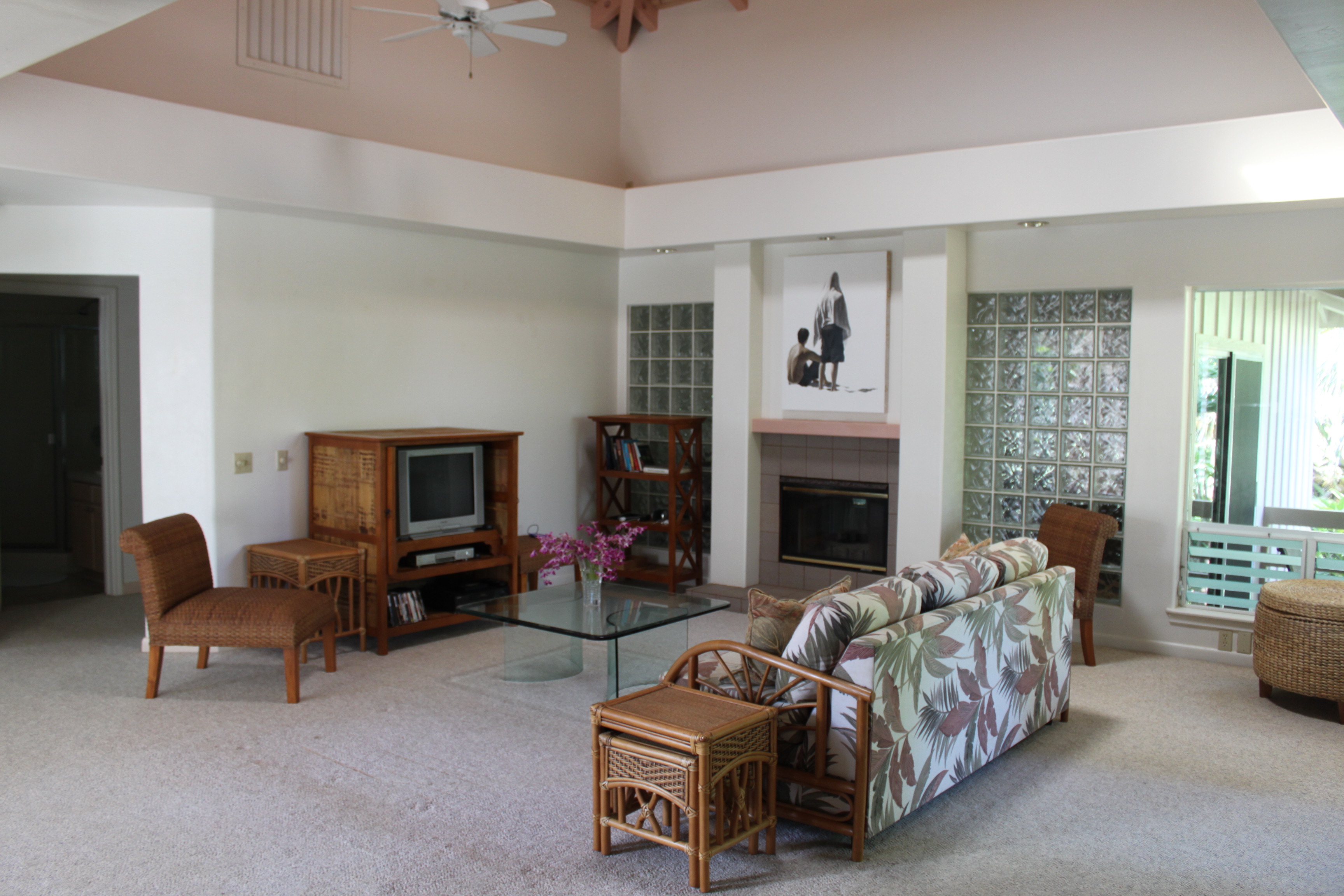
Master bedroom 2011The seller left pretty much all the basics: beds, linens, sofas, chairs, chests-of-drawers, lamps, silverware, as well as a large number of paintings and nick-nacks (even a couple of old TVs and VCRs), while our generous and thoughtful realtor gifted some important missing items: coffee table, saucepans, towels.

Living room 2011So, we really didn’t need to add much for our occasional one- or two-week vacations. [The only item of ours in the photo (right) is the painting, a spontaneous purchase from a local gallery in April 2011 when we first saw the house.]

While our taste in furnishings is very different, I was grateful for everything in the house, and even found the heavy accent on Hawaiiana amusing, perhaps because it was so very different from our CA decor. I assumed that we’d retain many of the smaller items once we moved in full-time.

Master bedroom August 2012All that changed, however, once we started unpacking our own possessions. Very quickly the previous furnishings, ornaments, and paintings looked out of place and just ‘not us’!

At the risk of sounding ungracious, I couldn’t wait to box up and remove all (well, almost all) the remaining vestiges of the previous owner.

Living room August 2012

Still, I don’t feel so bad knowing that there are others out there who are grateful for the donations…as were we, last year.Living room August 2012

Office August 2012

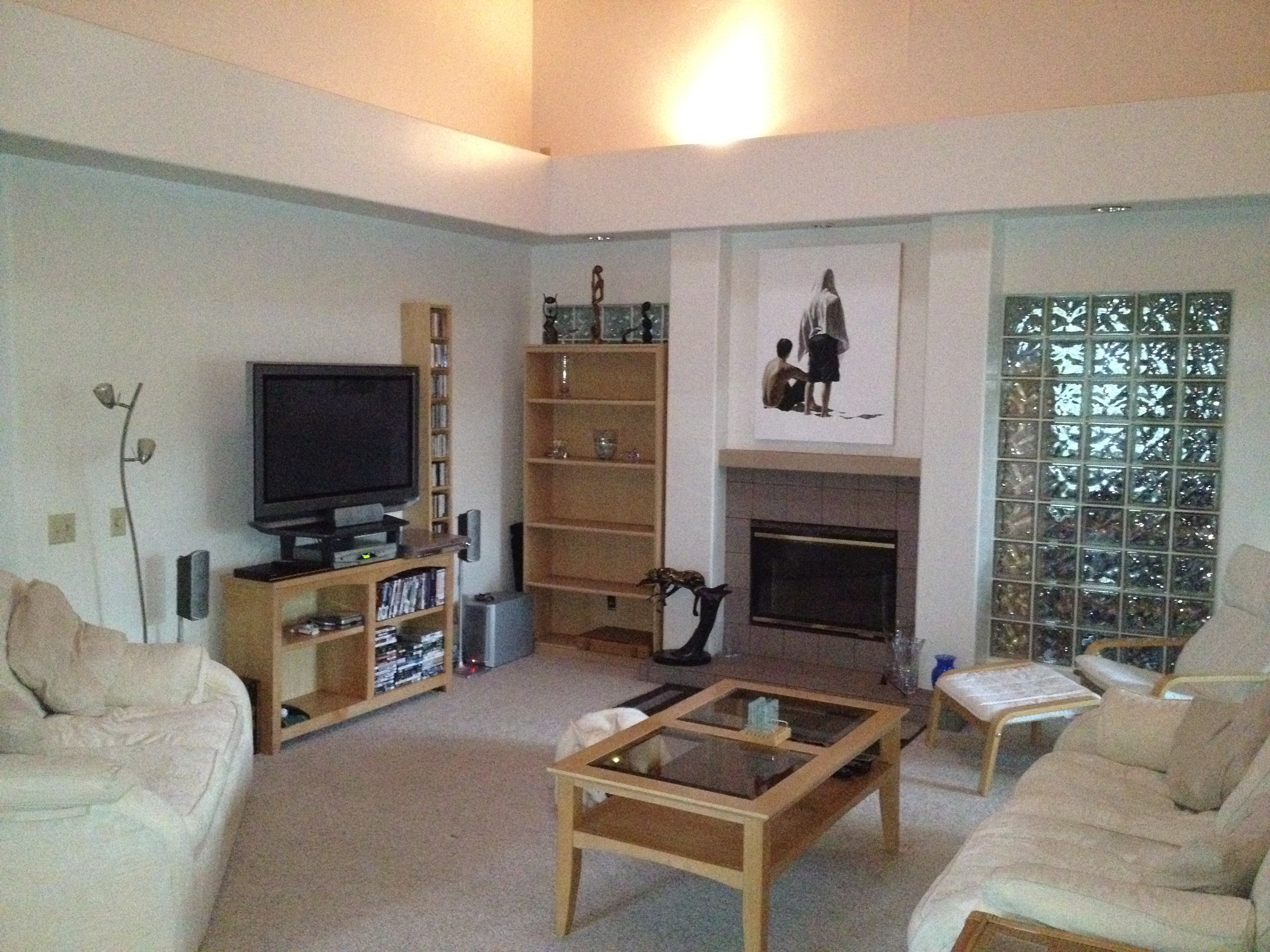
What a mess! Looks like we’ve lived here for years! Still need more drawer space in the office.

We’re not done yet, but this house is very quickly becoming our home. The final push now is to unpack more of our artwork, ornaments, and glass…once we figure out where on earth to put them. 

Dining area August 2012

At last, my keyboard’s out of storage, having been packed away in May during the pre-open house declutter.

KPNWR’s newest recruit at Kilauea Point

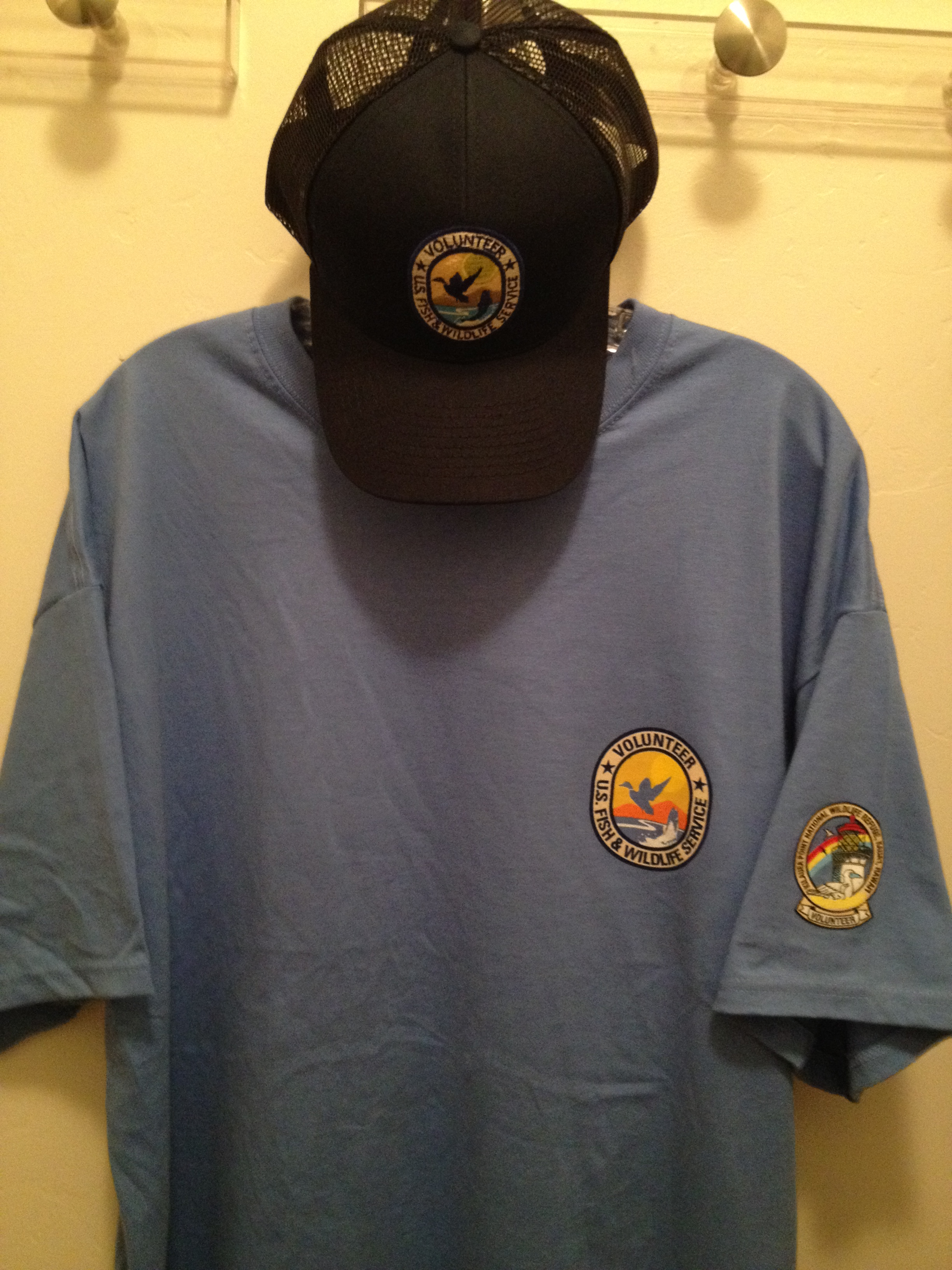
Tuesday marked my first day on the ‘job’, as a volunteer at the Kilauea Point National Wildlife Refuge (KPNWR).

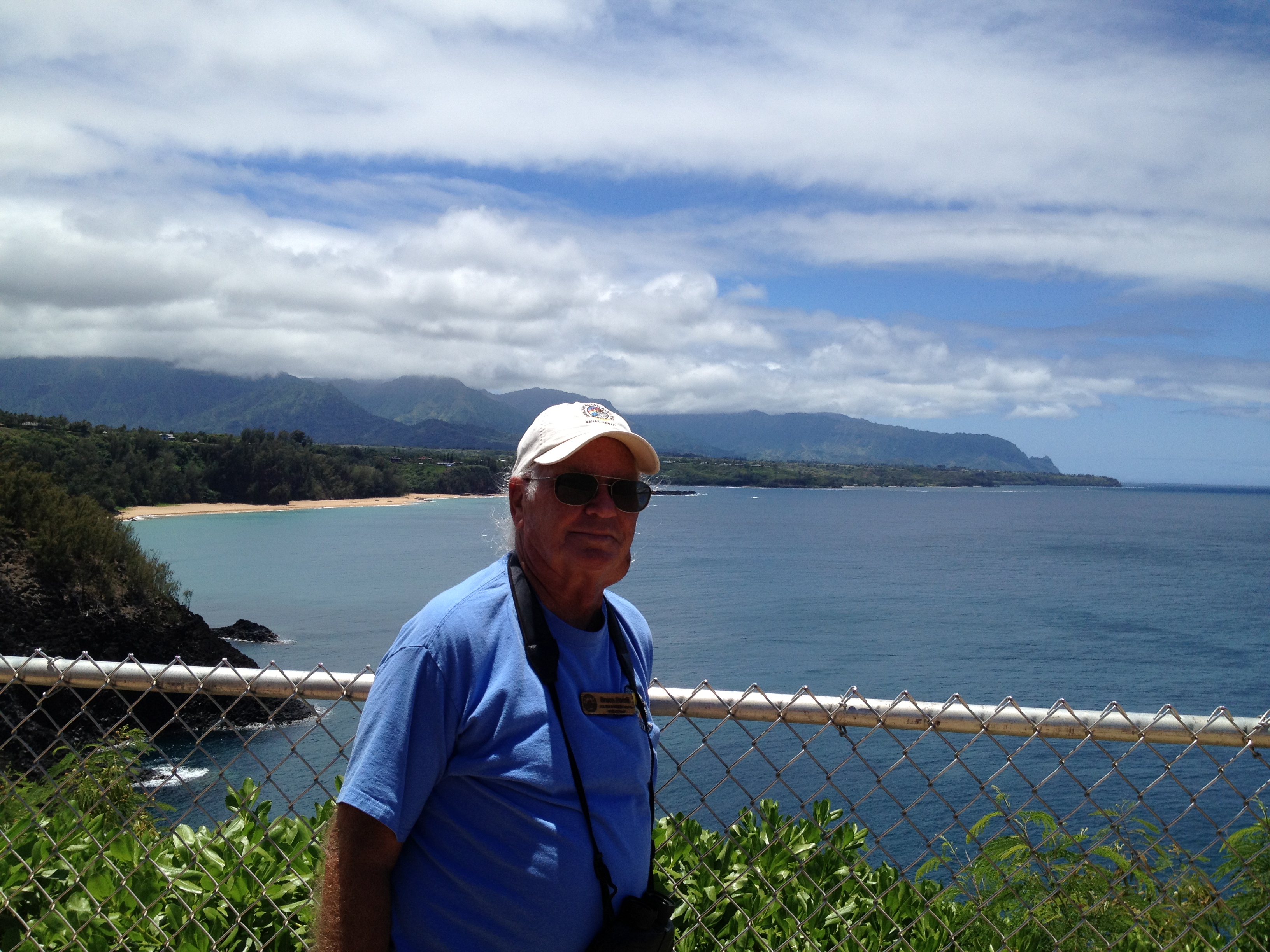
I had a brief orientation with Jennifer Waipa who’s the park ranger responsible for the volunteers. Then, for the afternoon shift from 1 to 4pm, I shadowed a long-time, very experienced and equally entertaining volunteer named Bruce Parsil.

Bruce Parsil, knowledgeable and entertaining mentorI felt like a new kid on the first day at school, and the afternoon was a great experience: perfect weather, with sufficient wind for the birds to be constantly playing and drifting all around us, and a ton of fascinating information to absorb from Bruce.

The main residents at this time of year are the frigate birds, shearwaters, red-footed boobies, and tropic birds (both white-tailed and red-tailed). The Laysan albatross have already bred, the youngsters have fledged, and all have returned to sea.

Btw, if you caught my previous post about the late-bloomer albie in our neighboring street, I’m delighted to report it fledged Monday morning, sometime between 7:30am when the owner went to work and noticed the youngster was still hanging out, and 8:15 when I walked Freya and it was gone…oh and, Nan, I admit my biased gender assumption was wrong, apparently it was a ‘she’! 😉

Here are just a few of the many facts I learned from Bruce and Jennifer (these notes are as much for a memory for myself as for any reader’s edification): 

  • ‘Our’ frigates are female only. No breeding occurs here; they just seem to hang out and chill. Either they are non-breeding females, or they are stopping off on their way to or from their breeding grounds. So, sadly, not much chance of the glorious sight of a male frigate with his huge engorged red throat.
  • There are two species of shearwater on the island, the Wedge-tailed Shearwater and the smaller Newell’s Shearwater. The ‘wedgies’ are not endangered, and breed in burrows around the bluff including close to pathways (so close that sometimes the chicks fall out and roll down the path). The Newell shearwaters, on the other hand, are endangered, and usually breed further inland…high in the mountains. However, a recent program seems to have been successful in establishing a number of Newells on refuge land.
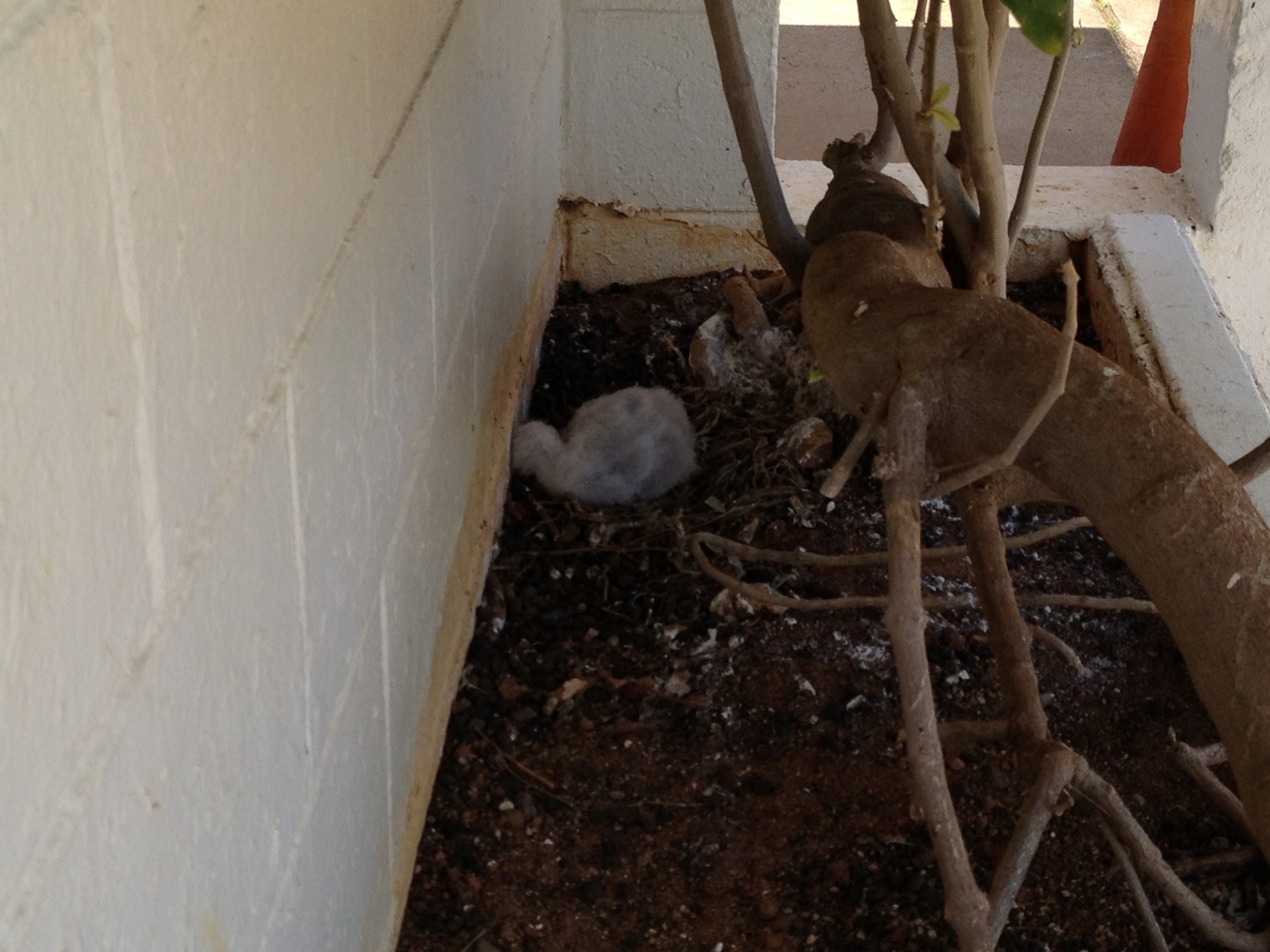
  • The shearwaters are now hatching. The first wedgie on the refuge hatched three weeks ago and, surprisingly, is situated in one of the most public, exposed areas, immediately outside the interpretation center beside the lighthouse. The parents return year after year to nest in that spot, so evidently the human activity doesn’t bother them too much. The chick is currently a cute pale gray/white fluffball which attracted a great deal of visitor interest and gave me several opportunities to regurgitate Bruce’s words of wisdom.
  • There is a hybrid tropic bird. The traditional white-tails have a pale beak, and the red-tails have a red beak…then there’s the hybrid that has a white tail and a red beak! I know, I’ve seen them!

I’ve omitted any details about the red-footed boobies…they will probably have a dedicated post in the future.

There were some other entertaining sights as well as the birds. We spotted a large number of spinner dolphins, who often hang out in the bay to the west of the Point until mid-afternoon, and we had just one sighting of a green turtle. No monk seals that afternoon, but I’ve seen one near the Point in the past.

Moku’ae’ae islet off Kilauea Point

Anyone need a didgeridoo?

In a neighboring yard is a plant with a flower stem that resembles an enormous asparagus stalk. This is an agave.

20120810-063451.jpg

A neighbor tells me he’s lived here over 10 years and this is the first time he’s seen it flower. Agave stalks are used to make didgeridoos…perhaps that’s why one rarely sees anyone wandering down the street with a didgeridoo tucked under their arm!

Apparently, once an agave has flowered, the entire plant will die. However, its seedlings form the next generation…I wonder if I’ll still be here to see its offspring flower too.